


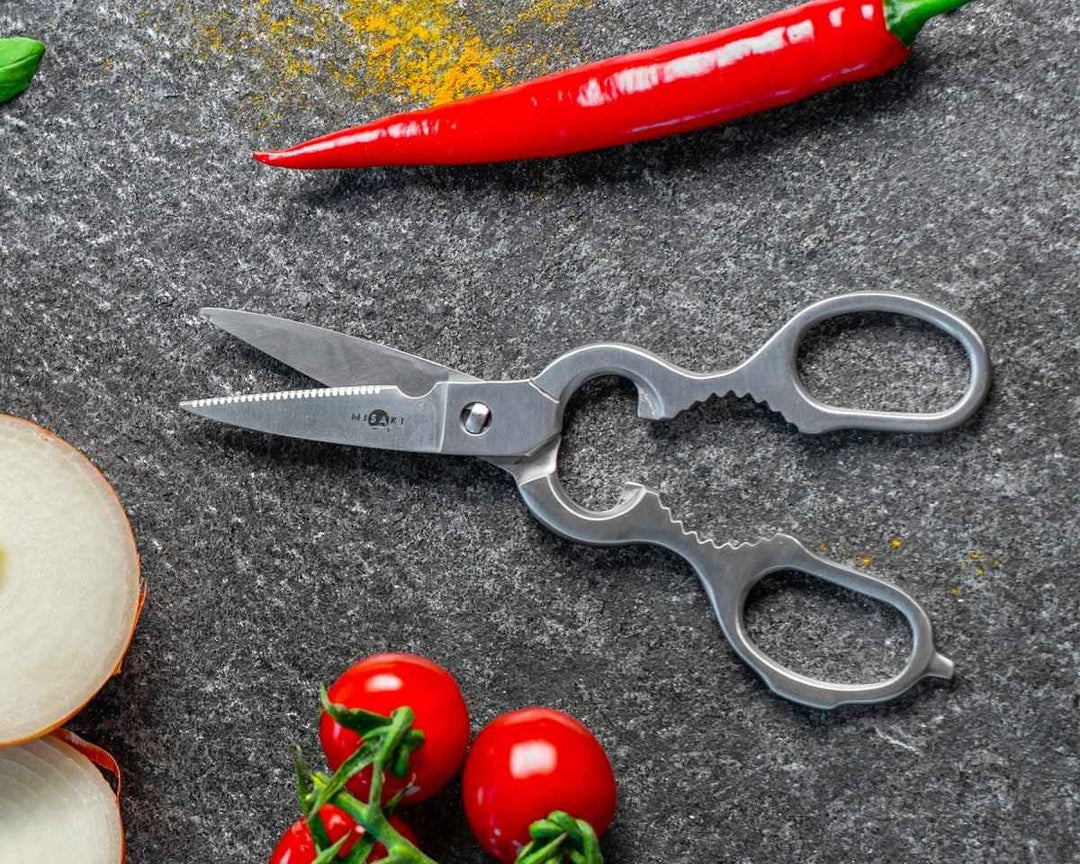


Multifunctional kitchen scissors
Regular price
85.00 CHF
Sale price79.00 CHF
Save 6.00 CHF
Tax included.
Shipping calculated at checkout.
- ✓Versatile for every cutting task in the kitchen
- ✓Precise serrated edge for controlled cutting
- ✓Stainless steel – durable and easy to care for
- ✓Can be taken apart for easy, hygienic cleaning
In stock – more than 10 items available
Free delivery:
Ships from Switzerland
Express selectable at checkout
i
You can select express shipping at checkout. Orders placed Monday to Friday before 11:00 are shipped the same day and delivered on the next delivery day by 9:00, including Saturdays. Public holidays excluded. Cost: CHF 30.–
Multifunctional kitchen scissors
These all-purpose scissors from MISAKI are made entirely of stainless steel and are ideal for many cutting tasks in the kitchen. They are suitable for cutting herbs, poultry and sturdy packaging materials. The serrated edge can also help when scaling fish and peeling fruit and vegetables.
Functions:
- Suitable for many cutting tasks, for example as herb scissors for chives and parsley as well as for cutting poultry
- Serrated edge for precise cutting, even with sturdy packaging materials
- Integrated cap lifter and bottle opener for bottles with crown caps
- Integrated twist-cap opener and nutcracker
- Can be separated for easier cleaning
Ergonomics:
- Ergonomic stainless steel handles help prevent uncomfortable pressure points and sit securely in the hand
- Suitable for right- and left-handed users
Suitable for:

Meat

Fish

fruit and vegetables

Herbs
| Blade material | Stainless steel (304 stainless steel) |
| Handle material | Stainless steel (3Cr14 stainless steel) |
| length | 207 mm |
| Weight | 167 g |
The Misaki kitchen scissors can be separated for thorough cleaning. The stainless steel blades are dishwasher safe, but hand washing is recommended to maintain sharpness and quality. After washing, the pieces should be thoroughly dried and reassembled.


