Santoku knives: The essence of Japanese cutting art
Experience the perfect symbiosis of traditional craftsmanship and timeless elegance with our exquisite Santoku knives . Crafted from the finest Damascus steel, our knives combine sharpness, balance, and aesthetics in perfect form. They are ideal for anyone who considers cooking not just a passion, but an art.
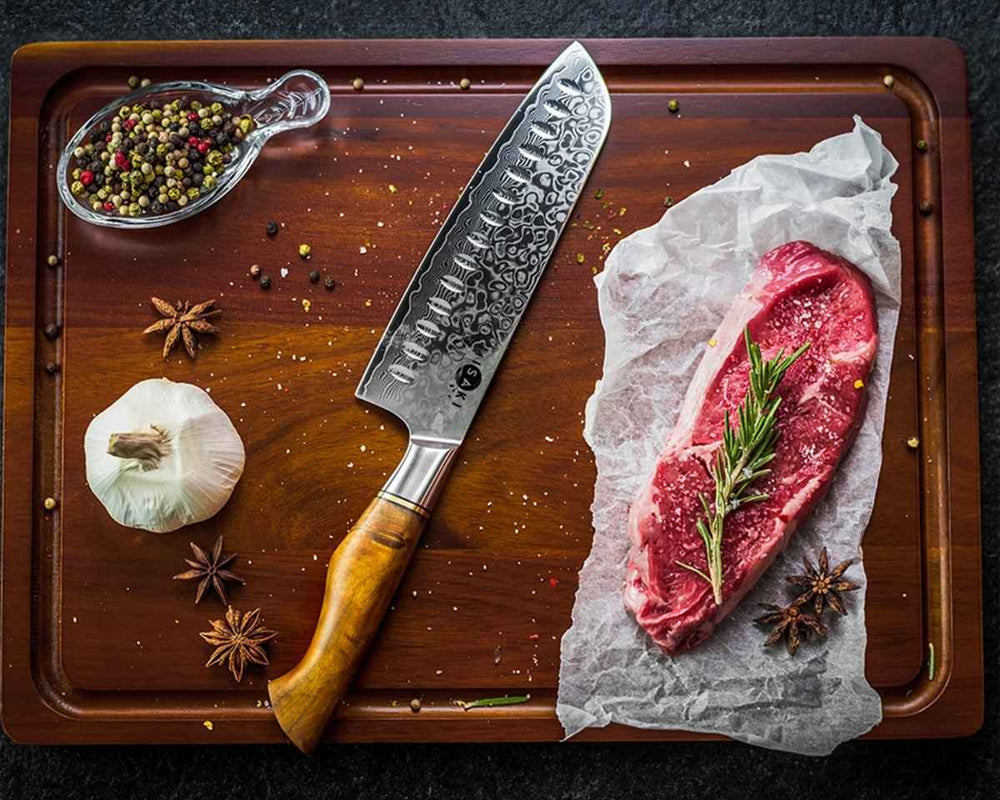
The Santoku knife, a traditional Japanese chef's knife, is considered the equivalent of the European chef's knife. The name "Santoku" means "three virtues." This refers to meat, fish, and vegetables, which you can prepare with equal precision using the Santoku knife. When you purchase a Santoku knife, you are getting a versatile cutting tool that will become your indispensable helper in the kitchen.
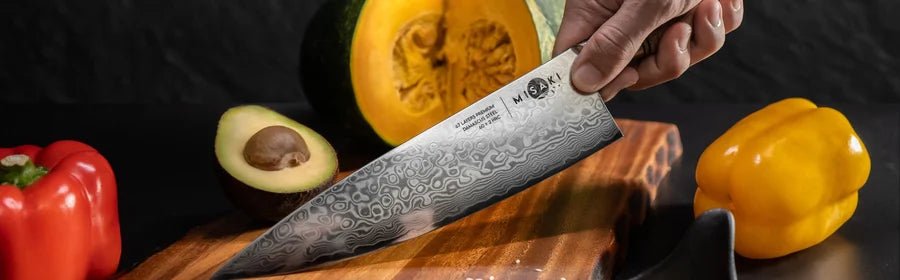
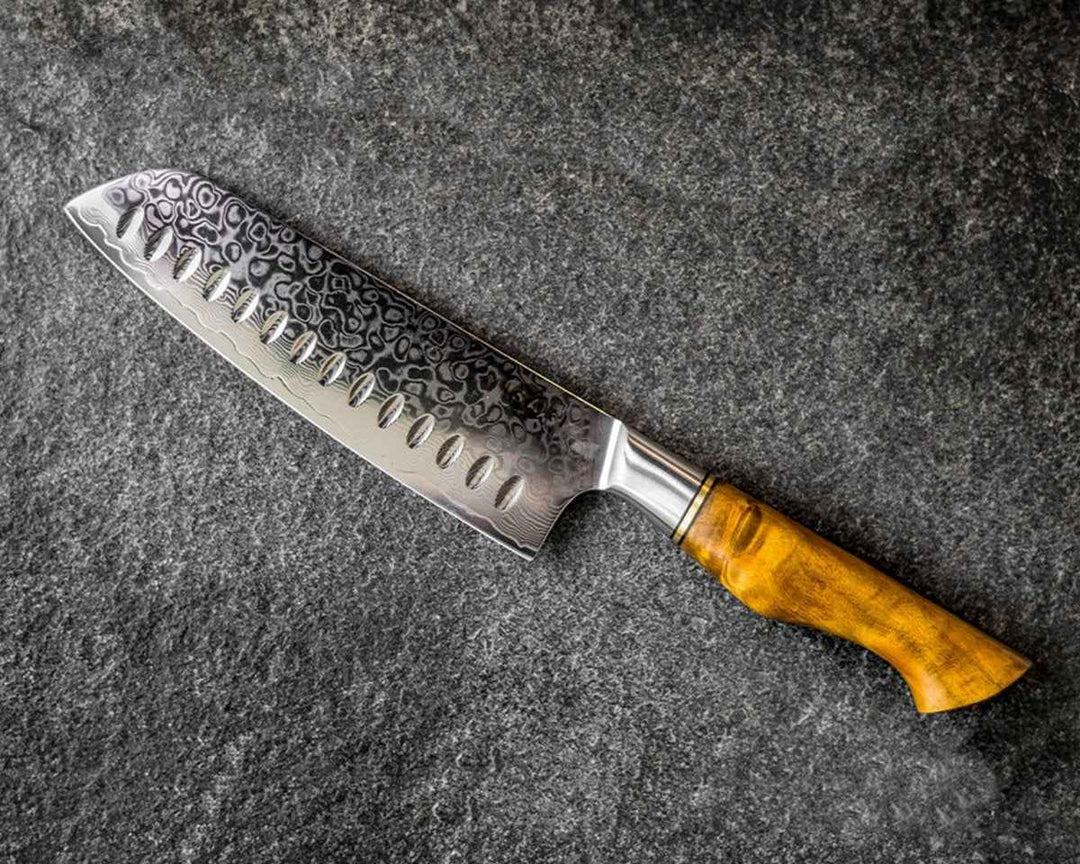
The Santoku is characterized by a wide blade with a straight edge, a double-edged blade, and a slightly recessed tip. Thanks to the knife's balanced shape, you always have control over the food you're cutting and process it evenly. Our Santoku knives feature a hollow grind, a half-moon-shaped groove along the blade that reduces friction and prevents the food from sticking. Due to its compact shape and precise cutting control, the Santoku is particularly popular with our female clientele.
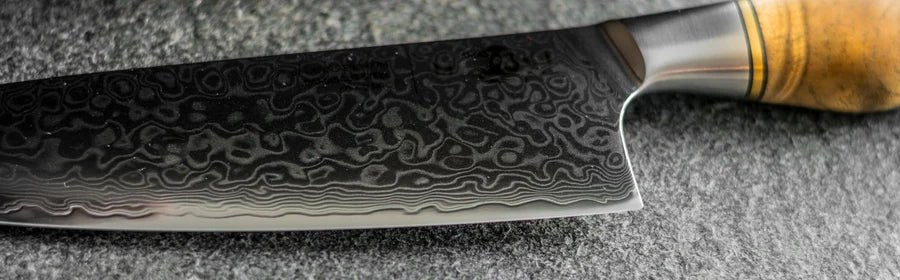
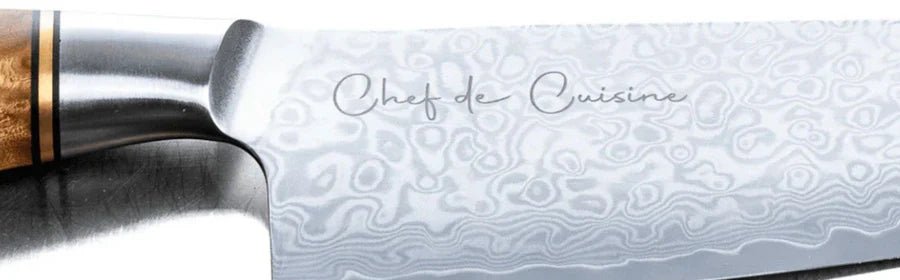
MISAKI has earned an excellent reputation for its first-class Damascus knives . Our knives are meticulously handcrafted to ensure they retain their outstanding quality for a long time. Thanks to their characteristic grain, you also receive knives that, with their unmistakable appearance, are a true eye-catcher in your kitchen.
The Santoku knives from MISAKI in detail
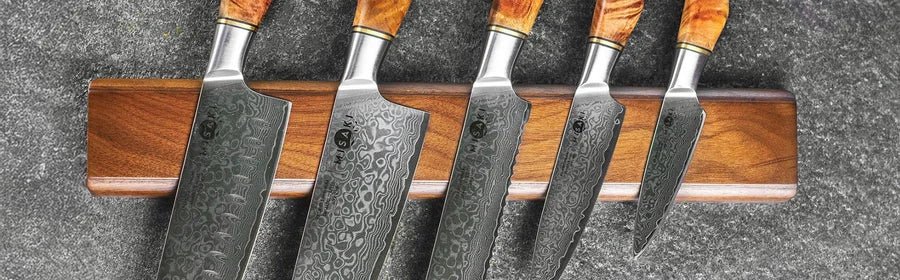
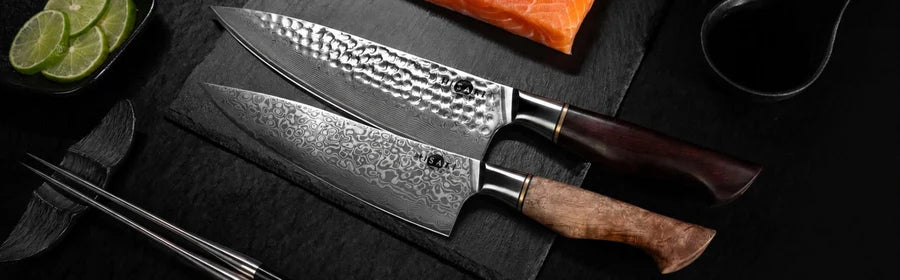
At MISAKI, you can find Santoku knives from the Hikari and Akane lines . These are our diverse product lines of high-quality Damascus knives.
Our Santoku from the Hikari line is crafted from 67 layers of Damascus steel. The core is made of the rust-resistant and edge-holding 10Cr15CoMoV steel grade. The blade has a hardness of 60 to 62 HRC and is ground on both sides at a 15-degree angle, making it ideal for both left- and right-handed users.
The handle of our Santoku from the Hikari line is made of fine sycamore maple. This wood has an amber hue and is a highly prized hardwood with a fine grain and high density . The handle fits particularly well in the hand, allowing you to wield the knife with precision.
Our Santoku knife from the Akane line is made of 73 layers of Damascus steel. The core is made of 14Cr14MoVNb steel, a particularly hard and durable steel. The blade has a hardness of 62 to 64 HRC and is also ground on both sides at a 15-degree angle. The handle is made of dark rosewood, which underscores the elegant appearance of this Santoku knife.
As with the Hikari line, the knife is designed for both right- and left-handed users.
When manufacturing our Damascus knives, we rely on one of the world's most modern hardening technologies: vacuum heat treatment. This creates flawlessly smooth surfaces that make cutting with our knives exceptionally easy.
How to care for your Santoku knife
By following these tips, you can ensure that your MISAKI Santoku knife will last a long time:
-
Rinse the knife with warm water after use. Use only a mild detergent for cleaning.
-
Then dry the knife immediately with a soft cloth.
-
Never put the knife in the dishwasher. The high temperatures and aggressive cleaning agents would cause irreparable damage to the blade and handle.
-
The best way to care for your Damascus knives is with our camellia oil . Apply a few drops of the oil to a soft cloth and gently rub the blade. Rinse the knife with water before the next use. You can also treat the handle with the oil to maintain its high quality.
-
For resharpening, use our 1000/6000 wet whetstone or our fine diamond grinding rod.