









Damascus knives: The crown of blacksmithing and the soul of the kitchen
Damascus knives are among the highest quality and most sought-after blades in the world. They are characterized by excellent cutting properties and impressive beauty. They also retain their sharpness longer than conventional knives and are easy to resharpen.
Knives made of Damascus steel are particularly prized by amateur and professional chefs. They are also sought after by collectors and as engraved gifts . Thanks to their quality and durability, these knives are ideal heirlooms that will last for generations. Buying a Damascus knife means choosing the highest quality.
If you're looking for premium knives, you'll find an exquisite selection at MISAKI – specifically in the Hikari and Akane lines. Are you interested in buying Damascus knives? We'll tell you what factors to consider when buying.
What is a Damascus knife? Masterful blades for the highest demands
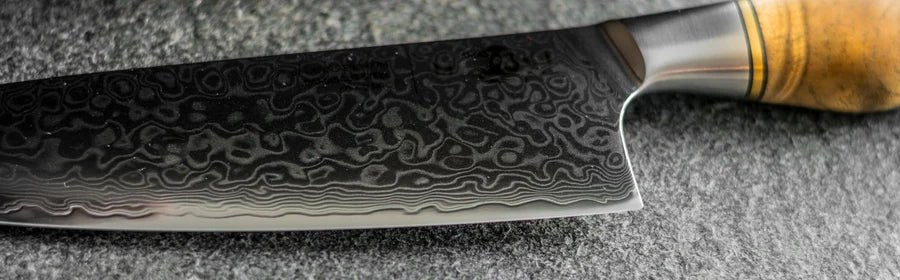
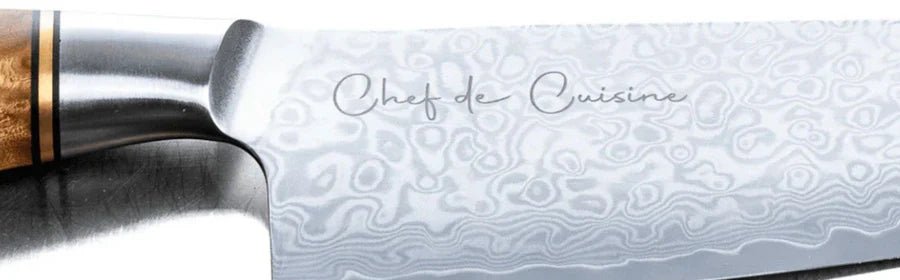
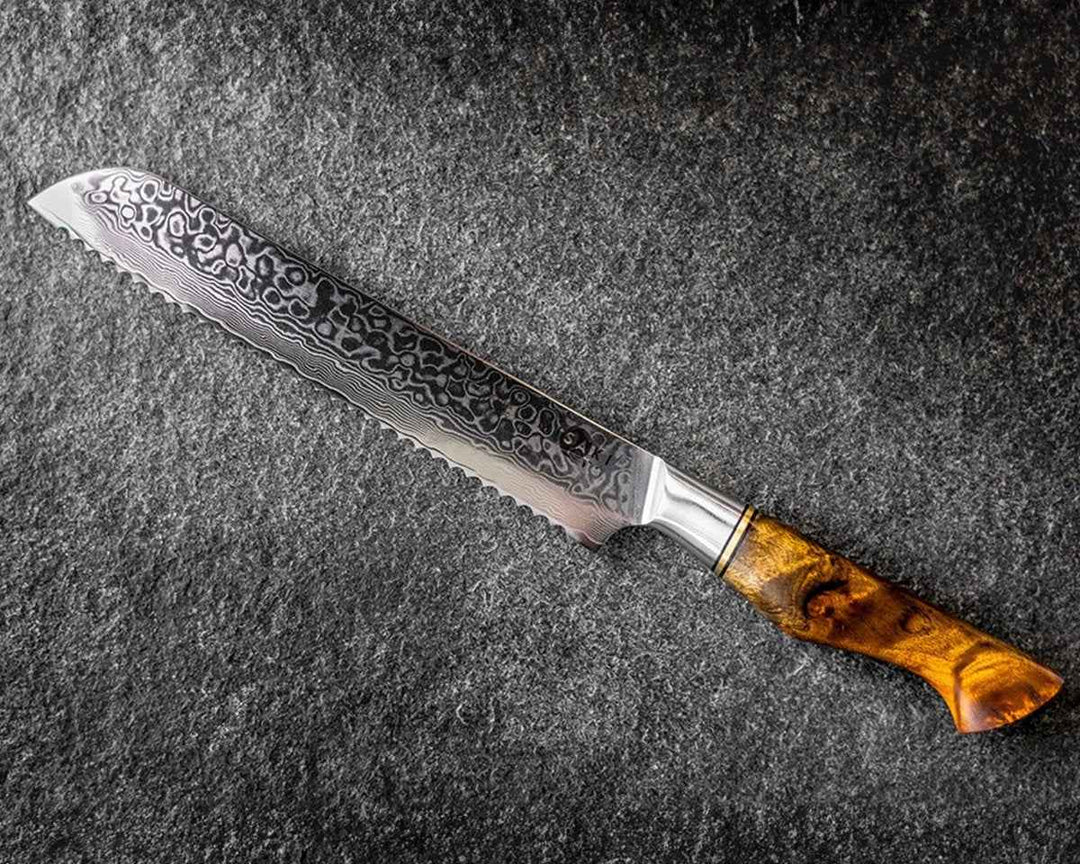
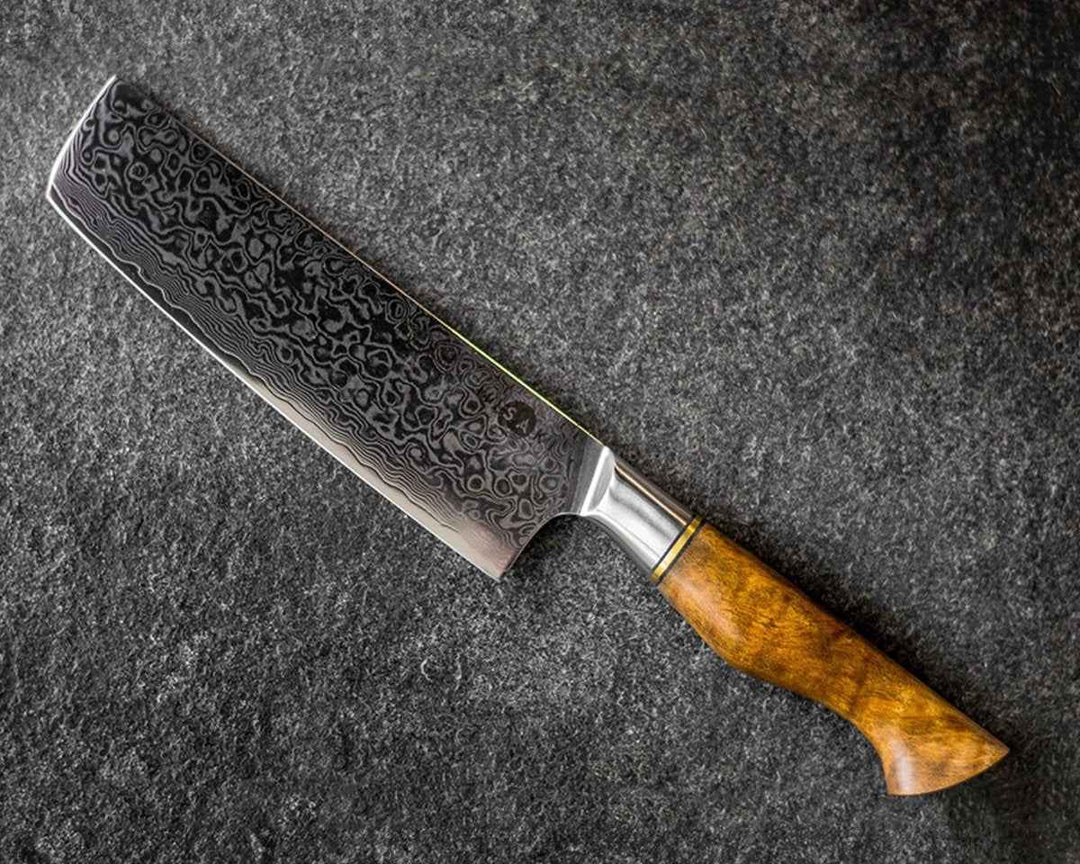
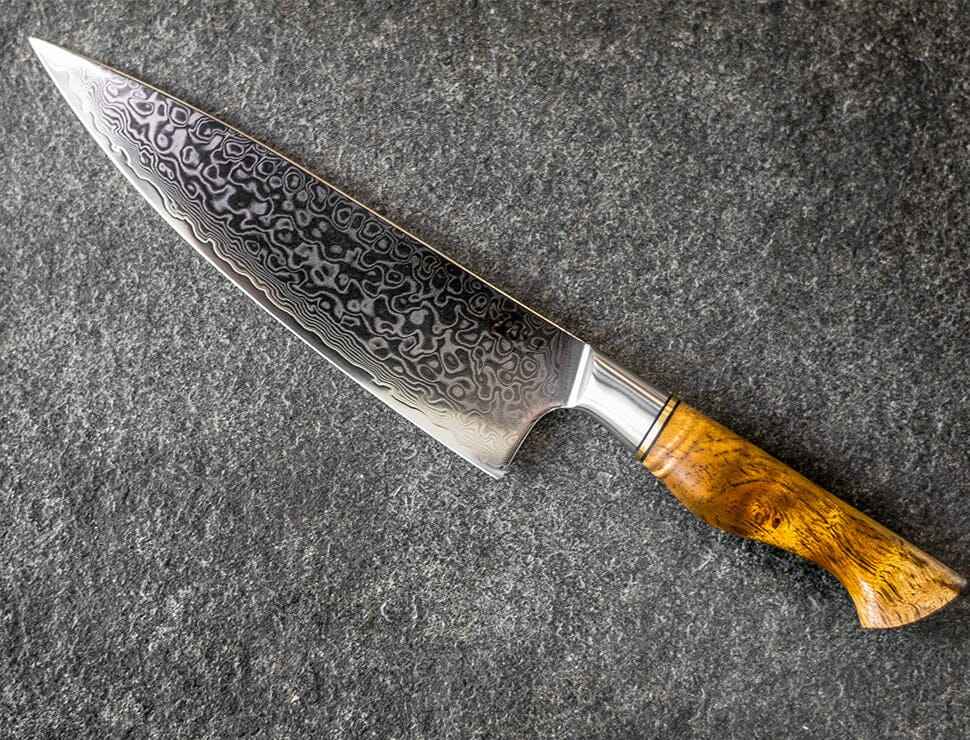
A Damascus knife isn't simply forged, it's created. Folded, hammered, and reheated under extreme heat, the result is a blade as hard as it is resilient. At the same time, it possesses a delicate beauty. Repeated folding creates fine layers that run across the blade like the growth rings of an ancient tree. The steel gains strength while remaining elastic enough to resist brittleness.
Each grain is unique—like a fingerprint of the blacksmith's craft. However, it only reveals itself after the blade has been etched. The acid affects each type of steel differently, creating characteristic patterns.
A Damascus blade can consist of over 100 finely forged steel layers. Layer by layer, different steel grades, often high-carbon and low-carbon, are fused together. The combination of soft and hard steels gives the blades their specific balance between strength, cutting precision, flexibility, and break resistance.
Modern Damascus knives usually feature a hard cutting core surrounded by several layers of specially alloyed steel. They are made of tough, corrosion-resistant steels that impress with their high edge retention and long service life.
The multitude of complex processes required for manufacturing result in the high value. If you want to buy an outstanding Damascus knife, pay attention to the number and top-quality of the layers.
Advantages of Damascus knives: Precision in every cut
-
Thanks to the fine-grained steel core, even the finest cuts can be made precisely and effortlessly. This makes delicate work particularly easy and pleasant.
-
An ideal balance between hardness and stability: The multi-layer construction gives the blade exceptional strength and durability. It remains stable and resilient even with regular use.
-
High durability: Fine chef's knives made of Damascus steel are characterized by excellent edge retention. Their long-lasting blade makes them an investment that will pay off for many years.
-
Unique aesthetics: The characteristic grain of the blade makes each Damascus knife an individual work of art with a distinctive appearance.
-
Easy to care for in everyday life: With little effort and regular care , your Damascus knife will stay sharp and beautiful for a long time.
Buying a Damascus knife: What really matters
Damascus steel knives are available in various lengths and shapes and are optimized for different applications. When purchasing a Damascus knife, don't just be enchanted by its stunning appearance. Also consider its intended purpose.
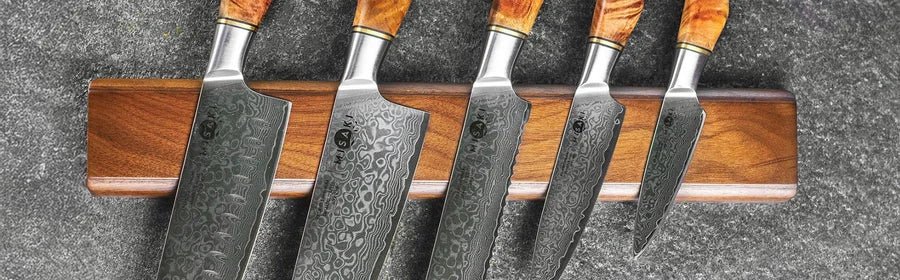
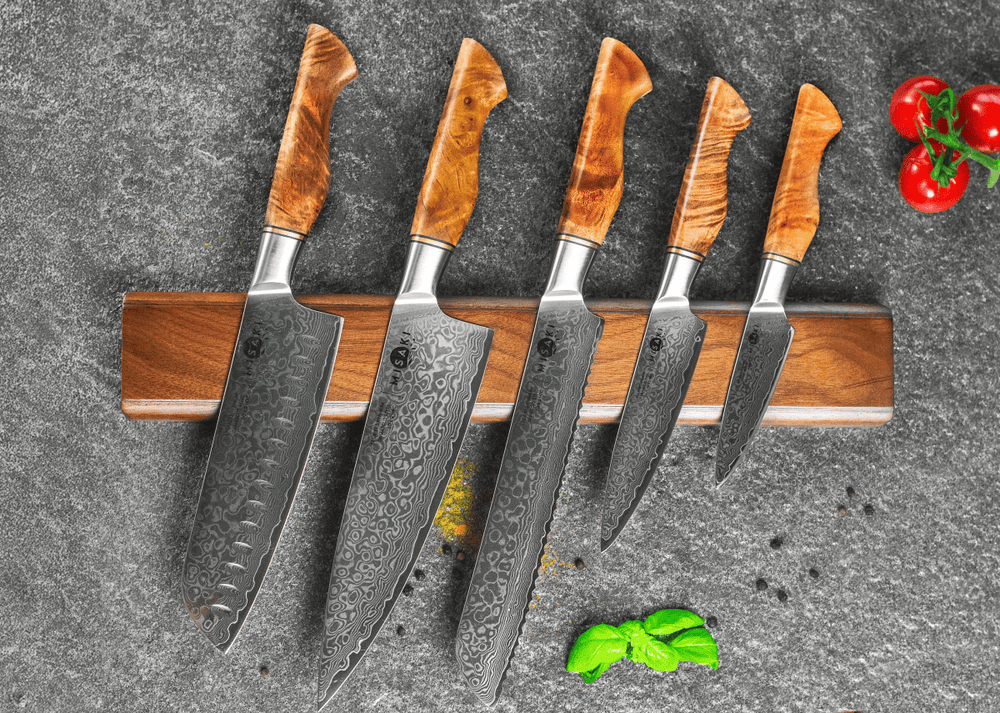
Start by asking yourself whether you need a single Damascus knife or a knife set to meet your needs. When you purchase a knife set from MISAKI, you'll receive a free magnetic knife holder so you can stylishly display your precious Damascus knives.
The most common Damascus knives in the kitchen are versatile, high-quality tools that, thanks to their different blade shapes, are ideal for specific cutting tasks. The following knife types are particularly popular at Misaki:
-
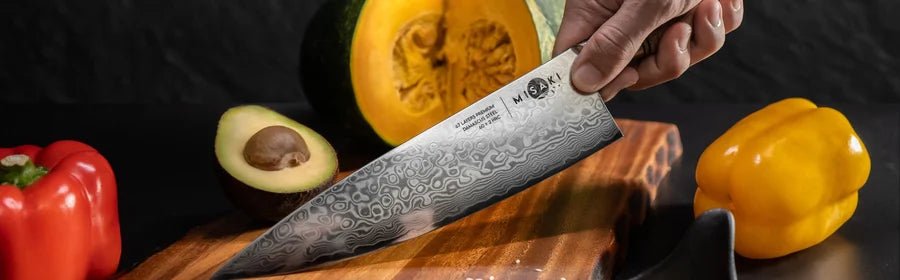
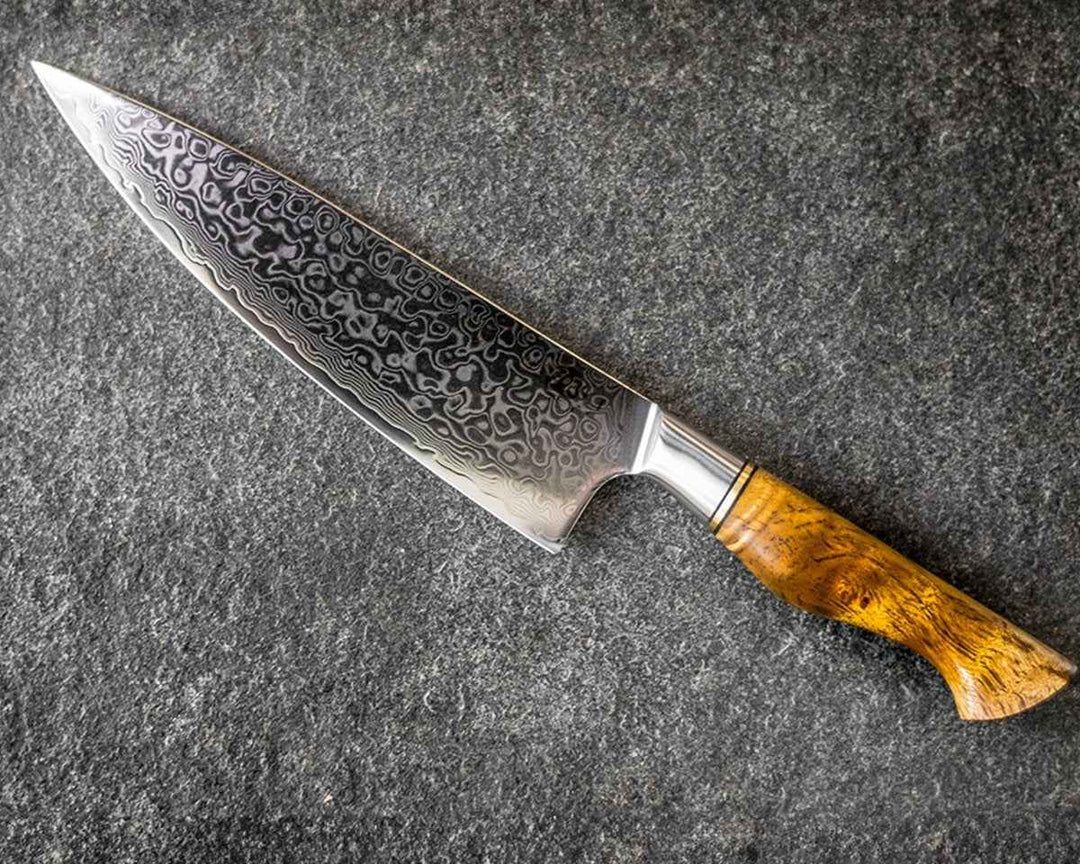
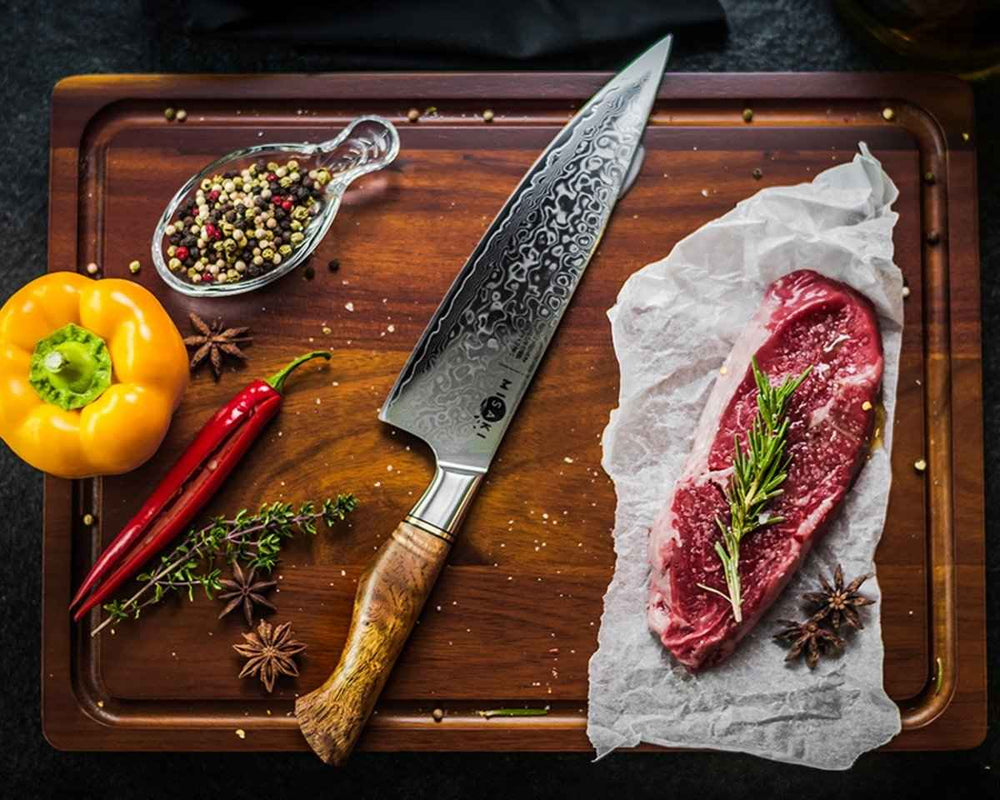
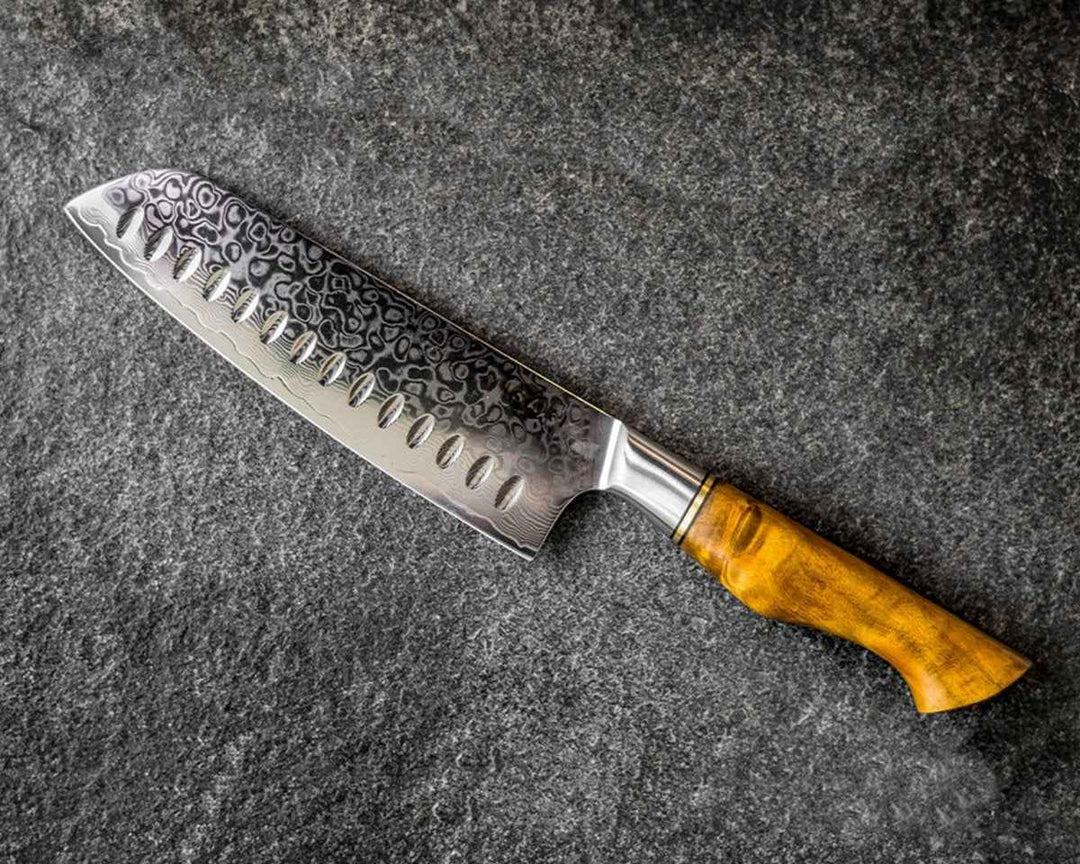
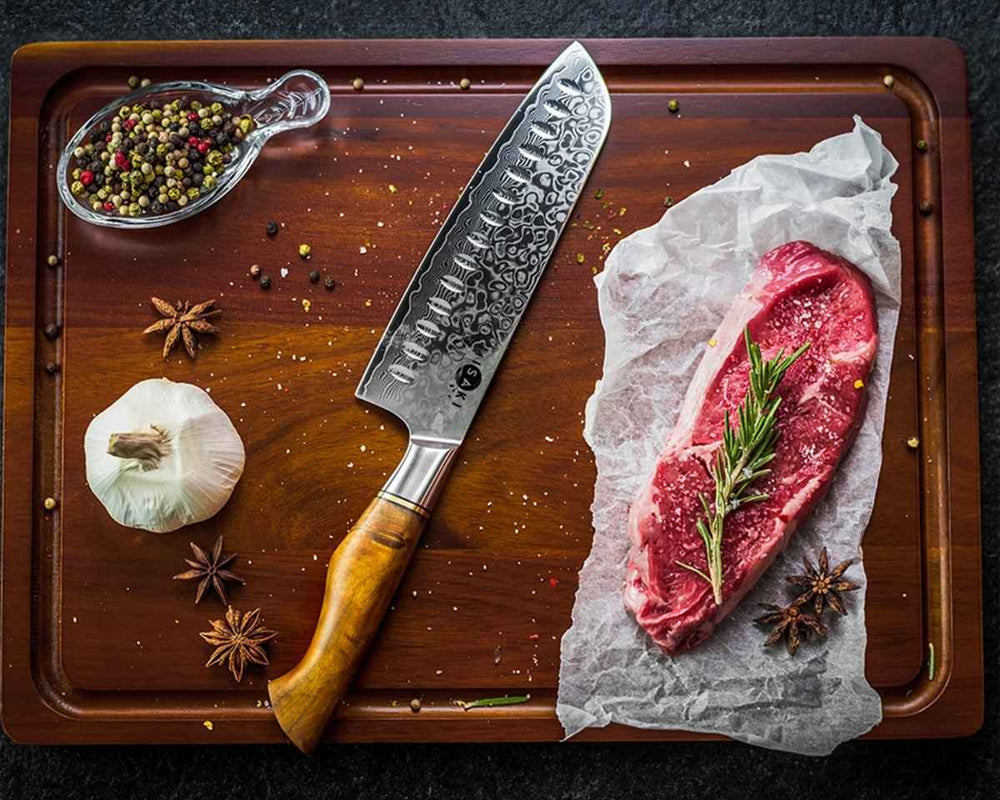
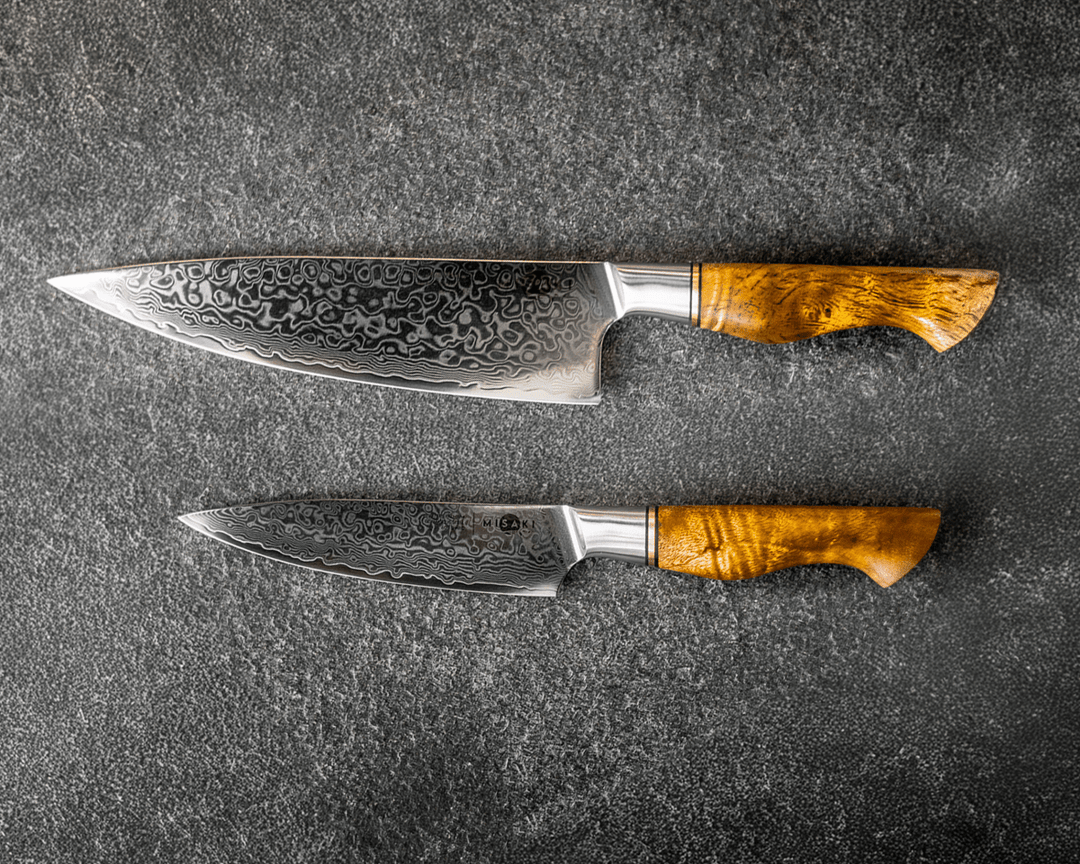
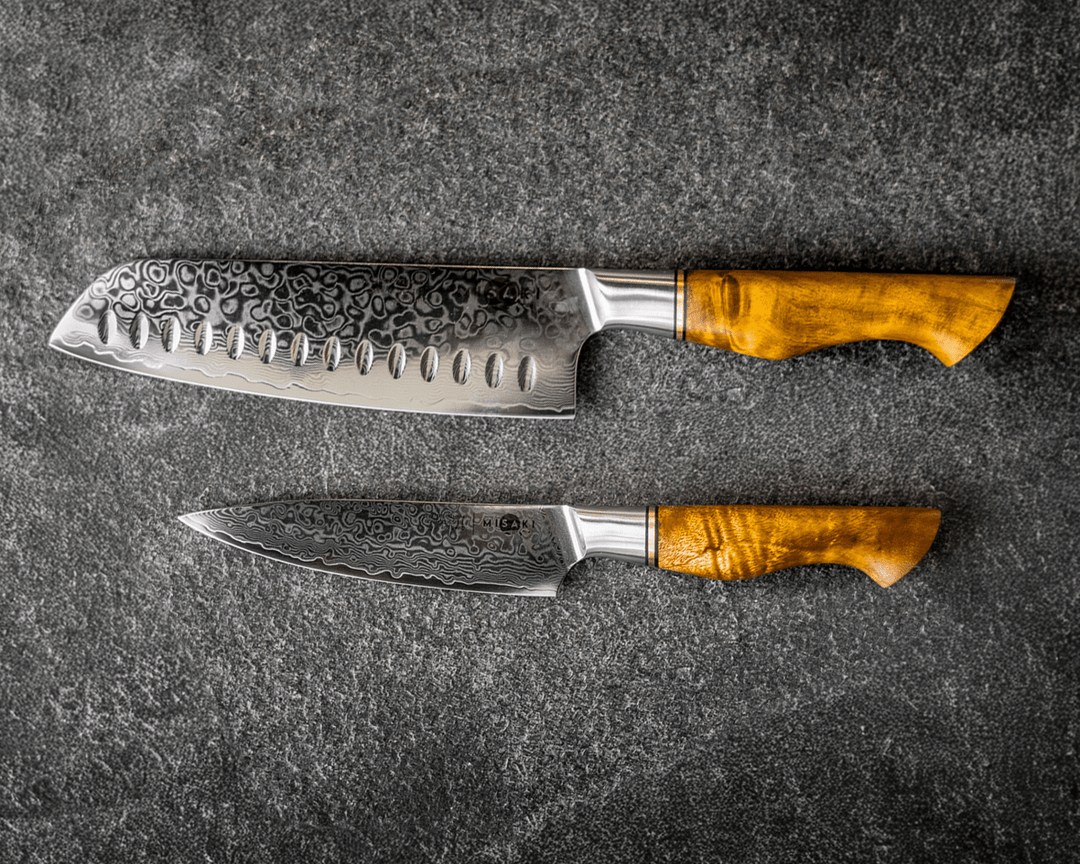
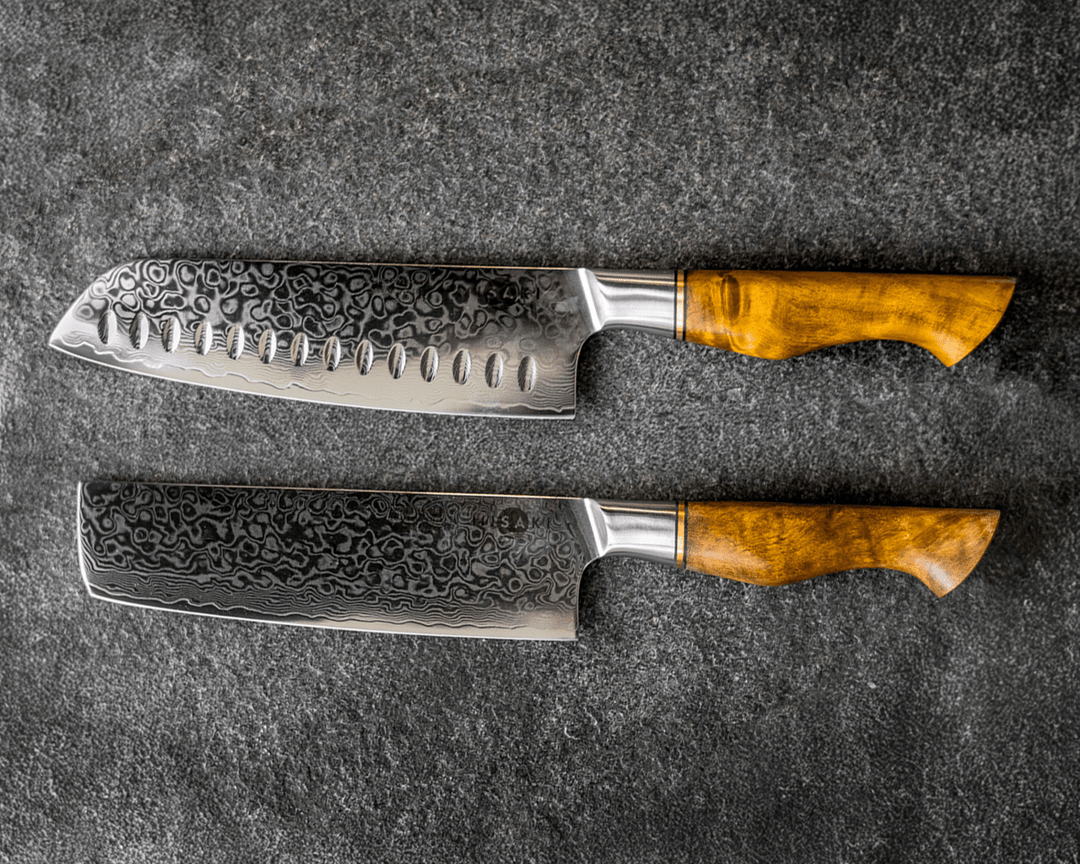
The chef's knife is a true all-rounder that no kitchen should be without. It's ideal for cutting vegetables, meat, and fish and offers a balanced combination of length, edge retention, and flexibility. Equally popular is its Japanese counterpart, the Santoku, which is somewhat more compact and particularly favored by our female customers.
-
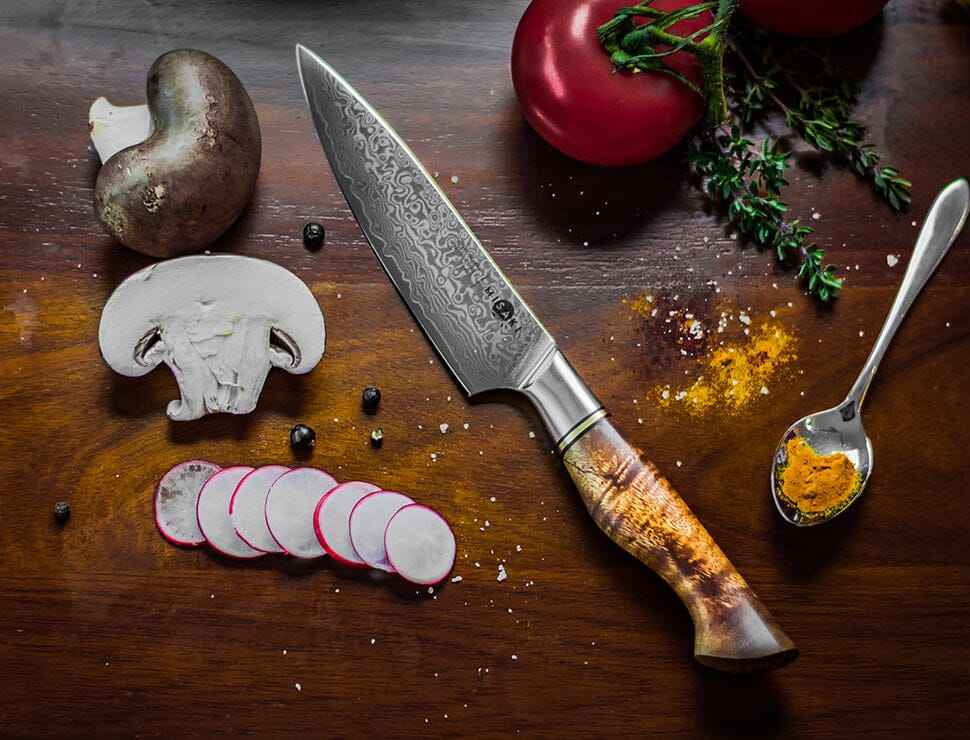
The all-purpose knife is perfect for smaller cutting tasks. It bridges the gap between a chef's knife and a paring knife and is suitable for fruit, vegetables, herbs, and smaller pieces of meat.
Our 5-piece and 2-piece sets are also very popular, and usually include chef's knives, Santoku knives, and all-purpose knives.
An important factor is the hardness of the blade, which, depending on the cutting tool, ranges between 60 and 64 HRC. Generally speaking, the harder the blade, the longer it stays sharp.
An ergonomically shaped handle made of fine natural wood lies comfortably in the hand, is safe, stable and a visual delight.
Buy Damascus knives at MISAKI: Timeless elegance meets master craftsmanship
Whether you're looking for a single knife for precise cuts or an entire set for culinary masterpieces, MISAKI Damascus knives combine unparalleled craftsmanship, enduring value, and a design that delights the senses. Find your new favorite knife now! If you have any questions about our product range, please contact us using the contact form.
FAQ about Damascus knives
How can you recognize a high-quality Damascus knife?
+
+
A high-quality Damascus knife can be recognized by clean workmanship, an even blade shape, a precise grind and a clearly visible Damascus pattern. It is also important that the blade does not merely show a visual Damascus pattern, but is actually built from several layers of steel.
The choice of material also plays a major role. High-quality Damascus knives usually have a hard cutting core that provides sharpness and edge retention. The handle should be cleanly finished, feel comfortable in the hand and allow controlled guidance.
Why are Damascus knives especially sharp?
+
+
Damascus knives can be ground especially sharp because they often have a high-quality, hard cutting core. This allows a fine edge and helps the knife glide cleanly and with control through food.
Sharpness does not depend on Damascus steel alone. Steel quality, hardness, sharpening angle, workmanship and care are also decisive. A good Damascus knife stays sharp for a long time when used correctly and can be resharpened precisely when needed.
At MISAKI, HIKARI and AKANE models range from 60 to 64 HRC, depending on the model. A higher hardness supports long-lasting edge retention, but also requires careful handling. The HRC value alone is not a guarantee of quality. Heat treatment, blade geometry and grind are equally important.
What is the difference between Damascus steel and regular knife steel?
+
+
Damascus steel consists of several bonded steel layers. This creates the typical grain that makes each Damascus knife visually unique. In modern kitchen knives, a hard cutting core often sits inside, while the outer Damascus layers add stability and appearance.
Regular knife steel usually consists of a single type of steel without a visible layered structure. That does not automatically make it poor quality. Steel quality, heat treatment and grind are always decisive. Knives made of Damascus steel combine a distinctive look with high cutting performance and are therefore often valued as premium knives.
Who is a Damascus knife worth it for?
+
+
A Damascus knife is worth it for anyone who cooks regularly and values sharpness, precision and high-quality workmanship. A sharp, well-balanced blade makes a clear difference when cutting vegetables, meat, fish or herbs.
Damascus knives are also special visually. The individual grain makes every knife unique. If you are looking for a durable kitchen knife and are willing to care for it consciously, a Damascus knife is an excellent choice. If you want to buy a high-quality Damascus knife, MISAKI offers a carefully curated selection for every cutting style.
How do you care for a Damascus knife properly?
+
+
A Damascus knife should always be cleaned by hand and carefully dried immediately afterwards. The dishwasher is not suitable, because heat, moisture and aggressive detergents can damage the blade and handle.
For cutting, it is best to use a wooden or plastic board and avoid hard surfaces such as glass, stone or ceramic. After use, the knife should be stored safely, for example in a knife block, on a magnetic strip or in a suitable blade guard. This keeps the edge protected for longer.
Which Damascus knives are available at MISAKI?
+
+
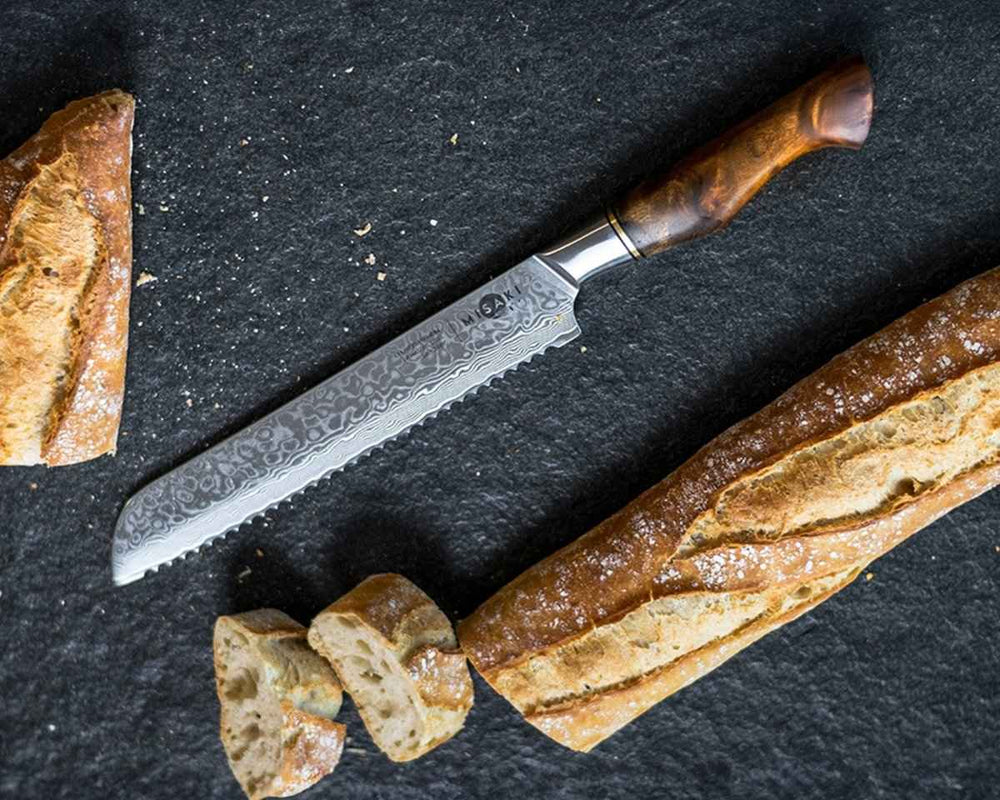
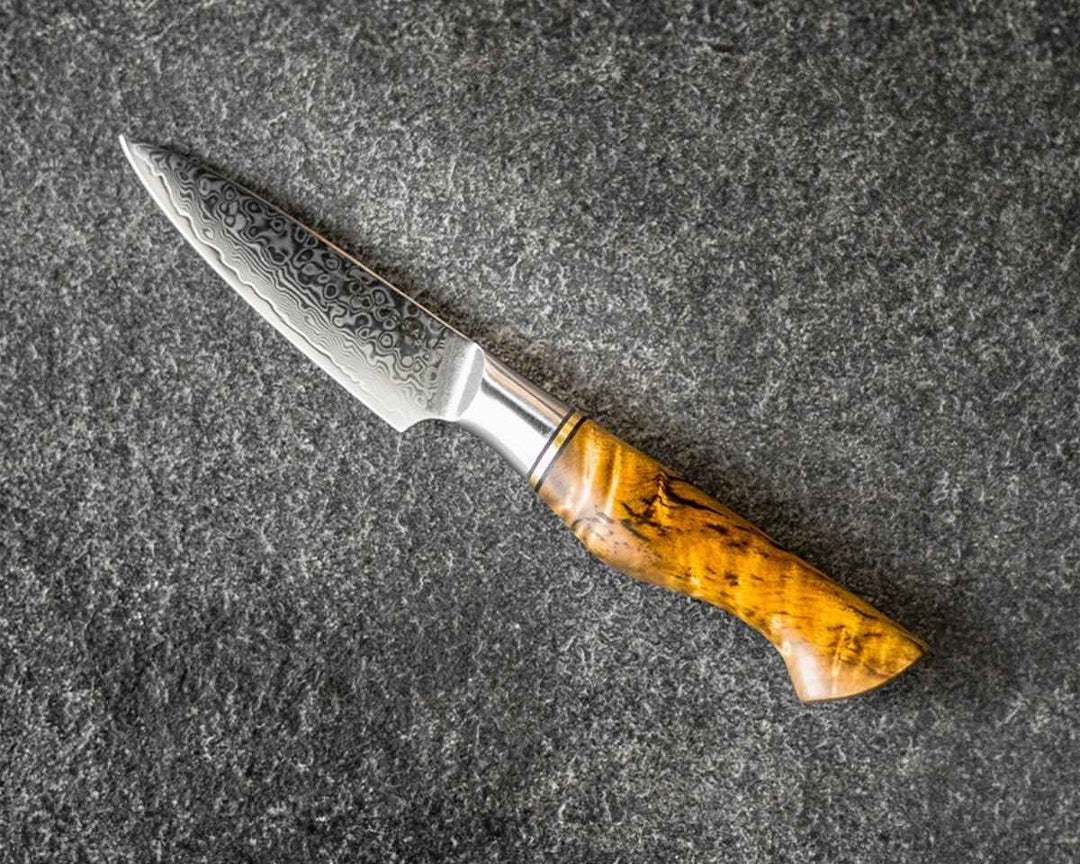
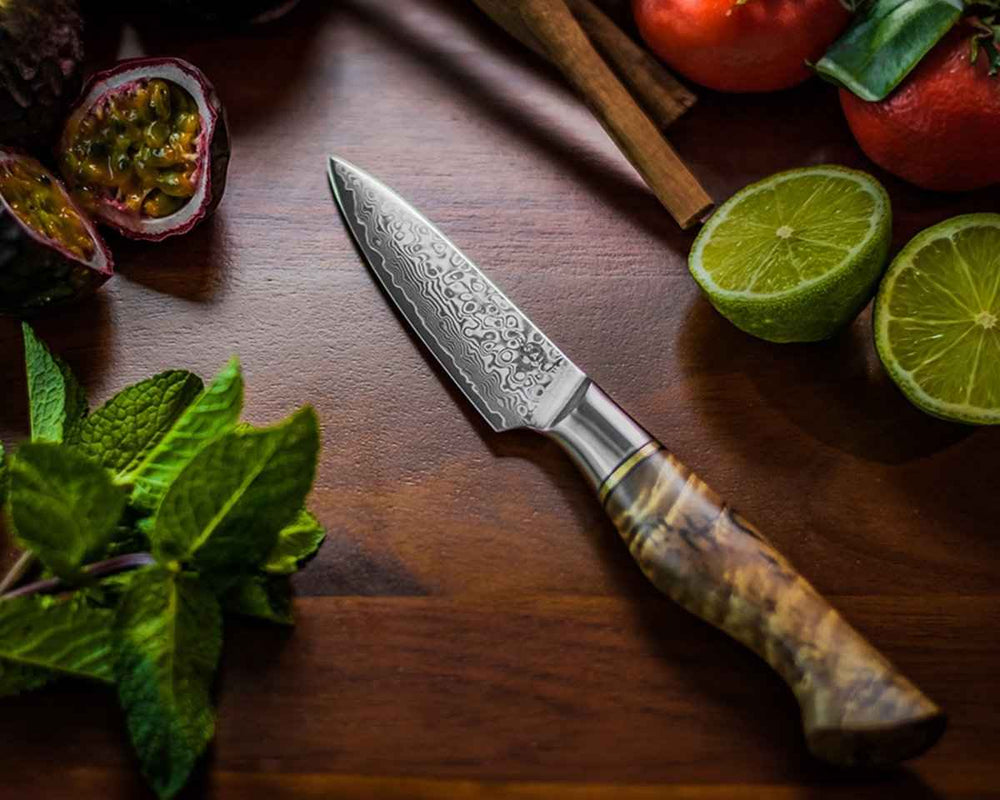
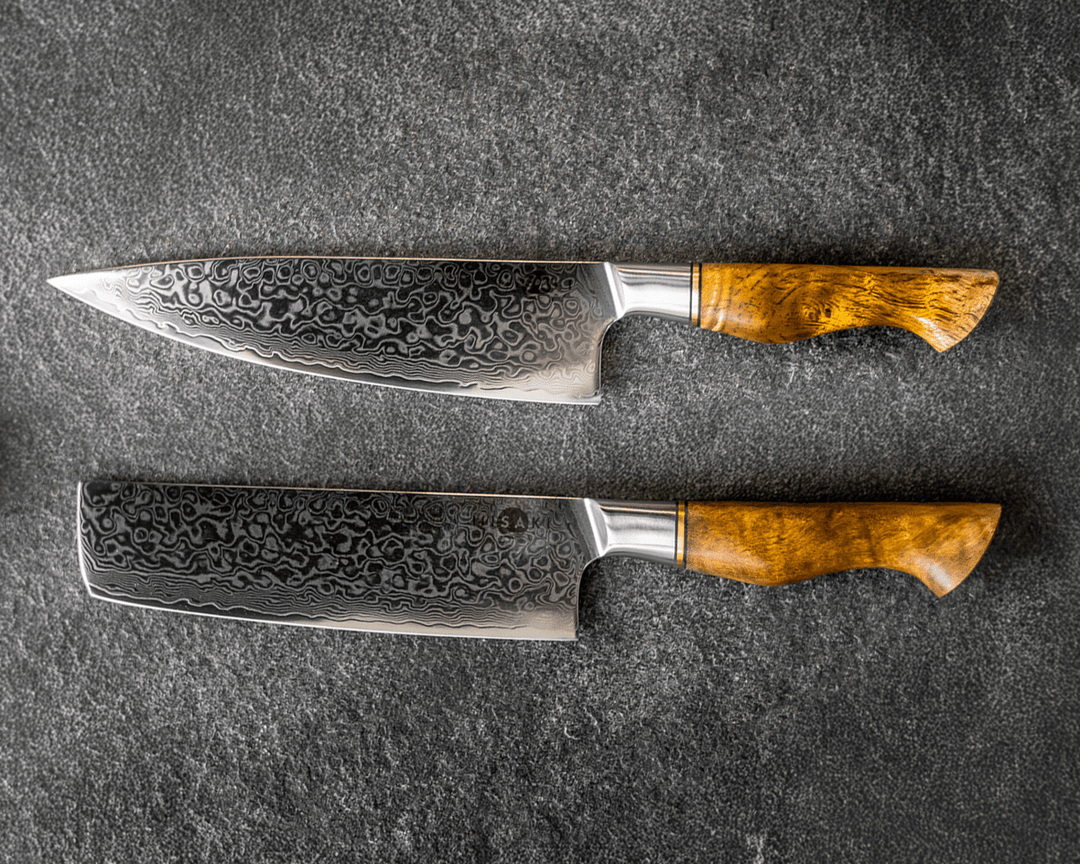
At MISAKI you will find Damascus knives for different cutting tasks. These include chef knives, Santoku knives, utility knives, paring knives, bread knives, Nakiri knives and various knife sets.
The HIKARI line is lighter, approachable and pleasantly controlled in use. It is especially well suited to daily cooking. The AKANE line is designed for maximum sharpness, edge retention and precision. Thanks to its harder powder-steel core, it is especially powerful, but should be guided and cared for consciously.
What are the disadvantages of a Damascus knife?
+
+
Damascus knives offer high performance, but they require mindful handling. The hard, finely ground edge can be sensitive to hard cutting surfaces, bones, frozen foods and lateral pressure. Damascus knives should also be washed by hand and carefully dried immediately afterwards. If you follow these basic rules, you benefit in return from excellent sharpness, precise control and a long service life.
Are more Damascus layers automatically better?
+
+
No. The number of Damascus layers alone does not determine quality or sharpness. The core steel, heat treatment, hardness, blade geometry, grind and workmanship are more important. More layers mainly affect the construction and visible pattern. A carefully made knife with fewer layers can therefore cut better than a knife with many layers but weaker workmanship.


