Damascus steel bread knives for clean cuts
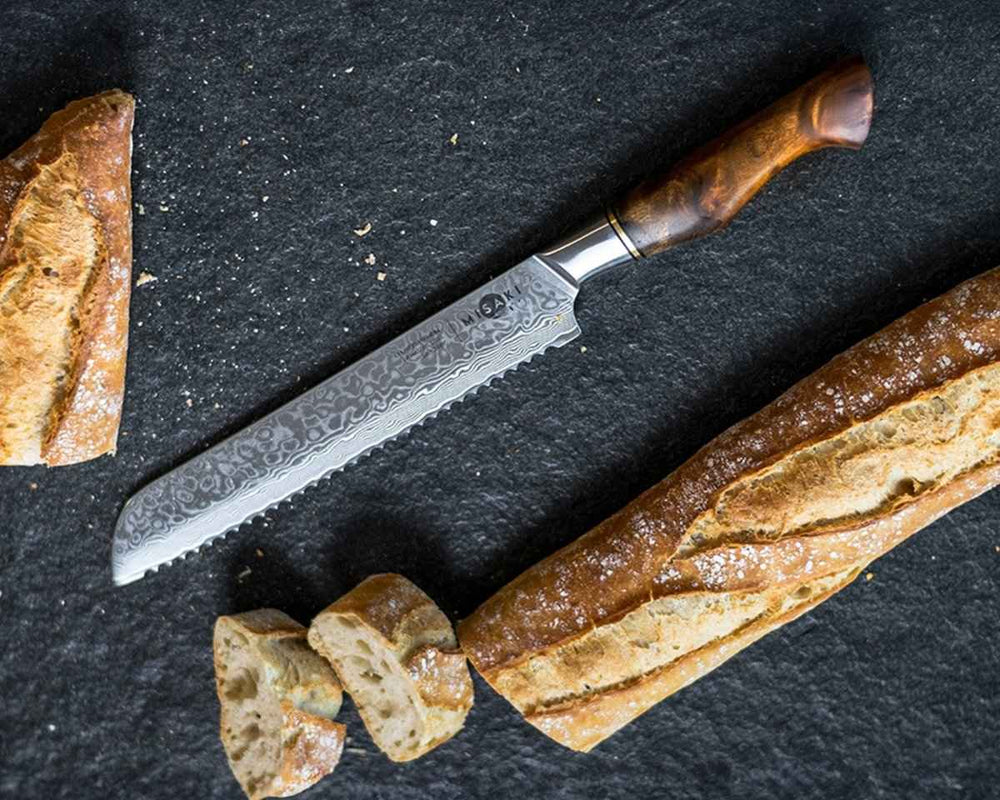
A bread knife cuts crusty bread, baguettes and pastries without crushing the soft crumb. Its long blade is also suitable for large fruit and roasts with a firm crust.
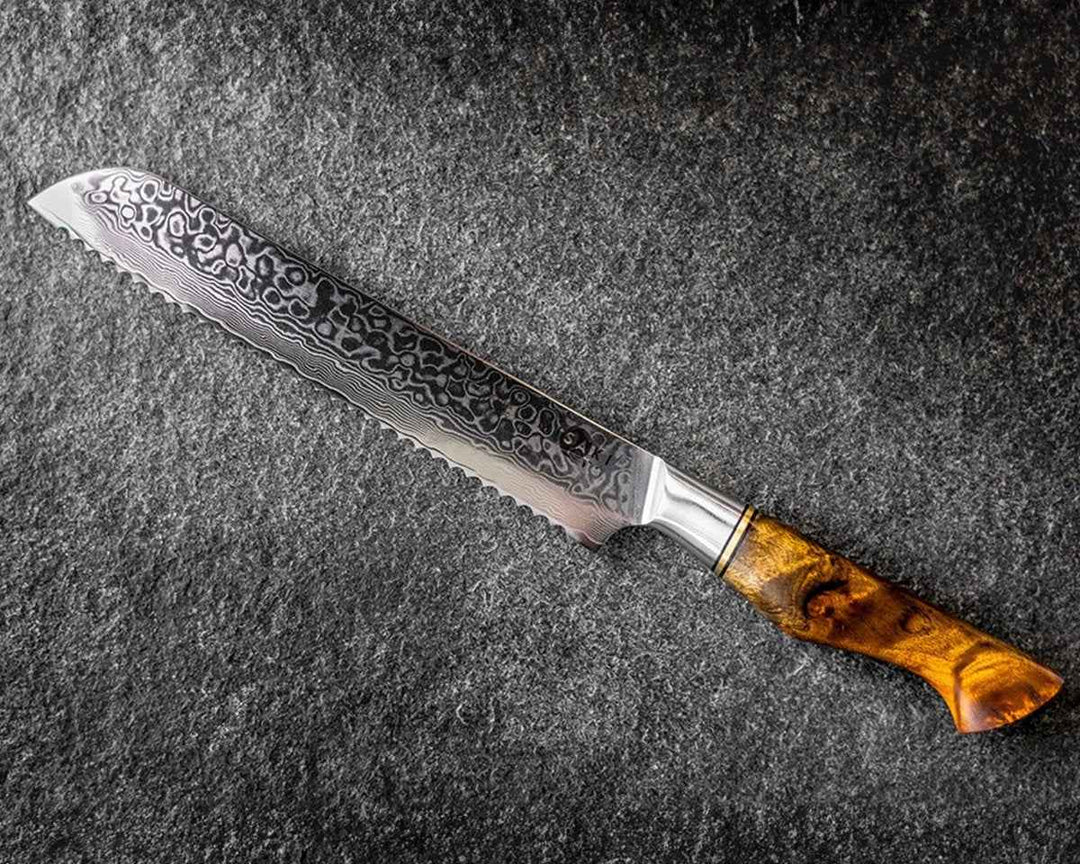
The single-sided 30° serrated edge grips hard surfaces in a controlled manner and guides the blade through the food with little pressure. The even serration produces clean slices and reduces crumbs.
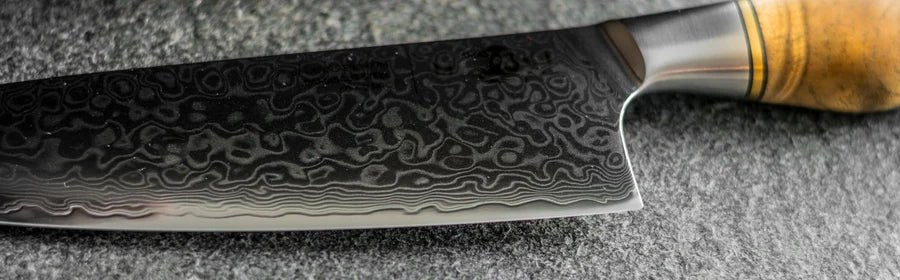
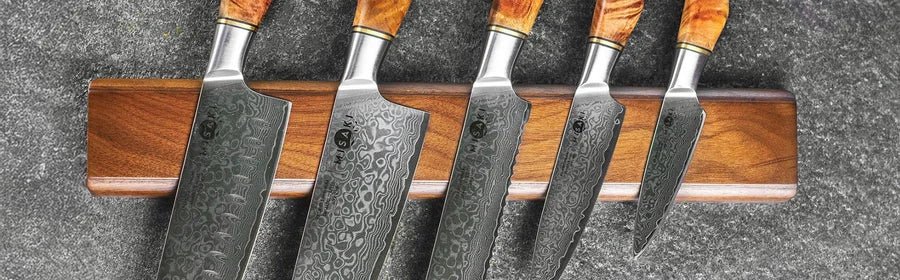
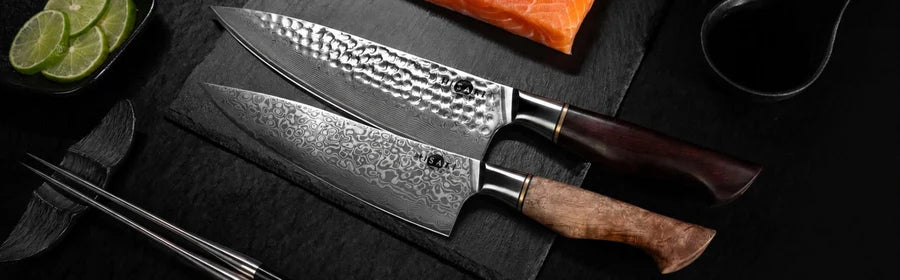
MISAKI bread knives combine Damascus steel with carefully finished wooden handles. They complement a complete selection of kitchen knives with the right knife for bread and pastries.
MISAKI bread knives
The range includes bread knives from the AKANE line and the HIKARI line. The two models differ in their number of Damascus layers, core steel, hardness and handle wood.
- The AKANE bread knife is made from 73 layers of Damascus steel with a 14Cr14MoVNb core. The blade reaches 62 to 64 HRC. The handle is made from dark rosewood.
- The HIKARI bread knife is made from 67 layers of Damascus steel with a 10Cr15CoMoV core. The blade reaches 60 to 62 HRC. The handle is made from light maple.
Both models are part of the selection of MISAKI Damascus knives and are designed for controlled cuts through bread, pastries and foods with a firm skin and soft interior.
How to care for your bread knife
Clean the bread knife by hand after each use with warm water and a mild detergent. Dry it completely afterwards. Do not put the knife in the dishwasher.
Treat the blade and wooden handle regularly with a suitable care oil. MISAKI camellia oil protects the materials and preserves the natural surface of the handle.
Store the bread knife so that the cutting edge does not come into contact with other metal objects. A magnetic knife strip made from walnut wood keeps the knife protected and within easy reach.
FAQ about Bread knife
+
A high-quality bread knife should ideally have a blade length of 20 to 25 centimetres. This length allows precise, even cuts without unnecessary pressure. It ensures balanced handling and also underlines the elegance of the knife.
+
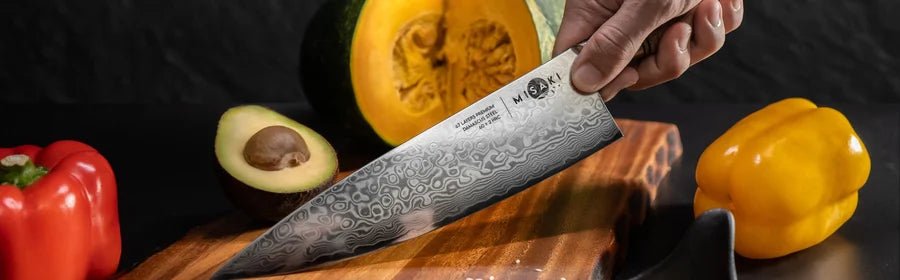
A bread knife is excellent for cutting foods with a firm skin or crust and a soft interior. This mainly includes fruit such as melons and pineapples, where the knife’s blade length comes into play. You can also cut roast with a crust and smaller foods such as tomatoes with a bread knife.
+
A chef’s knife or a Santoku is a versatile kitchen knife and reliably covers many cutting tasks. But when it comes to bread and pastries with a hard crust, a serrated bread knife is irreplaceable. Only the toothed blade glides through the crust in a controlled way while preserving the structure inside. For anyone who regularly slices fresh bread or fine pastries, a high-quality bread knife belongs in the basic kitchen setup.
+
A bread knife is a special knife with a long, serrated blade designed for cutting bread and other baked goods. Its sharp teeth make it easier to cut through crisp crusts and soft interiors.
+
A bread knife is perfect for cutting bread, rolls, baguettes and other baked goods. Thanks to its serrated blade, you can cut through crisp crusts with ease without crushing the soft interior.
+
A bread knife is an essential tool for anyone who enjoys bread. It allows you to slice freshly baked bread and pastries easily and precisely without destroying their structure.
+
With a high-quality bread knife, you can cut bread with ease and precision, making your meals even more enjoyable. It is a must-have for every kitchen that enjoys bread and pastries.
+
A serrated bread knife ensures that hard crusts are gripped and cut cleanly without crushing the soft interior. The toothed blade starts in a controlled way on the surface and guides the cut with less pressure. This keeps bread, baguettes, pastries and foods with a firm skin and soft core neatly in shape.
+
MISAKI bread knives have a single-sided 30° serrated edge. This lets the blade work through hard crusts with particular control. The toothed side opens the crust, while the smooth side guides the knife steadily. The result is straight cuts, less pressure on the bread and significantly fewer crushed slices.
+
The HIKARI bread knife is lighter and especially easy to guide. It is ideal if you are looking for a precise, agile bread knife for everyday use. The AKANE bread knife is stronger and more stable in its design. Its higher weight and more robust blade create more pressure on the cutting edge, which gives additional control with firm crusts. Both Damascus bread knives use a single-sided 30° serrated edge for clean cuts through bread, pastries and hard skins.
+
A Damascus bread knife combines high sharpness, stability and a distinctive appearance. For a bread knife, it is especially important that the blade keeps its edge for a long time and glides reliably through hard crusts even with regular use. MISAKI Damascus blades are designed to cut precisely, create slices that hold their shape and feel high quality in the hand.
+
Yes, a bread knife can be resharpened. Because of the serrated edge, however, this is more demanding than with a smooth blade. Each serration must be followed cleanly so that cutting performance is maintained. For a high-quality bread knife, professional sharpening is usually recommended. If you would like to have your MISAKI bread knife resharpened, please contact us. We will check the condition of the blade and advise you on the right approach.
+
A high-quality bread knife is made for long-term use. Replacement is only necessary when cutting performance noticeably declines, the serration is damaged or the blade can no longer be properly restored even by professional sharpening. With proper care, hand cleaning and suitable cutting surfaces, a good bread knife can remain reliable for many years.