
Sharpening Damascus knives – diamond rod, wet whetstone or leather strop?
Damascus knives are precision tools. To preserve sharpness, cutting feel and the Damascus pattern over the long term, they need the right care and a suitable strategy for sharpening Damascus knives. In this guide, we show you three tools that complement each other perfectly: diamond sharpening steel, whetstone 1000/6000 and leather strop. For each tool, you will find a detailed guide to the diamond sharpening steel, a guide to the whetstone and a guide to the leather strop with images. You will also learn when professional sharpening is the best solution.
Why Damascus knives need special care
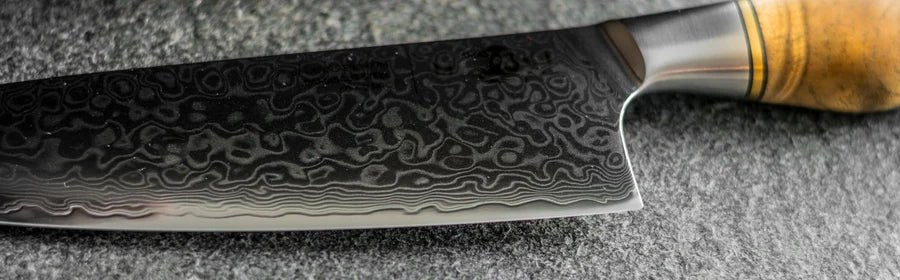
Damascus steel consists of multiple layers of harder and softer steel, forged into an extremely durable, sharp and flexible blade. This combination makes Damascus knives popular tools in refined kitchens. But even the hardest blade loses sharpness over time: microchips, fine burrs or dull cutting edges are unavoidable with regular use. That is why it is important to sharpen knives in good time, otherwise cutting performance suffers and the edge is put under unnecessary strain.
The right process for sharpening Damascus knives
Different tools are used depending on the condition of the blade. There is no rigid sequence, but a sensible combination of refreshing, basic sharpening and finishing.
- Leather strop for regular everyday edge care and as a finish after the whetstone, to remove the final burr and refine the edge as much as possible. Guide with images
- Diamond sharpening steel for quick touch-ups in between, when the bite noticeably decreases. Guide with images
- Whetstone 1000/6000 for thorough basic sharpening and fine sharpening when the knife is clearly dull or the edge needs to be rebuilt. Guide with images
In practice, this means: in everyday use, you keep the sharpness stable with the leather strop. If that is no longer enough, the diamond sharpening steel provides quick sharpness. And when the edge is truly tired, the whetstone restores the geometry cleanly. Afterwards, the leather strop creates the clean finish.
1. Diamond sharpening steel: quick touch-ups for hard blades
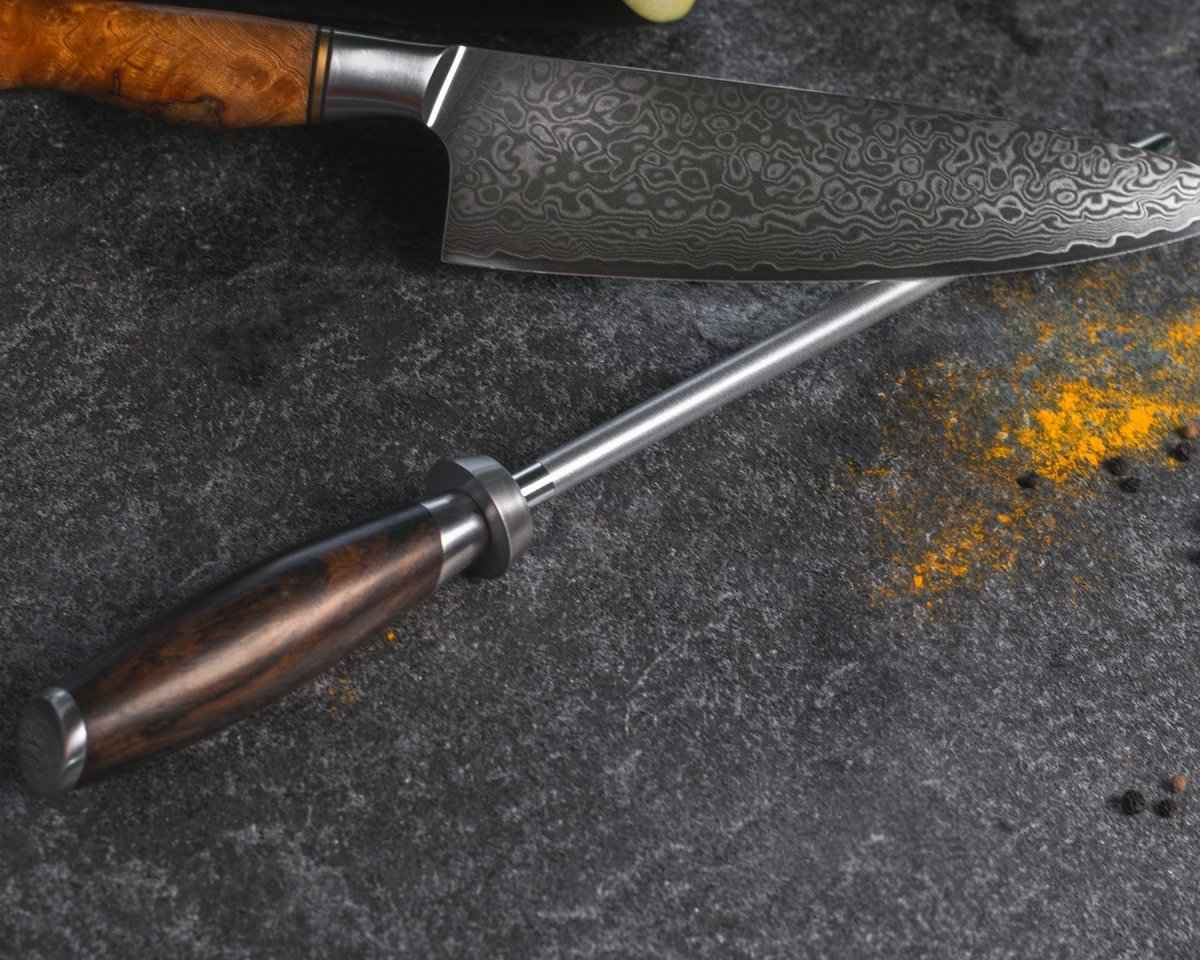
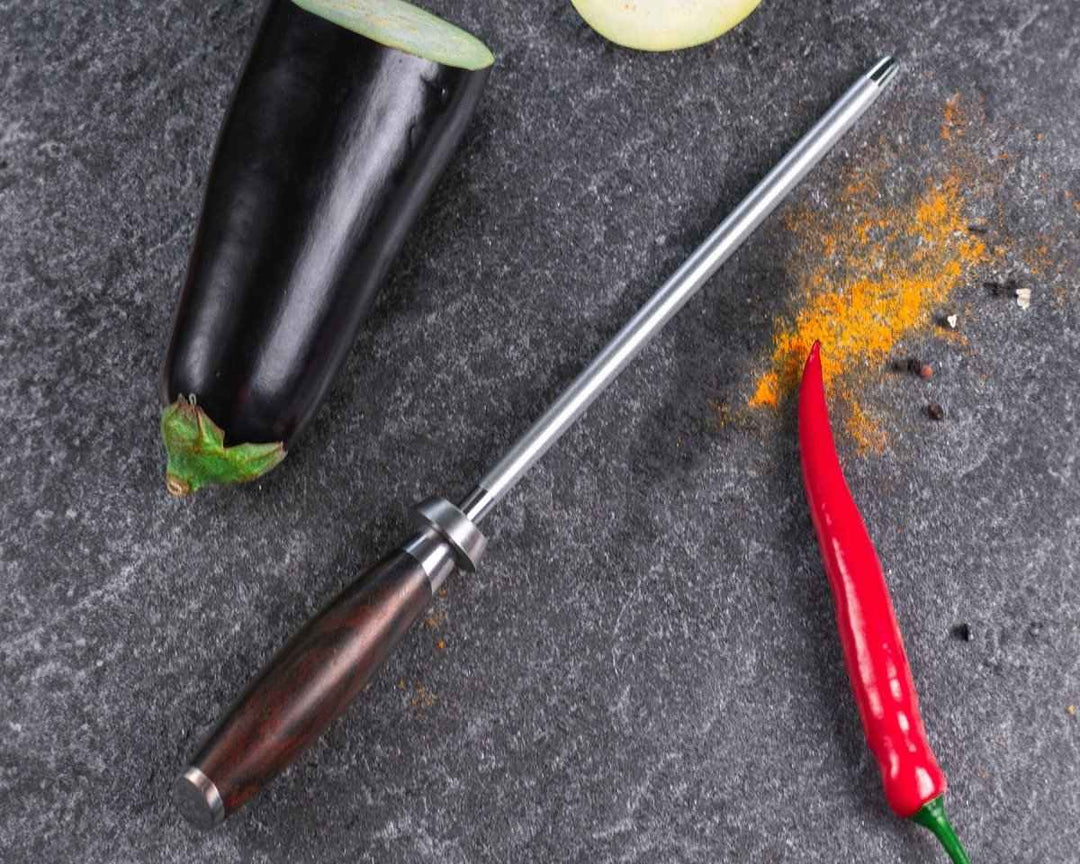
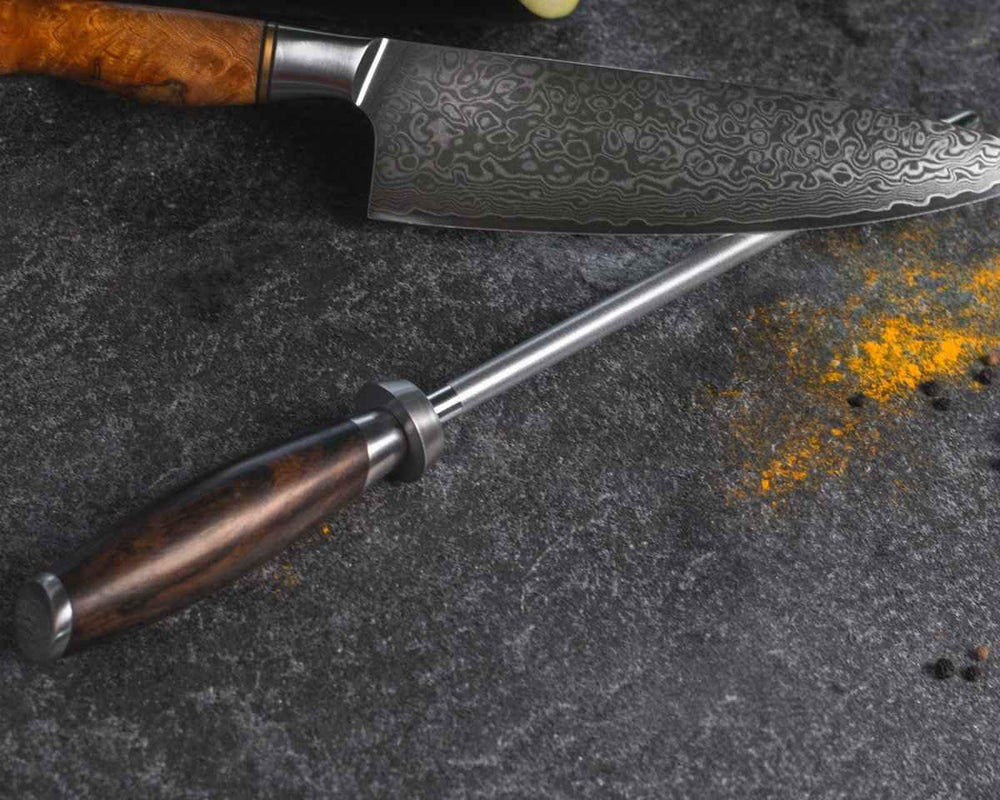
The MISAKI diamond sharpening steel is the fastest way to refresh a Damascus knife in between. Unlike traditional honing steels, which only realign the edge, the diamond steel actually removes material. This means even hard Damascus blades can be resharpened effectively.
Application
- Place the knife at a 15° angle.
- Use light pressure for 2 to 3 strokes per side.
- Repeat until sharpness returns.
When to use it?
- When the blade loses sharpness but is not yet dull.
- For quick corrections between main sharpening sessions.
- Ideal for hard steels where classic honing steels have little effect.
Limits
A diamond sharpening steel does not replace a whetstone. It is not enough for very dull knives. Use it with care because it removes material.
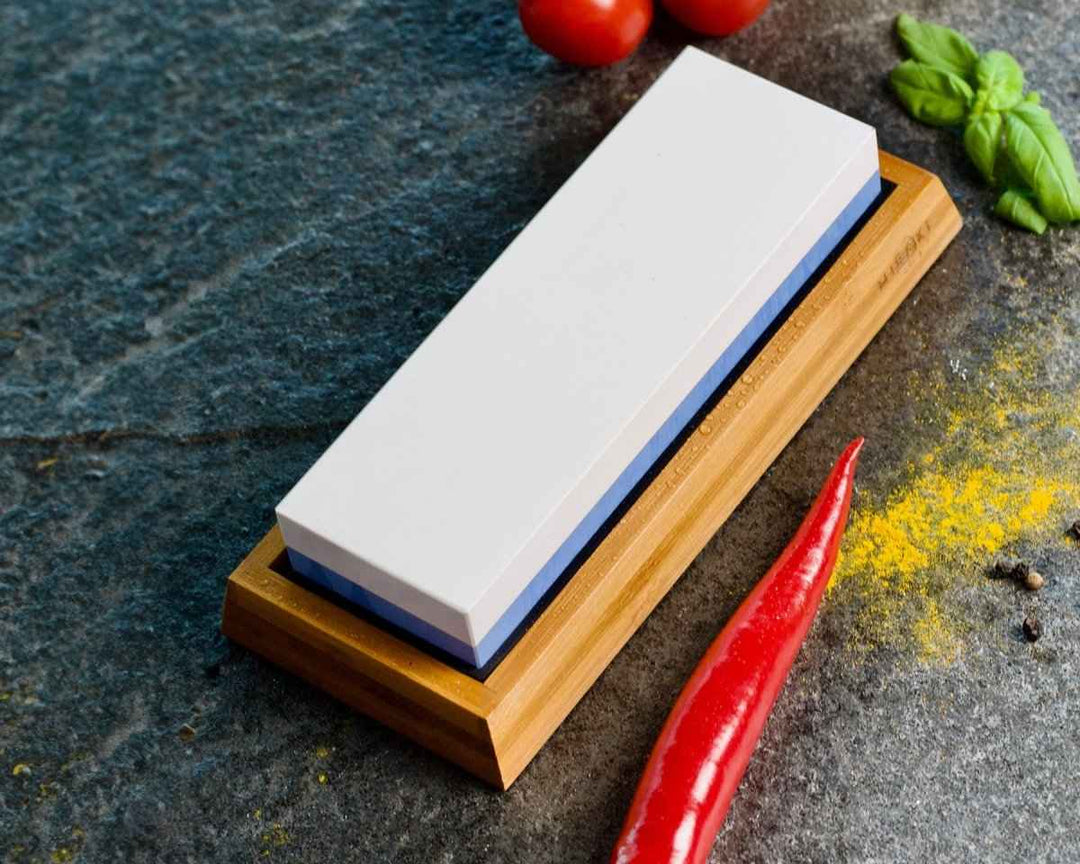
2. Whetstone set 1000/6000: thorough sharpening for precise basic sharpness
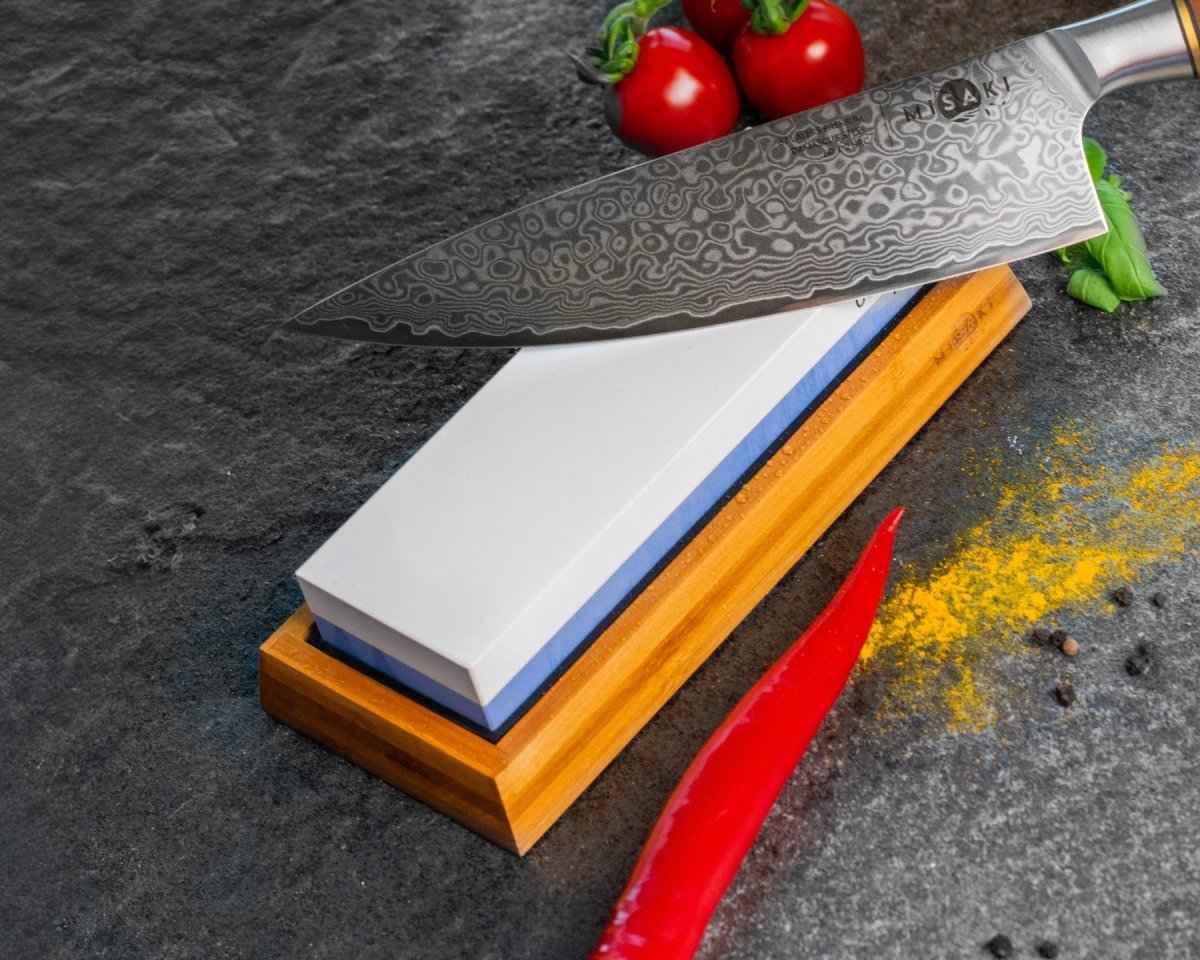
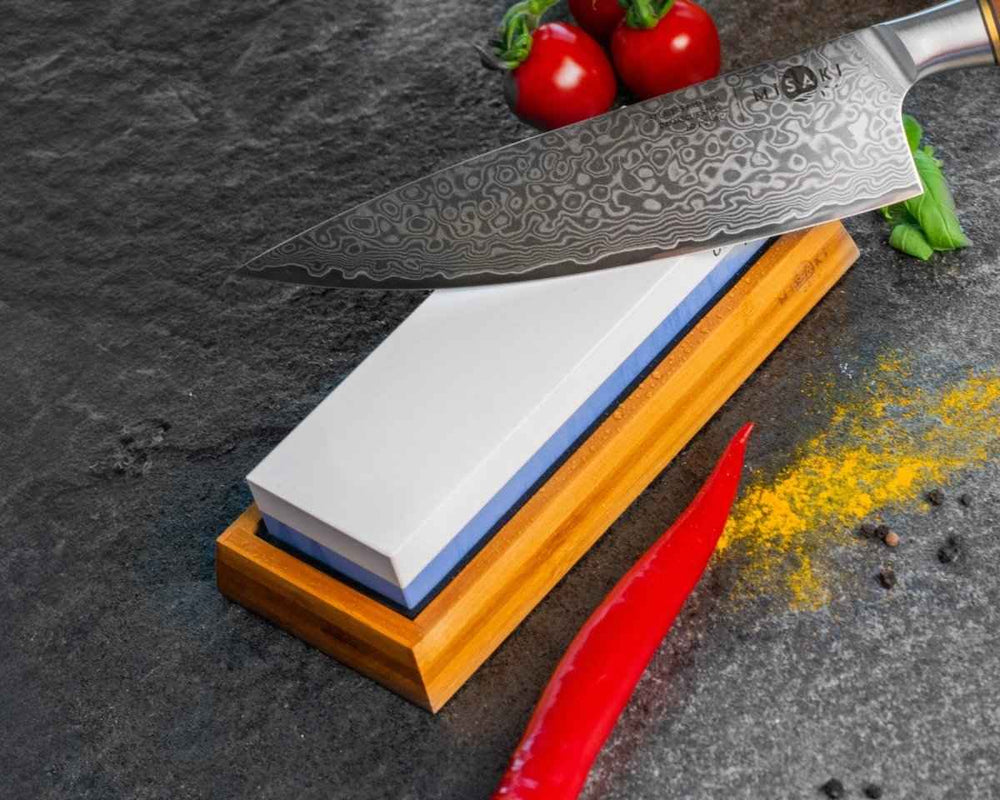
If a knife is clearly dull, there is no way around the MISAKI whetstone set. With its two grits, it is perfect for the complete sharpening process.
- 1000 grit: For shaping and sharpening heavily used or dull blades.
- 6000 grit: For fine sharpening and a smooth, precise cutting edge.
Application step by step
- Soak the stone in water for about 10 to 15 minutes before use.
- Place the knife at a 15° angle and draw even strokes along the full length of the blade.
- Start with the 1000 side until even sharpness is achieved.
- Refine the edge with the 6000 side.
- Clean the stone after use and keep it flat.
Avoid typical mistakes
- Too much pressure, this can damage the cutting edge.
- Inconsistent angles, this leads to uneven sharpening.
- Not keeping the stone flat, this worsens the result.
3. Leather strop: regular edge care and a clean finish

The MISAKI leather strop is your tool for regular everyday edge care and the perfect finish after the whetstone. It removes the finest burrs, smooths the edge and creates an especially clean cutting feel. The leather strop is double-sided and combines two applications in one tool.
The two sides in detail
- Green side: pre-loaded with polishing compound. Ideal after the whetstone to remove fine burrs and visibly refine the edge.
- Smooth side: for final stropping and polishing without additional paste. Result: a very fine finish and an especially clean, eager-cutting blade.
Application step by step
-
Place the knife at an angle of about 15°.
Make sure to keep the angle constant so the edge does not become rounded. -
Pull the blade over the leather away from the cutting edge.
This prevents the edge from cutting into the leather. -
Use the green side first (10 to 15 strokes per side).
Then clean the blade with a microfiber cloth to remove residue. -
Then use the smooth side (10 to 15 strokes per side).
This side provides the final finish and maximum smoothness at the edge. -
Finally, clean the blade again with the microfiber cloth.
This removes the last residue and the edge is ready for use immediately.
Why the leather strop is so important
Even if a knife is already sharp after the whetstone, a fine burr often remains. This burr can fold over during cutting and noticeably reduce sharpness. The leather strop removes this burr, smooths the edge and significantly extends edge life.
Limits
The leather strop does not replace basic sharpening on the stone. It is ideal for regular edge care and as a finish after the whetstone when the blade already has good basic sharpness.
Comparison: which tool for which purpose?
| Tool | When to use it? | Advantages | Limits |
|---|---|---|---|
| Diamond sharpening steel | Quick touch-ups in between | Fast, effective, also for hard blades | No replacement for the stone when knives are clearly dull |
| Whetstone 1000/6000 | When knives are dull or basic sharpening is needed | Very precise, controllable, clean rebuilding of the edge | Requires practice and time |
| Leather strop | Regular edge care and finish after the stone | Removes fine burrs, refines the edge, very clean finish | No basic sharpening, does not rebuild a dull edge |
The MISAKI sharpening service
Not everyone wants to sharpen their Damascus knives themselves. That is exactly why the MISAKI sharpening service exists. Our experts treat your knives professionally and make sure your blades cut precisely again. Ideal if you want to place your knives in professional hands.
Conclusion: the perfect trio for permanently sharp Damascus knives
- Diamond sharpening steel for quick touch-ups in between. Guide with images
- Whetstone 1000/6000 for basic sharpening and fine sharpening. Guide with images
- Leather strop for regular edge care and as a finish after the stone. Guide with images
If you prefer to place your blades in professional hands, the MISAKI sharpening service is the safe choice. Discover our sharpening products and care products for perfect results in knife care.