MISAKI chef's knives: precision, passion and Japanese cutting craft
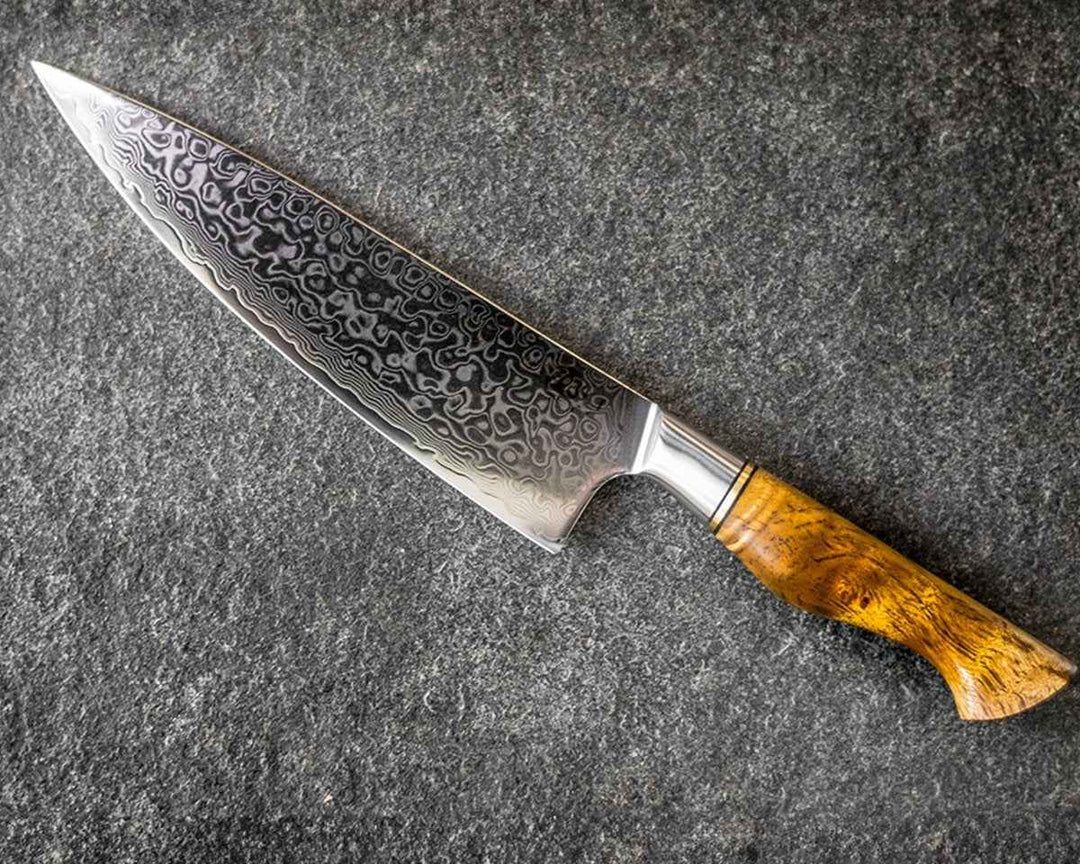
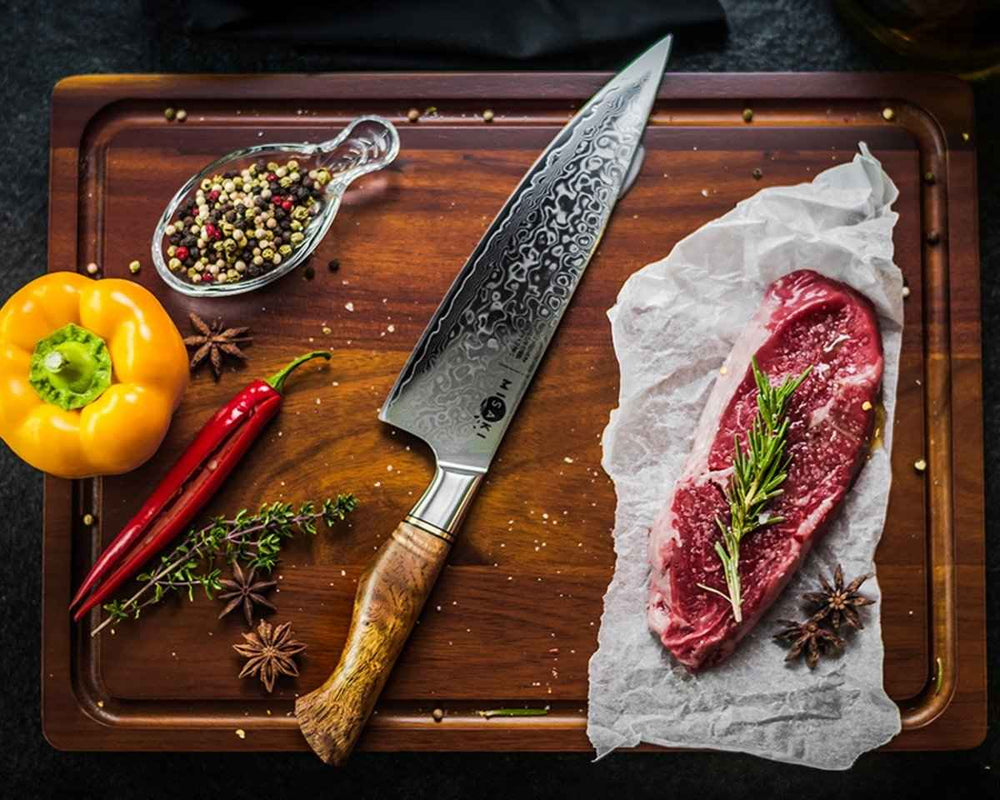
In this category you will find high-quality chef's knives, also known as cook's knives, developed for precise and powerful work in the kitchen. A chef's knife is the central tool for vegetables, meat, fish and herbs. Its broad blade, balanced shape and fine edge make it suitable for fast chopping, controlled slicing and clean cutting.
A good chef's knife should feel secure in the hand, remain stable in demanding tasks and still allow fine, accurate work. MISAKI chef's knives combine carefully selected steels, balanced blade geometry and refined handles so that the knife supports fluid movement instead of forcing it.
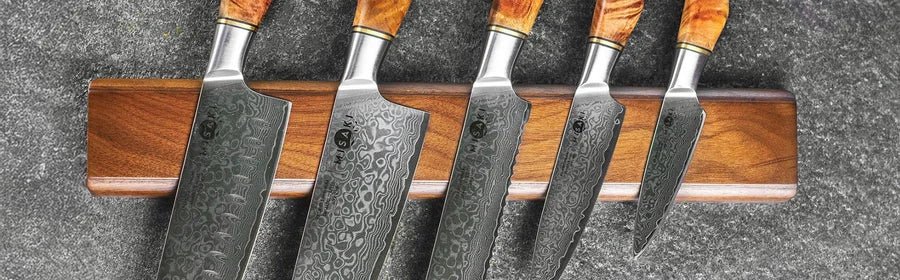
For many kitchens, the chef's knife is the first essential blade. In combination with a utility knife, it covers most daily cutting tasks. If you cook regularly and want more flexibility, our 5-piece knife sets add further specialist blades for bread, fine prep work and Japanese cutting techniques.
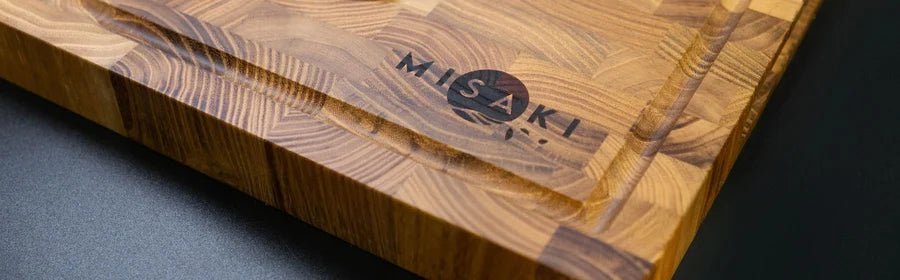
To preserve sharpness and protect the edge, we recommend cutting on wooden cutting boards and caring for the blade with suitable tools for edge maintenance. A knife block or magnetic strip keeps your chef's knife safely stored and ready to use.
Whether you cook every day or prepare ambitious menus, a MISAKI chef's knife gives you a reliable foundation for precise, enjoyable work in the kitchen.
Choose the line that best suits the way you cook. Hikari feels light, agile and balanced for everyday preparation. Akane has a stronger presence and is made for cooks who enjoy decisive, powerful cuts. Both lines focus on long-lasting sharpness, reliable control and the calm beauty of natural wood handles. This makes the chef's knife not only a practical tool, but the centrepiece of a thoughtful knife selection.
Care for your chef's knife properly so precision and sharpness are preserved
Clean your chef's knife directly after each use under warm water and dry it completely. A high-quality knife should never go in the dishwasher, as heat, detergent and impact can damage both the edge and the handle.
Always use cutting surfaces made from wood or plastic to protect the fine cutting edge. An occasionally oiled wooden handle stays smooth for longer and keeps its natural structure.
For edge maintenance, a diamond sharpening rod is ideal for quick daily touch-ups. For full basic sharpening, use whetstones and finish the edge with a leather strop for a particularly fine result.
Store the knife protected, for example in a knife block, on a magnetic strip or in a knife bag, so the edge does not come into contact with hard objects.