




Knife sharpening for maximum enjoyment in the kitchen
A sharp knife is the basis for clean cuts, controlled movements and joy in cooking. If you want to buy sharp knives, you should also think about the right care. Even high-quality kitchen knives only keep their sharpness over the long term when knife sharpening and regular maintenance are part of the kitchen routine.
In our knife sharpening category, you will find high-quality sharpening tools developed for lasting sharpness and maximum precision. Each sharpener has its own purpose. Together, they create a complete care routine, from quick edge refreshing to fine polishing of your knife edge.

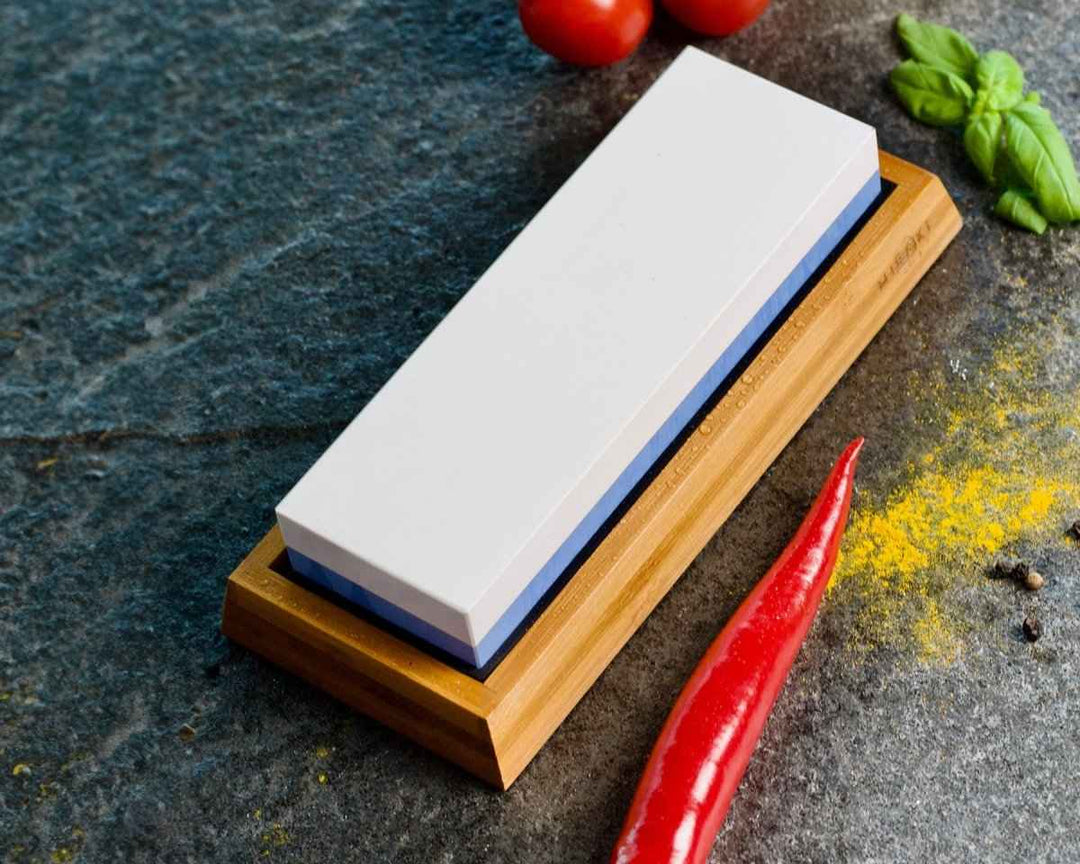
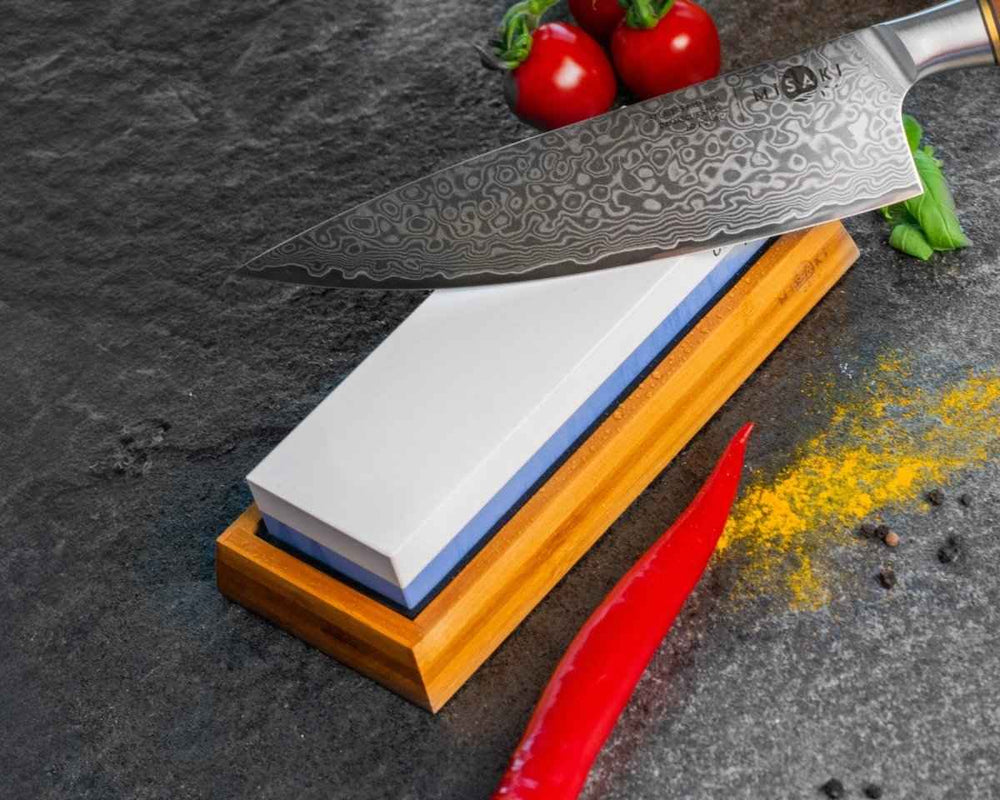
The 1000/6000 whetstone is the core of a thorough sharpening routine. The medium 1000 grit restores a dull edge and removes small chips. The fine 6000 grit then creates a polished micro-bevel that noticeably improves the cutting feel and keeps the knife sharp for longer. The stone is ideal for all high-quality kitchen knives made from stainless steel or Damascus steel.
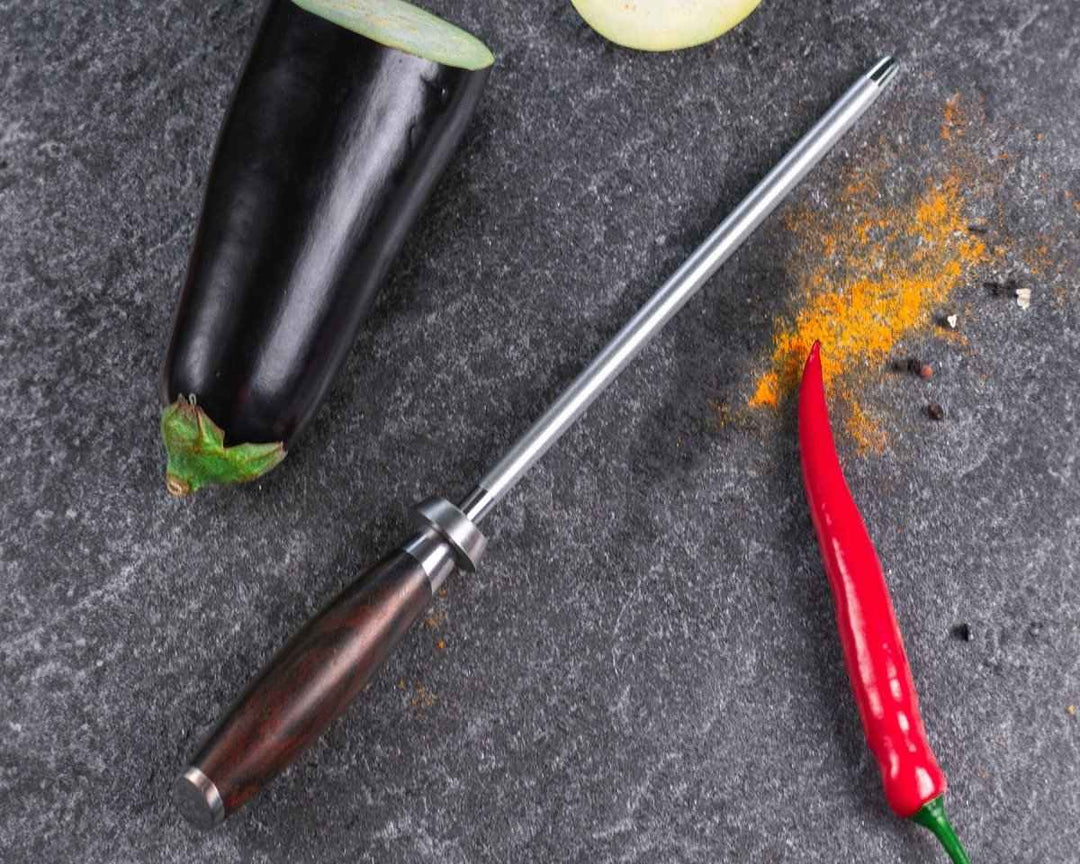
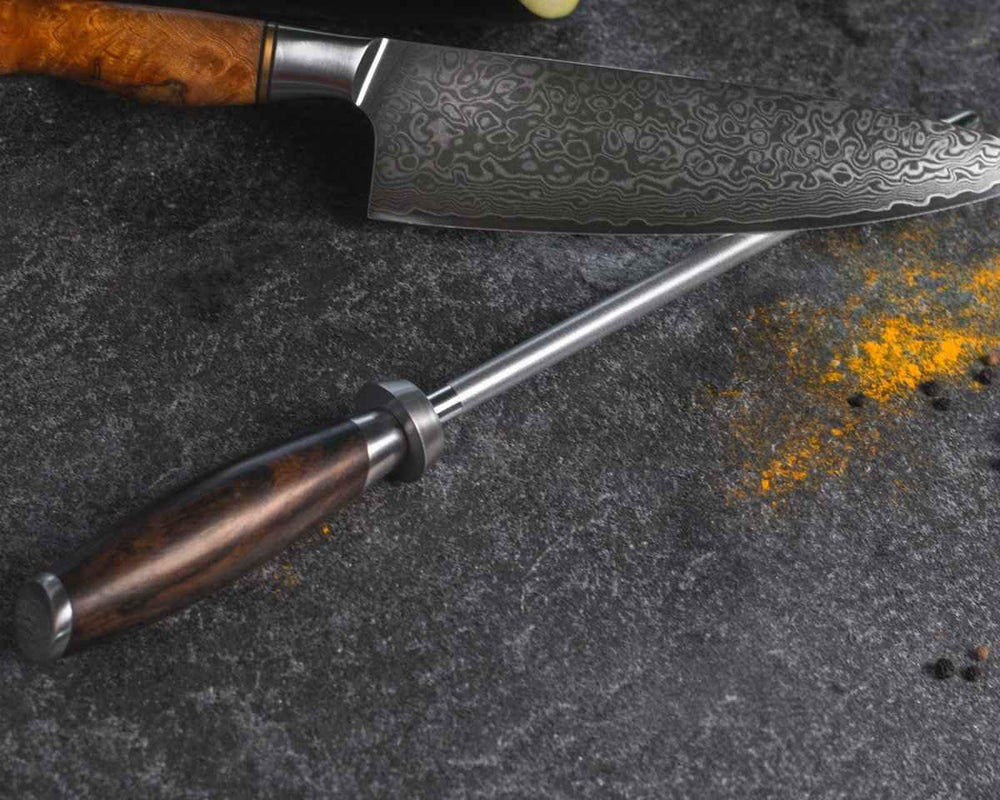
The diamond sharpening steel is a tool for quickly refreshing sharpness in everyday use. With a few even strokes, you realign the micro-edge and restore basic sharpness in seconds. Diamond-coated steels are especially efficient and are excellent for hard steels such as those used in premium Damascus knives. They do not replace a full sharpening process, but they extend the interval between whetstone sessions.
The leather strop completes every professional sharpening routine. It removes the finest burr residues that can remain even after using a whetstone and gives the edge a smooth, precise finish. The cutting edge becomes more even, smoother and more durable. Regular use of the leather gives the best possible cutting feel and maximizes edge life.
Together, these three tools form a system that keeps your knives sharp, reliable and powerful for a long time. Whether you cook at home or professionally, a high-quality knife sharpener is an investment you will notice every day.
The right sharpening routine: knife care from the ground up
Store your whetstone dry and soak it for about 10 minutes before sharpening, until no more air bubbles rise. Use the entire surface evenly to prevent hollows. Clean the stone after each use and let it dry completely. To maintain long-term flatness, a flattening stone can be used.
Wipe the diamond sharpening steel after each use with a slightly damp cloth. Avoid aggressive cleaners. Store the steel so that its surface does not hit hard metal edges.
The leather strop should remain dry and clean. The green side already has enough paste applied so you can use it straight away. If this layer wears down after extended use, you can refresh it with a fine green stropping paste. Nothing needs to be applied to the beige side. Always draw the knife over the leather with the edge facing backwards and without pressure.
FAQ about Knife sharpening
What is the difference between honing and sharpening a knife?
+
+
Knife sharpening is the general term for making a dull blade capable of cutting again. Sharpening with material removal usually means rebuilding or refining the edge, for example with a whetstone. A diamond sharpening steel is better suited to quickly refreshing the edge between full sharpening sessions. A whetstone is useful when the blade has clearly lost sharpness or when the cutting edge needs to be rebuilt cleanly.
How often should knives be sharpened?
+
+
How often a knife should be sharpened depends on use, cutting surface and care. With normal use, a high-quality kitchen knife does not need constant full sharpening. It is often enough to maintain the edge regularly with a leather strop or diamond sharpening steel. A thorough sharpening with a whetstone only becomes necessary when the knife no longer glides cleanly through food despite refreshing. For targeted use of a water stone, we recommend the whetstone set.
What is best for sharpening knives?
+
+
For thorough and controlled sharpening, a whetstone is especially suitable. It restores the edge and refines it with a fine finish. A diamond sharpening steel is ideal for quickly refreshing sharpness between full sharpening sessions. A leather strop refines the edge and removes the finest burrs. For serrated knives such as bread knives, a professional service is usually recommended. Here you can learn how to use the whetstone correctly, including grit and technique.
Can you sharpen Damascus knives yourself?
+
+
Yes, Damascus knives can be sharpened yourself. When sharpening a Damascus knife, a constant angle and the right tool are especially important. A high-quality whetstone is particularly suitable. Work with little pressure and guide the blade evenly over the stone. If you are unsure or would like to have a particularly high-quality knife sharpened, you can use a professional sharpening service.
Which sharpening angle is optimal when sharpening knives?
+
+
MISAKI knives with a Japanese V-edge are designed for 15° per side. This fine sharpening angle creates a very sharp and precise edge. When resharpening, it is important to keep the angle as constant as possible. An angle that is too shallow or too steep can make the edge uneven. Here you can learn how to keep the angle safely while sharpening.
Can incorrect sharpening damage the blade?
+
+
Yes, incorrect knife sharpening can damage the blade. Too much pressure, an uneven angle or an unsuitable sharpening tool can thin, deform or dull the edge. Hard, coarse sharpening methods are also unsuitable for high-quality Damascus knives. Work with control, the right tool and without rushing. If in doubt, a professional sharpening service is the safer choice.
When should you sharpen a knife fully rather than just refresh the edge?
+
+
A knife should be fully sharpened when a simple edge refresh is no longer enough. You will notice this when the blade pushes food rather than cutting it, or when it no longer has a clean bite despite a diamond sharpening steel and leather strop. Then the cutting edge needs to be rebuilt. A whetstone or a professional sharpening service is suitable for this base sharpening.
How do you care for the blade properly after sharpening?
+
+
After sharpening, the blade should be thoroughly cleaned, carefully dried and, if needed, finely finished with a leather strop. Remove all sharpening residue before using the knife again. Then store the knife protected, for example in a knife block, on a magnetic strip or with a blade guard. This keeps the freshly sharpened edge intact for longer. Here you can learn how to clean and store the whetstone correctly after use.
What do you need to keep a knife sharp for a long time?
+
+
To keep a knife sharp for a long time, the right care is essential. A whetstone restores the edge, a diamond sharpening steel refreshes it quickly and a leather strop removes fine burrs after sharpening. This keeps the blade precise for longer and means it needs intensive resharpening less often.
Why is a sharp knife safer than a dull one?
+
+
A sharp knife glides through food with more control and requires less pressure. This makes the blade less likely to slip and allows more precise cuts. A dull knife may seem less dangerous in everyday use, but it is harder to control and can therefore be less safe.


