

Nakiri knives: cutting vegetables with maximum precision
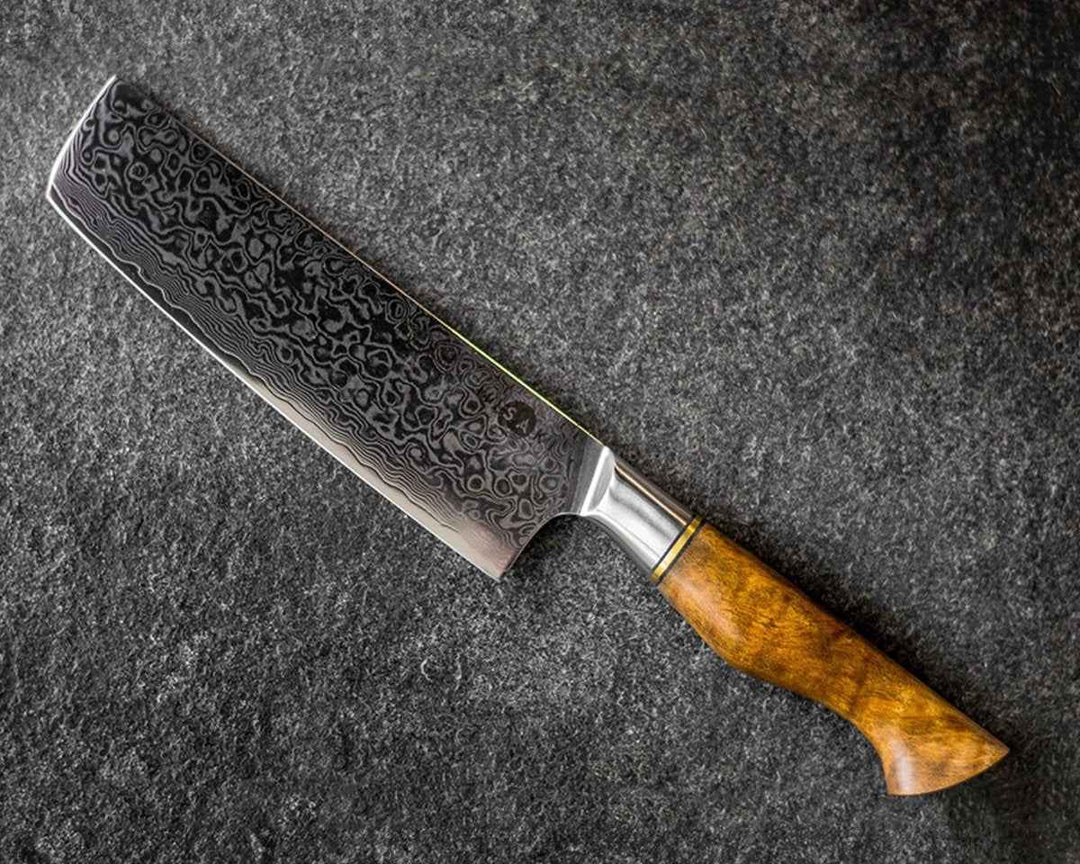
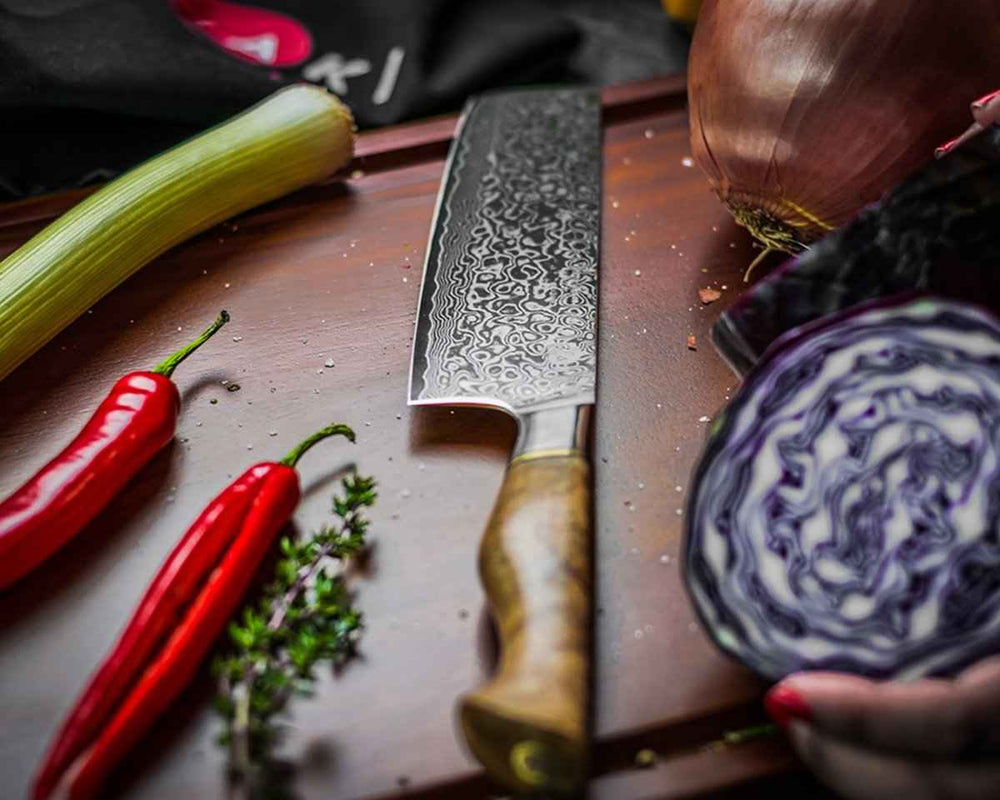
The MISAKI Nakiri knife combines Japanese tradition with modern design. Its wide, straight blade made from 67 layers of Damascus steel glides effortlessly through vegetables and herbs and enables clean, even cuts, ideal for raw vegetables, cubes and fine strips. Handcrafted with an elegant maple handle, it offers perfect balance and excellent comfort.
A Japanese Nakiri knife is not only a cutting tool. It is a statement of culinary precision and aesthetics. Whether for your own kitchen or as a gift, discover the quality and elegant design of MISAKI knives.
The elegant Nakiri knife from MISAKI
The Japanese word “nakiri” can be translated as “leaf cutter”. The Nakiri knife is designed for cutting vegetables, raw produce and herbs.
Our Nakiri knife is available exclusively in the HIKARI line. Like all knives in this line, its blade is made from 67 layers of Damascus steel with a hardness of 60 to 62 HRC. This allows clean cuts. The handy handle is made from amber-coloured maple.
In addition to the single knife, the Nakiri is also part of selected sets, for example as a duo with a Santoku or in combination with a chef knife, the perfect addition for versatile cutting tasks.
Each of our Damascus knives is unique because it is crafted with masterful handwork. This can be seen in the individual grain of the blade, typical of Damascus knives. On request, we can add an engraving to your Nakiri knife and turn it into a personal work of art.
How do you care for a Nakiri knife properly?
Proper care of a Nakiri knife preserves its sharpness, beauty and longevity. After each use, clean the blade carefully by hand with warm water and mild dish soap. Aggressive detergents and the dishwasher are taboo. Then dry it thoroughly to avoid rust spots.
To keep your Nakiri knife permanently sharp, a graduated care routine is recommended. For everyday use, it is enough to refresh the edge regularly with a diamond sharpening steel, which quickly balances out slight dulling. When the knife has become noticeably duller, use a whetstone (1000/6000 grit). The coarse side restores basic sharpness, while the fine side refines the edge. For the perfect fine finish, then draw the blade over a leather strop, which removes remaining burrs and polishes the edge.
Treatments with our camellia oil reliably protect the blade from corrosion and preserve the elegant grain of the Damascus steel. Store your knife safely in a knife block, on a magnetic holder or in a matching sheath so that the blade is not damaged. This keeps your MISAKI Nakiri knife a precise and elegant tool for vegetable-focused cooking.
FAQ about Nakiri knives
Is a Nakiri knife suitable for everyday use?
+
+
Yes, a Nakiri knife is very well suited to everyday use if you often cut vegetables, herbs or fruit. The wide, straight blade enables clean, vertical cuts and gives plenty of control on the cutting board. The Japanese vegetable knife shows its strengths especially with vegetable cubes, fine strips and even slices.
Which cutting technique is best for a Nakiri knife?
+
+
A Nakiri knife is best guided with straight, controlled up-and-down movements. Unlike a strongly curved chef knife, the rocking motion is not the focus here. The straight edge meets the cutting board evenly and cuts vegetables cleanly without crushing them. This creates precise cuts with little effort.
Is a Nakiri knife suitable for beginners?
+
+
Yes, a Nakiri knife can also be suitable for beginners. The wide blade offers good guidance, and the straight edge makes controlled cuts easy to understand. It is important to work calmly and not use the knife for hard foods, bones or frozen items. For vegetables and herbs, it is a very pleasant knife for learning and working.
How does a Nakiri knife made from Damascus steel differ from other versions?
+
+
A Japanese Nakiri knife made from Damascus steel combines high sharpness, good edge retention and a distinctive look. The individual Damascus grain makes every knife unique. Compared with a standard Nakiri, a Damascus Nakiri offers a finer edge and longer edge retention. Ideal for precise, even vegetable cuts in everyday use.
What is the best way to store a Nakiri knife?
+
+
A Nakiri knife should be stored so that the edge does not come into contact with other knives or hard objects. Suitable options include a knife block, a magnetic strip or a matching blade guard. Storing it loosely in a drawer is not recommended, as the edge can be damaged or become dull more quickly. This keeps the edge protected and the Nakiri knife ready for use over the long term.
How often should a Nakiri knife be sharpened?
+
+
With proper care and regular stropping, a Nakiri knife stays sharp for a long time. How often it needs resharpening depends on use, cutting surface and care. You can learn when and how to resharpen your Nakiri in our knife sharpening collection.


