
Gyuto Knife: the Japanese Chef's Knife Explained
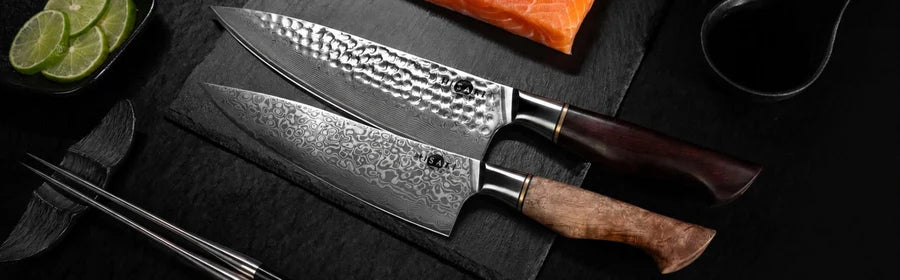
A Gyuto knife is the Japanese answer to the classic European chef's knife: slimmer, more precise and versatile enough for most cutting tasks in the kitchen. If you are choosing between a classic chef's knife and a Japanese chef's knife, this guide explains the key differences, uses and care tips for a Damascus steel Gyuto.
What is a Gyuto knife?
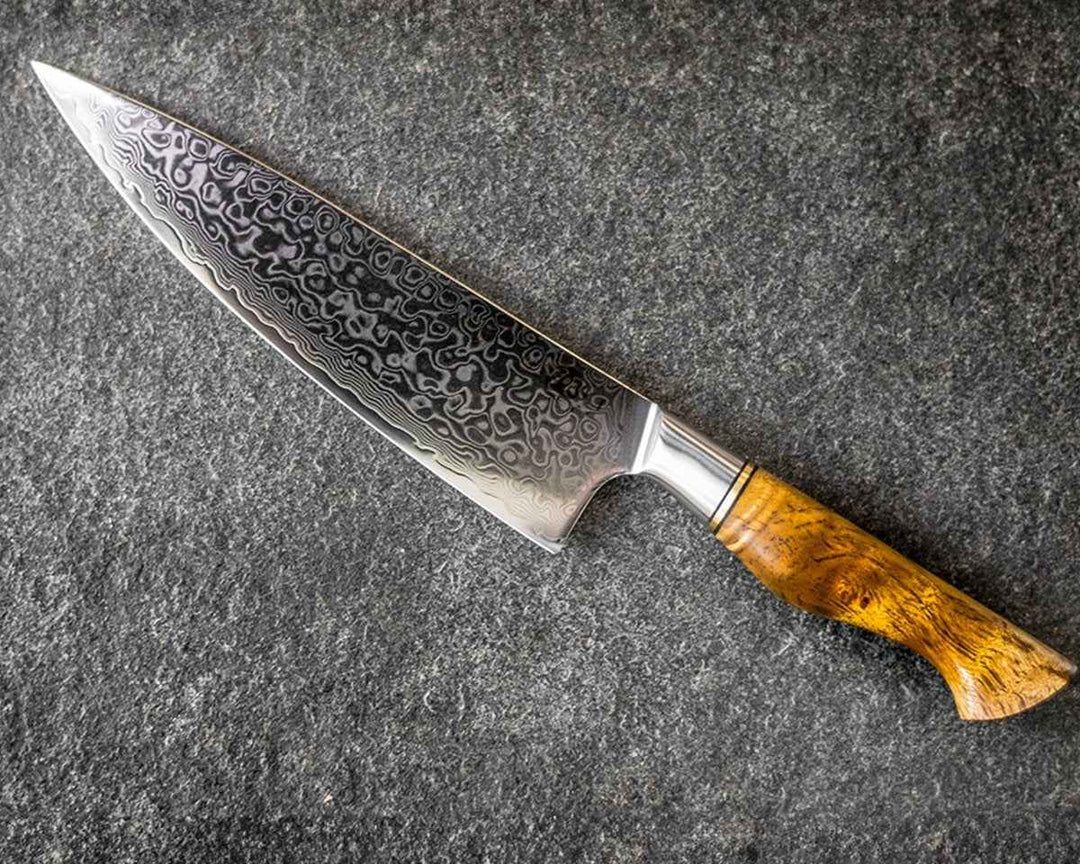
A Gyuto knife is the Japanese interpretation of the classic chef's knife. In everyday language, it is often described as a Japanese chef's knife. The term roughly means “beef knife”, referring to its origins when Western cutting techniques first entered Japanese cuisine. Today, the shape is far more versatile and is no longer limited to meat.
Its defining feature is a slim, often slightly longer blade with a fine tip. Compared with the stronger and more curved shape of a classic European chef's knife, a Gyuto feels more direct and precise. This geometry makes long, drawing cuts especially controlled.
Gyuto, chef's knife or cook's knife: what is the difference?
In everyday use, the terms chef's knife and cook's knife are often used interchangeably. Both refer to the versatile main knife in a kitchen. A Gyuto is the Japanese version of this idea: the same function, but with a slimmer, more precise blade geometry from the Japanese knife tradition.
The right choice depends on the cutting feel you prefer. If you want a versatile main knife with a stronger, more rocking cutting motion, a classic chef's knife is a natural choice. If you prefer a more direct and precise feel for drawing cuts, a Gyuto is a very suitable alternative.
What is a Gyuto knife used for?
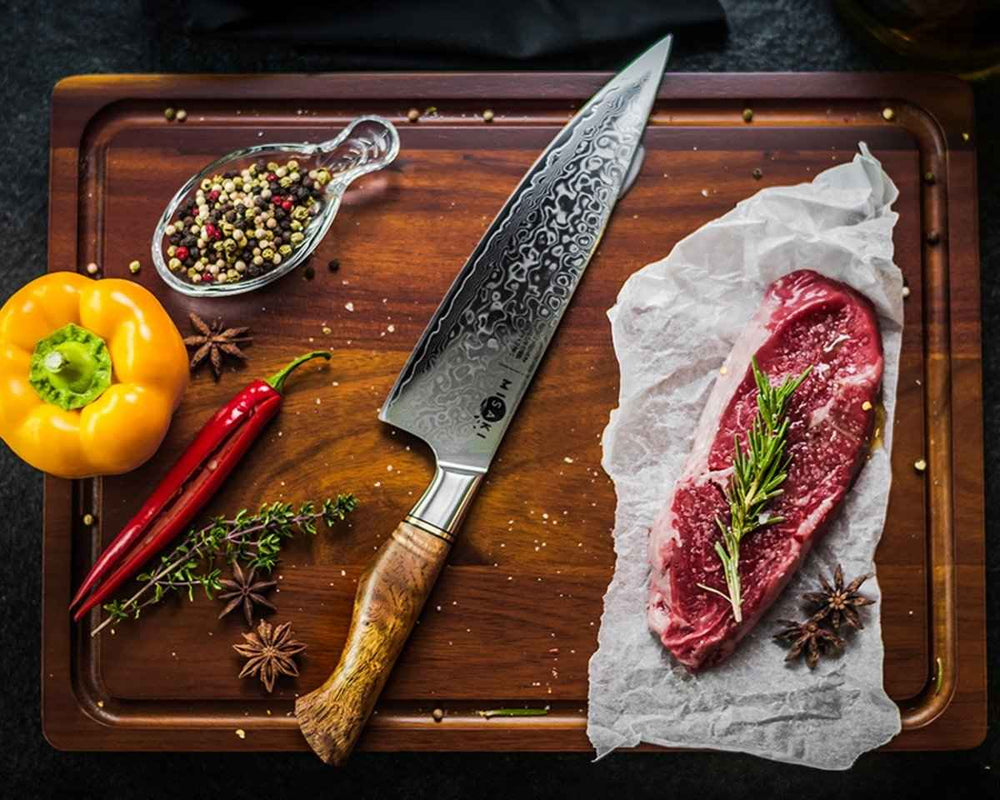
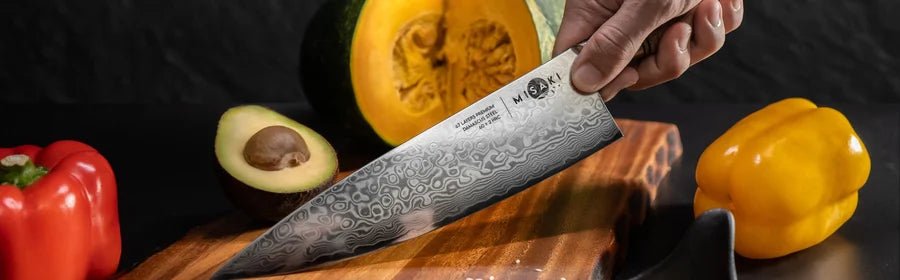
A Gyuto knife is suitable for many cutting tasks. It can portion meat, prepare fish, cut vegetables and finely chop herbs. Thanks to the longer blade, it also handles larger ingredients cleanly.
The Gyuto is especially strong for controlled drawing cuts. The fine tip helps with precise work, such as removing small sinews, starting fine cuts or slicing delicate ingredients.
For many kitchens, a Gyuto can be the central knife. If you cook regularly and want to choose one high-quality main knife, a Japanese chef's knife is a versatile decision.
What are the advantages of a Damascus steel Gyuto?
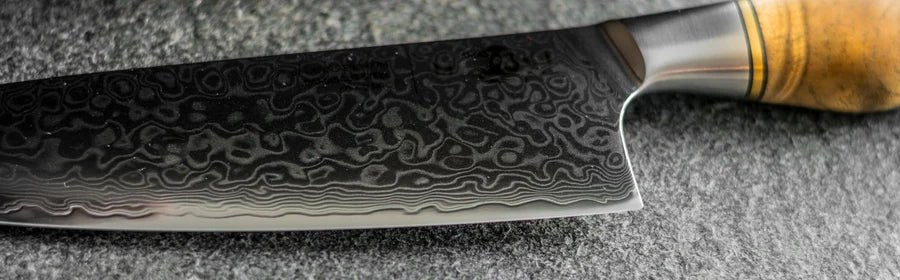
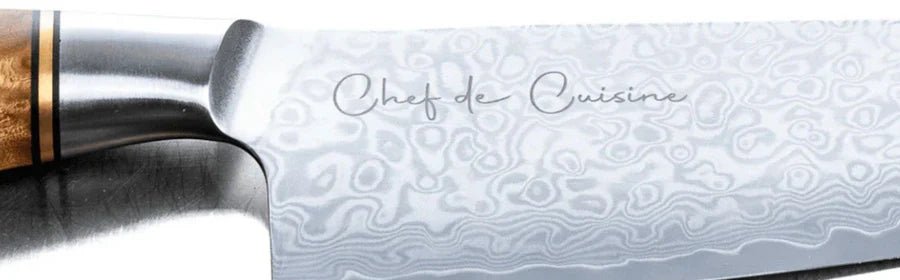
Damascus steel suits the Gyuto shape particularly well because this knife depends on a fine, precise edge. The blade glides easily through food, requires little pressure and stays sharp longer thanks to its high edge retention. More about the general advantages of Damascus steel can be found in our article about Damascus knives.
What should you consider when buying a Gyuto knife?
With a Gyuto, the key is the combination of slim blade geometry and balance. Despite its finer shape, the knife should sit securely and evenly in the hand and should not feel blade-heavy.
Also consider blade length. If you often work with larger ingredients, a longer blade is useful. For more compact work, a slightly shorter model may be the better fit.
How do you care for and sharpen a Gyuto knife properly?
Like all high-quality Damascus knives, a Gyuto should be cleaned by hand, dried immediately and used only on wooden or plastic cutting boards. The fine, slim blade benefits especially from a stropping leather for regular edge maintenance in everyday use. Full care and sharpening instructions for all MISAKI knives can be found in our care guide.
Your Gyuto knife from MISAKI
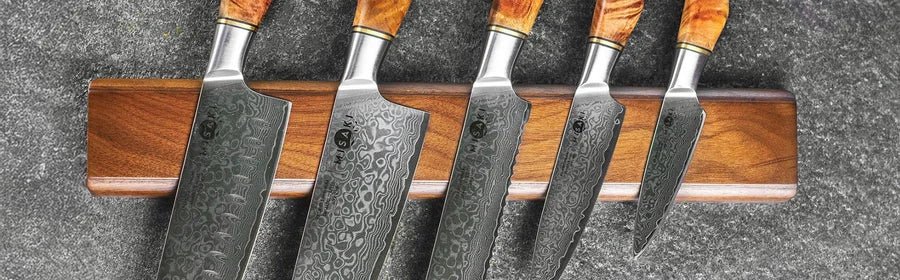
Whether you prefer a classic chef's knife or a slimmer, Japanese-inspired blade geometry: at MISAKI you will find precisely crafted chef's knives made from layered Damascus steel, with a characteristic pattern and a balanced natural wood handle. Discover our chef's knives and find the knife that suits your cutting style.
Unsure which model fits you best? Contact us. We will be happy to advise you personally.
FAQ
Is a Gyuto knife the same as a chef's knife?
Functionally, yes. A Gyuto is the Japanese version of the classic chef's knife. The difference is in the blade shape: slimmer and more precise instead of stronger and more curved.
What is a Gyuto knife used for?
A Gyuto is suitable for almost all cutting tasks in the kitchen, from meat and fish to vegetables and herbs. It is especially strong for controlled drawing cuts and precise work with the fine tip, such as removing sinews.
Is a Gyuto knife suitable for beginners?
Yes, if you like working with a longer, slimmer blade and drawing cuts. If you prefer very compact cutting or especially easy handling, a santoku often feels familiar more quickly.
Which is better: Gyuto or Santoku?
That depends on your cooking habits. A Gyuto, with its longer and slimmer blade, is especially suitable for drawing cuts and larger ingredients. A Santoku is more compact and particularly comfortable for short, controlled cuts on the board.
How long should a Gyuto knife be?
Most Gyuto knives have a blade length between 18 and 24 centimeters. The right length depends on your hand size, work surface and the ingredients you cut most often.