
Knife Handle: Which Handle Types Exist and What to Look For
The knife handle plays a major role in how safely, precisely and comfortably a kitchen knife can be guided. A sharp blade alone is not enough. Only when handle, weight and balance work together does a controlled cutting feel emerge.
In kitchen knives, the main distinction is between western knife handles, Japanese knife handles and modern hybrid or fusion handles.
What makes a good knife handle?
A good ergonomic knife handle sits securely in the hand without pressing or slipping. It supports a natural hand position and helps the knife be guided with control.
The most important factors are shape, material, weight and balance. A knife should not feel too blade-heavy or too handle-heavy. When blade and handle are well matched, the knife can be guided more calmly and precisely.
Western knife handle: stable, familiar and robust

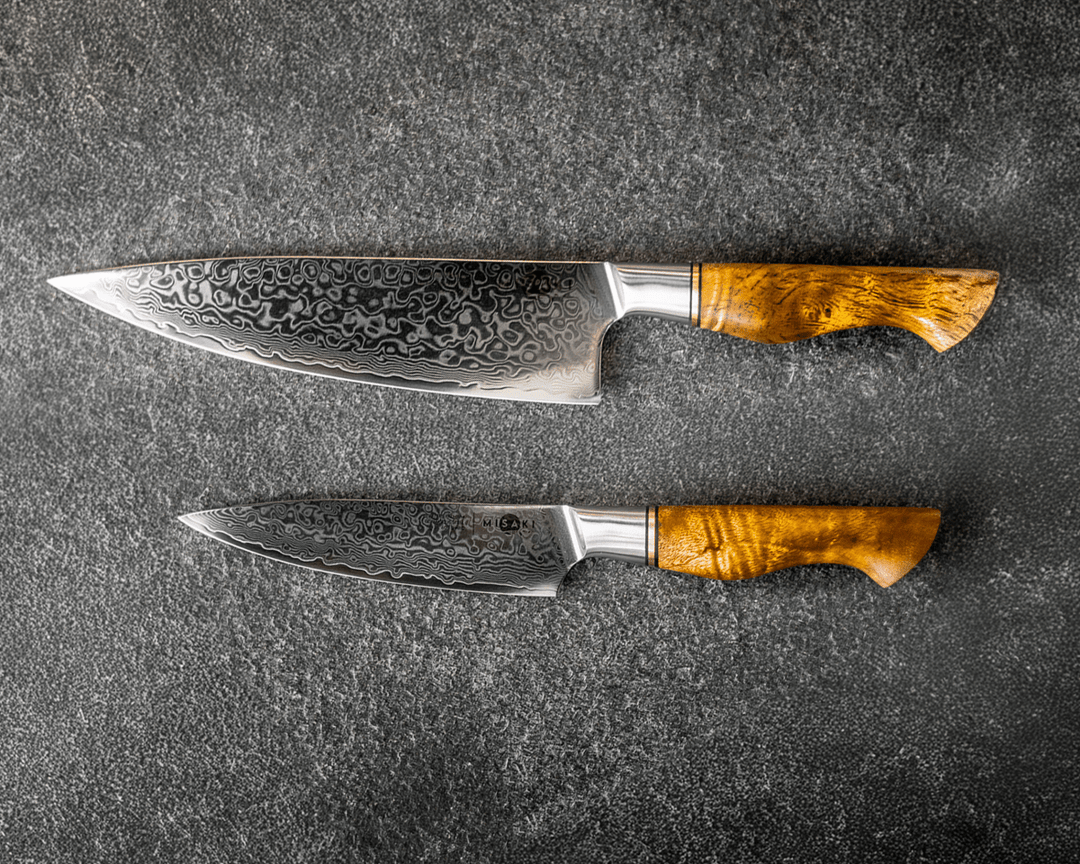
The western knife handle feels familiar to many users: ergonomically shaped, slightly stronger in build and usually connected to a full tang. More on this is explained below. This construction creates a solid, balanced knife feel that is especially appreciated in classic chef's knives.
Japanese knife handle: light, direct and traditional

Japanese knife handles are often called wa handles. They are usually lighter, straighter and less strongly ergonomic than western handles. They often have a round, oval, D-shaped or octagonal form.
Because of the lower weight, the balance point tends to sit more toward the blade. The knife therefore often feels very direct and finely controllable. Japanese handles are especially appreciated on traditional Japanese knife types.
They also require some getting used to because they feel different from classic western handles.
Hybrid and fusion handles: Japanese precision with familiar handling
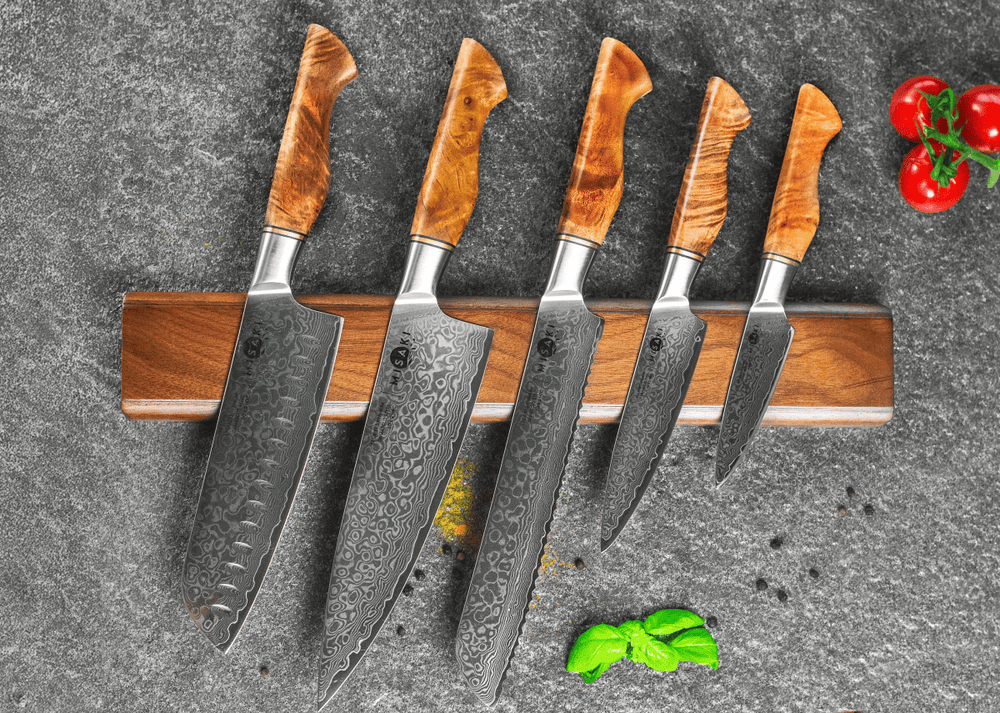
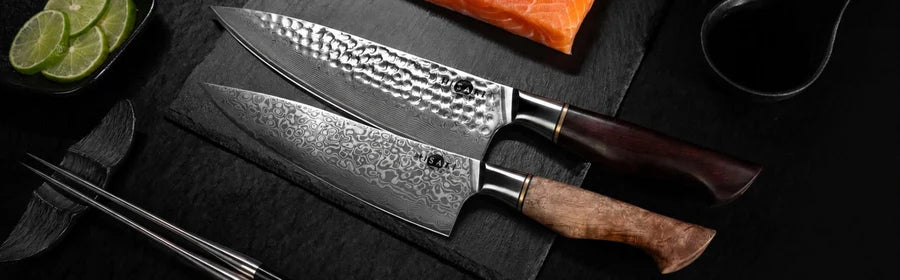
Hybrid or fusion handles combine qualities from both worlds: Japanese-inspired blades meet a more familiar, ergonomic handle design. This approach is popular in modern Damascus knives. MISAKI also uses this modern handle design in the HIKARI and AKANE lines. More about the properties of our knife lines can be found in our chef's knife guide.
Full tang, half tang and hidden tang: what does it mean?
With a full tang, the steel of the blade runs through the entire handle. This construction provides high stability, good balance and a robust knife feel. It is especially common in high-quality western and modern hybrid knives.
With a half tang, the tang only extends partly into the handle. This can make the knife lighter, but depending on the construction may offer less stability than a full-tang design.
Traditional Japanese handles often use a hidden tang. A narrower tang is inserted into the handle. This construction enables light knives with direct blade control, but has a different balance than a full-tang knife.
What role does the handle material play?
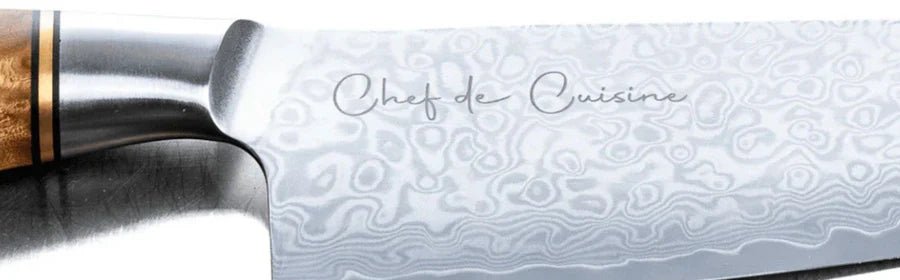
The handle material influences feel, appearance, care and durability. Wooden handles are particularly popular on high-quality kitchen knives because they feel warm, natural and pleasant in the hand. At MISAKI, different woods are used depending on the line: light, figured maple for HIKARI and dark rosewood for AKANE.
Which handle type is right?
The right handle type depends on how you cut and which knife feel you prefer.
A western or modern hybrid handle is a good choice if you value stability, familiar handling and robust balance. A Japanese wa handle is better if you want a very light, direct and traditional knife feel.
For everyday use, a hybrid handle is often especially practical. It combines precision with safe, intuitive handling and is therefore also suitable for users coming from classic kitchen knives.
How do you care for a wooden knife handle?
A wooden handle should not go into the dishwasher, as heat and aggressive detergents can dry out or damage the wood. Clean it by hand, dry it immediately and treat it with a suitable care oil when needed. The full care instructions for all MISAKI knives can be found in our care guide.
Your knife with the right handle from MISAKI
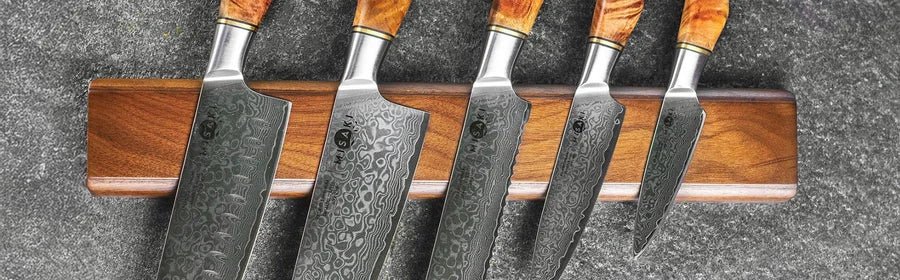
Whether western, Japanese or hybrid: at MISAKI you will find knives with carefully considered handle design, full tang for stability and high-quality maple or rosewood for a warm, natural feel. Discover our knife lines and find the knife that feels right for you.
Unsure which handle suits your hand size or cutting style? Contact us. We will be happy to advise you personally.
FAQ
Which knife handle types are there?
The most important handle types are western knife handles, Japanese wa handles and modern hybrid or fusion handles. They differ mainly in shape, weight, balance and handling.
What is the difference between a western and Japanese knife handle?
Western knife handles are usually more ergonomically shaped, more stable in construction and often connected to a full tang. Japanese handles are often lighter, straighter and more focused on direct blade control.
What does full tang mean on a knife handle?
Full tang means that the steel of the blade runs through the entire handle. This construction provides stability, balance and a robust connection between blade and handle.
What is a hybrid handle on kitchen knives?
A hybrid handle combines properties of western and Japanese knife handles. It usually offers familiar, ergonomic handling while supporting the precise control of a Japanese-inspired blade.
Is a wooden handle useful on kitchen knives?
Yes, a wooden handle is very useful on high-quality kitchen knives. Wood feels warm and natural, offers a premium look and sits comfortably in the hand. Clean workmanship and proper care are important.