
Kitchen Knife Blade Shapes: Which Knife Shape Fits Which Purpose?
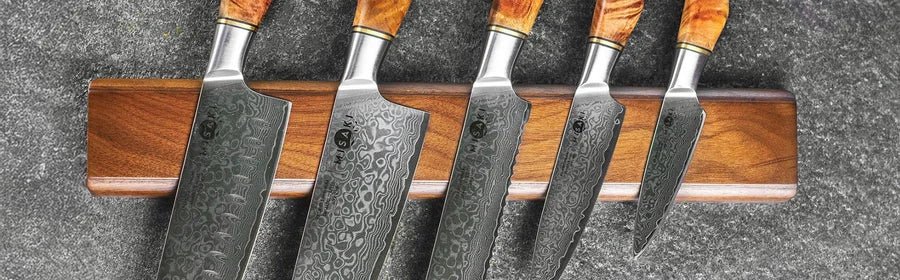
Legend:
- Chef's knife
- Santoku
- Nakiri
- Gyuto
- Bread knife
- Utility knife

Strictly speaking, the term kitchen knife often refers to the classic chef's knife. In search behaviour, however, it is often used more broadly when people are looking for different kitchen knife blade shapes. In addition to familiar everyday shapes such as chef's knife, Santoku or Nakiri, there are many other blade shapes for special uses, from sushi to bread crusts. This overview explains both: the most important everyday knives and the special shapes that belong in a well-equipped kitchen.
The blade shape influences how a knife is guided, which cutting technique is suitable and which foods it is best suited for.
Why blade shape matters in kitchen knives
The blade shape determines how a knife cuts. A long, slightly curved blade is well suited to rocking motions. A straight blade supports clean push cuts. A serrated blade grips hard crusts without crushing the soft inside.
In addition to the shape, blade length, blade thickness, blade height, tip and weight also play a role. Only the combination of blade shape, steel, grind and balance determines how precise and pleasant a knife feels in everyday use.
Chef's knife: the versatile all-rounder
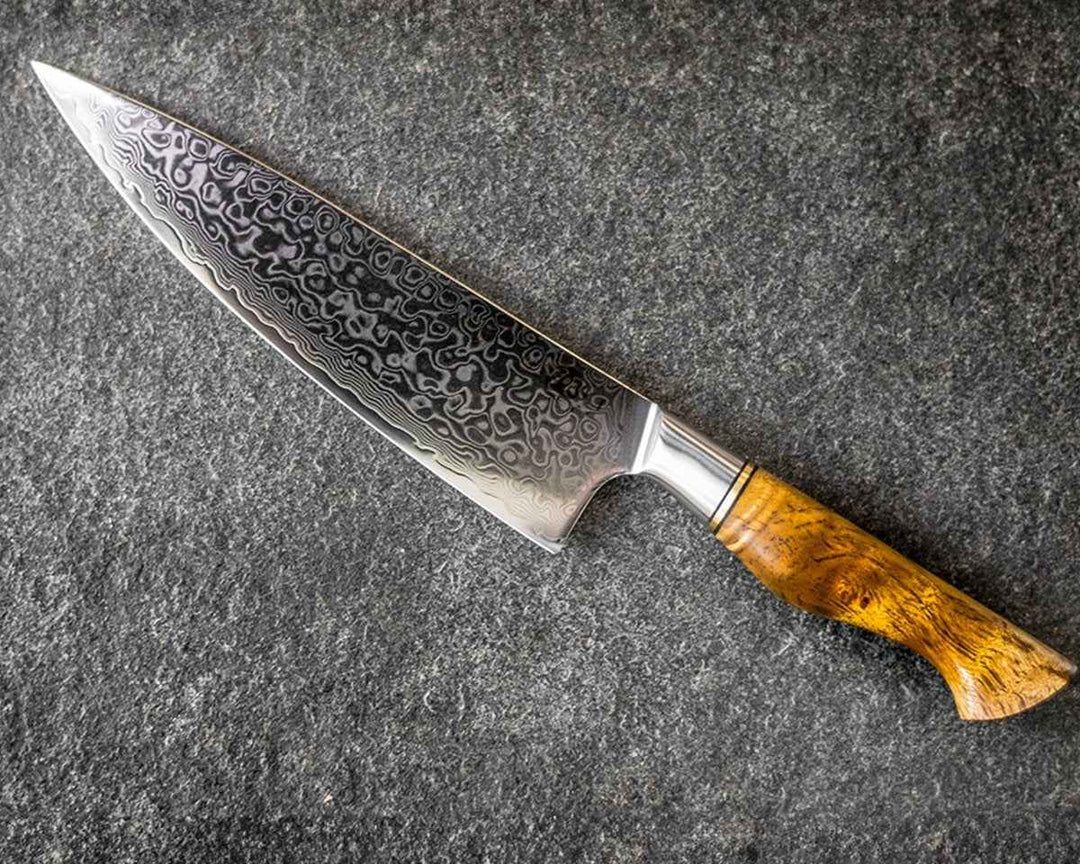
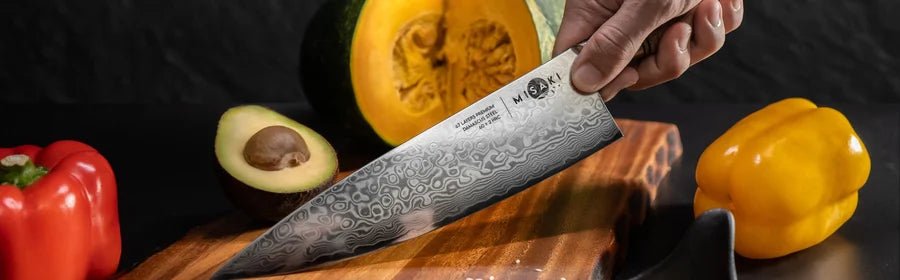
The chef's knife, also called a cook's knife, is the most versatile blade shape in the kitchen. Its elongated, slightly curved blade is suitable for rocking motions and almost any cutting task. More about properties, care and buying advice can be found in our chef's knife guide.
Santoku: compact, precise and versatile
The Santoku ("three virtues": meat, fish, vegetables) has a shorter, more compact blade with a straight edge. It is ideal for controlled, precise cuts instead of large rocking motions. More about its properties and comparison with the chef's knife can be found in our chef's knife guide.
Nakiri: the blade shape for vegetables
The Nakiri is a Japanese vegetable knife with a straight, rectangular blade that enables clean push cuts and sits evenly on the cutting board. It is particularly suitable for vegetables, herbs and fine cutting work. It is not intended for bones or very hard foods. More about all MISAKI knife types can be found on our overview page.
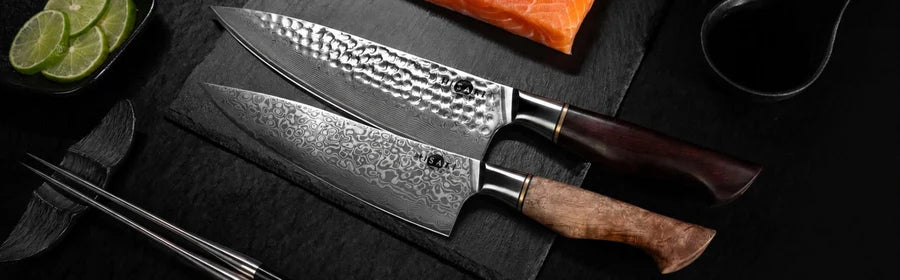
Gyuto: the Japanese chef's knife
The Gyuto is the Japanese version of the chef's knife. It is similarly versatile, but usually slimmer and more precisely ground. The detailed comparison with the classic chef's knife can be found in our Gyuto guide.
Bread knife: serration for hard crusts
The bread knife differs clearly from smooth blade shapes. The serrated edge breaks through hard crusts cleanly without crushing the soft inside. This is useful not only for bread, but also for foods with a firm skin and soft core, such as tomatoes or melons.
Utility knife: small, handy and flexible
The utility knife sits between a large chef's knife and a small paring knife. It is handier than a chef's knife, but larger than a pure paring knife. Typical uses include fruit, smaller vegetables, herbs, garlic, cheese or smaller pieces of meat and fish.
Petty, office knife and paring knife
Petty knives, office knives and paring knives are smaller knife shapes for precise work. A petty is usually slightly longer and more versatile, while office and paring knives are especially useful for peeling, trimming, coring or working in the hand.
These knives do not replace a chef's knife or Santoku, but they are a useful addition to a well-equipped kitchen. At MISAKI, this knife shape is offered as a paring knife.
Special blade shapes: Yanagiba, Deba, Kiritsuke and other Japanese knives

Legend:
- Bunka
- Kiritsuke
- Sujihiki
- Yanagiba
- Deba
- Usuba
- Filleting knife
- Boning knife
- Carving knife
- Chinese chef's knife
In addition to the most important everyday knives, there are other kitchen knife types developed for specific tasks.
Bunka: Japanese all-round blade shape with a distinctive tip. Good for precise cuts and versatile work.
Kiritsuke: Long, distinctive blade shape with an angled tip. Often better suited to experienced users.
Sujihiki: Long, narrow, usually double-bevel slicing knife for meat, fish and fine slices.
Yanagiba: Long, usually single-bevel Japanese knife for sashimi and very clean fish cuts.
Deba: Strong Japanese fish knife for breaking down fish. It is robust, but not a cleaver for hard bones.
Usuba: Traditional, usually single-bevel vegetable knife. Mainly used in professional Japanese kitchens.
Filleting knife: Flexible blade for filleting fish.
Boning knife: Narrow, stable blade for working around bones, sinews and joints.
Carving knife: Long knife for roasts, meat pieces and even slices.
Chinese chef's knife: Broad blade shape for many kitchen tasks. It resembles a cleaver, but depending on the version is not intended for bones.
Which blade shape is suitable for beginners?
For most beginners, a chef's knife or Santoku is the best choice. Both are versatile and suitable for everyday use. The chef's knife works well with a longer blade and rocking motion, while the Santoku suits a more compact, controlled cut. If you cut vegetables often, a Nakiri is also useful; for bread, a dedicated bread knife makes sense.
Which blade shapes does MISAKI offer?
When choosing the right kitchen knife blade shape, MISAKI covers the most important everyday cutting tasks with chef's knife, Santoku, Nakiri, bread knife, utility knife and paring knife. The full overview with all properties can be found on our knife types page. Special shapes such as Yanagiba, Deba or Usuba are currently not part of the range, but are explained here for better orientation. If you are looking for one of these shapes, we will be happy to advise you on a suitable alternative from our range.
Find your suitable blade shape at MISAKI
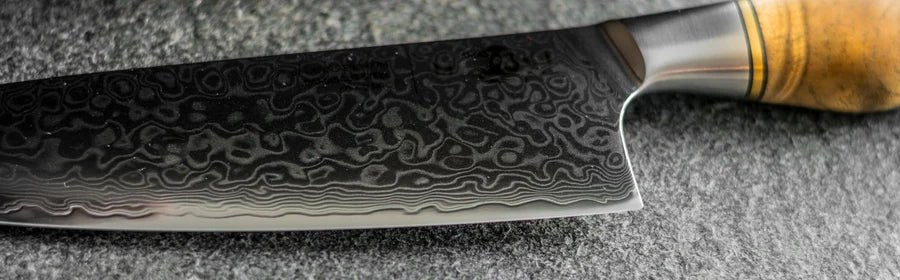
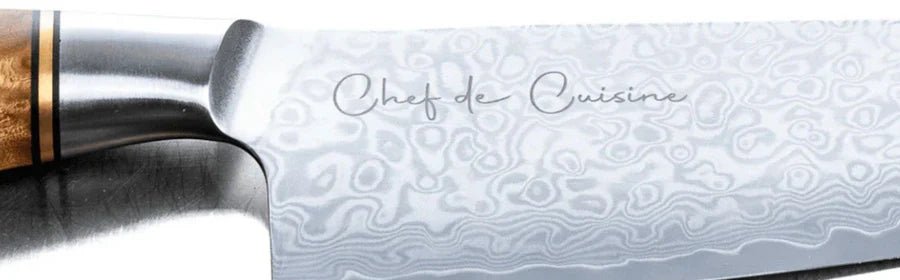
Whether versatile chef's knife, compact Santoku or specialised bread knife: at MISAKI you will find high-quality blade shapes made from layered Damascus steel, precisely hand-finished and perfectly balanced. Discover our kitchen knives and find the blade shape that suits your cooking style.
Unsure which shape is best for your use, including special shapes such as Yanagiba or Deba? Contact us. We will be happy to advise you personally.
FAQ
Which kitchen knife blade shapes are there?
The most important kitchen knife blade shapes include chef's knife, Santoku, Nakiri, Gyuto, bread knife, utility knife, petty and paring knife. There are also special shapes such as Sujihiki, Yanagiba, Deba, Usuba, filleting knife and boning knife.
Which blade shape is best for professionals or ambitious home cooks?
Users with knife technique experience will find particularly fine, precise blades for demanding cuts in shapes such as Gyuto, Kiritsuke or Yanagiba. These shapes require a little more practice with angle and guidance, but reward this with excellent cutting quality.
What is the difference between a chef's knife and a Santoku?
The chef's knife has a longer, slightly curved blade for rocking motions, while the Santoku has a more compact, straight blade for controlled push cuts. A detailed comparison can be found in our chef's knife guide.
Why does a Santoku knife have dimples on the blade?
The dimples are called kullens. They create small air pockets between the blade and the food. This helps moist or thin slices stick less to the blade. They do not replace good cutting technique and are not present on every Santoku.
Which blade shape is suitable for vegetables?
A Nakiri with its straight blade is best suited for clean push cuts. Santoku and chef's knives also handle vegetables reliably. The Nakiri is especially strong with large quantities or particularly even cuts.
Which blade shape do you need for bread?
For bread, a bread knife with a serrated edge is the right choice. Smooth blades such as chef's knives or Santoku tend to crush the soft crumb instead of cutting cleanly through the crust. The serrated edge is also useful for tomatoes or melons with a firm skin.