
Damascus Knives: The Choice of Discerning Cooks

When it comes to kitchen knives, there are many materials and blade constructions. Damascus knives are among the most popular premium options because they combine performance with aesthetics. But what exactly does Damascus mean, and how does it differ from classic kitchen knives? In this article, you will find a compact overview of construction, benefits and the most important differences.
What is a Damascus knife?
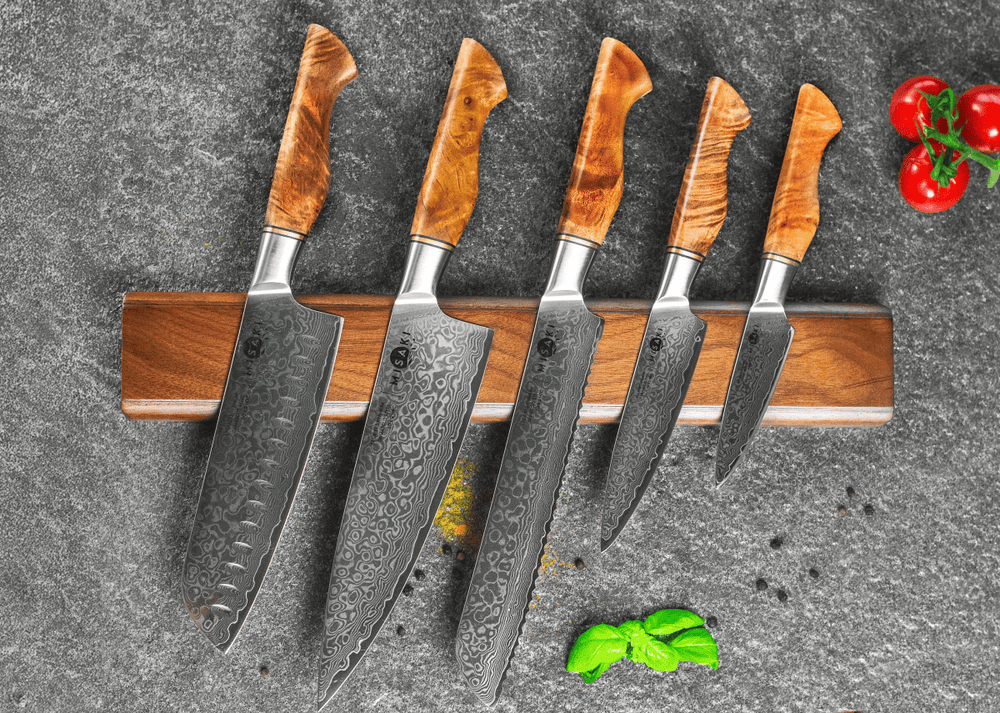
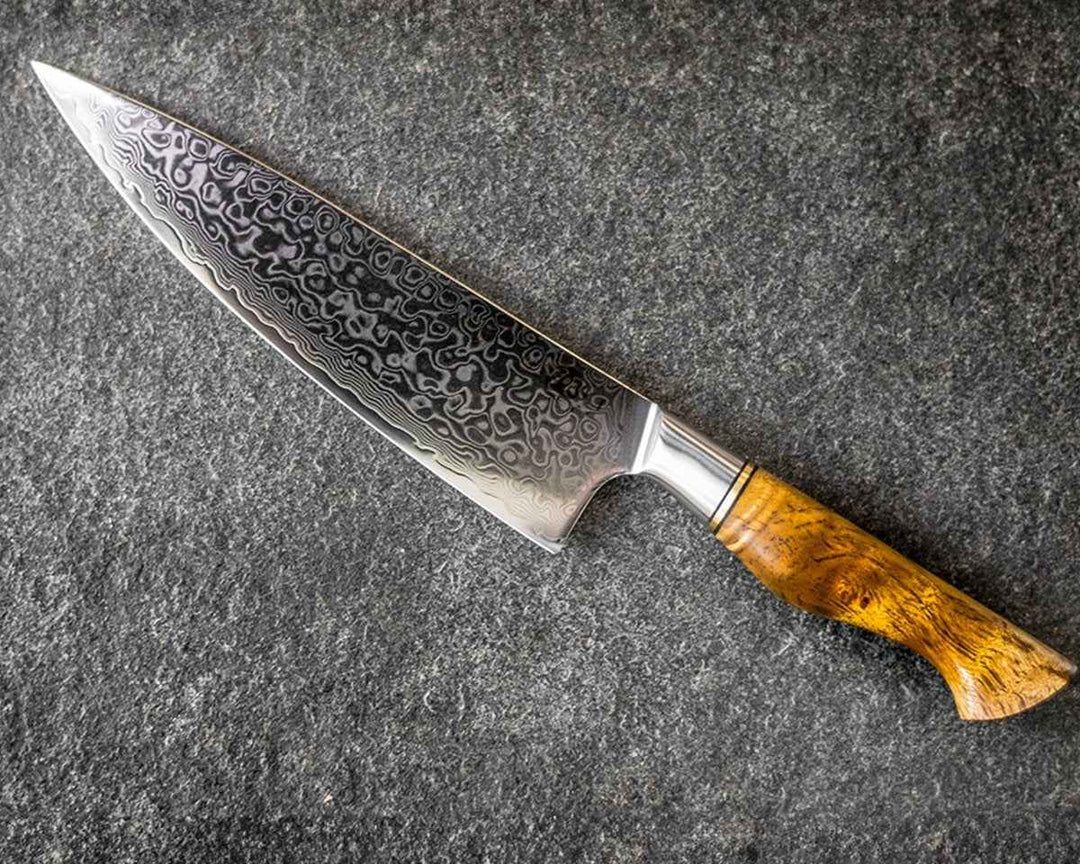
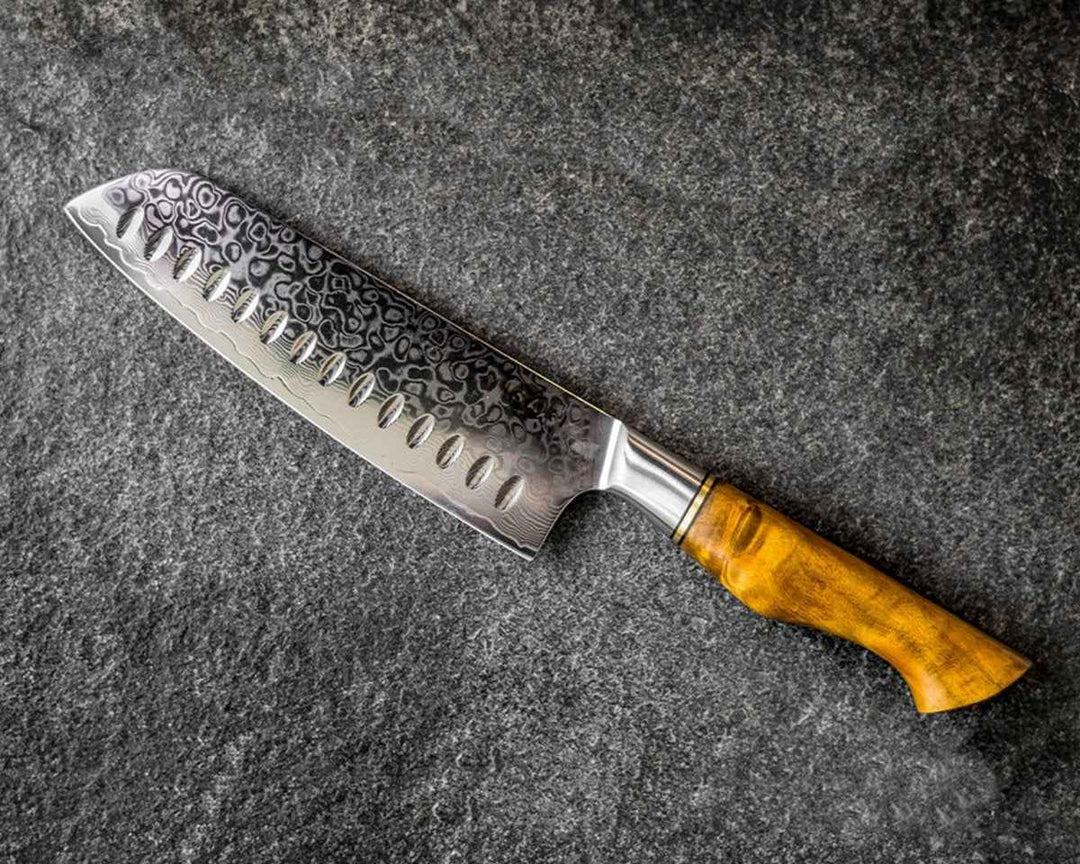
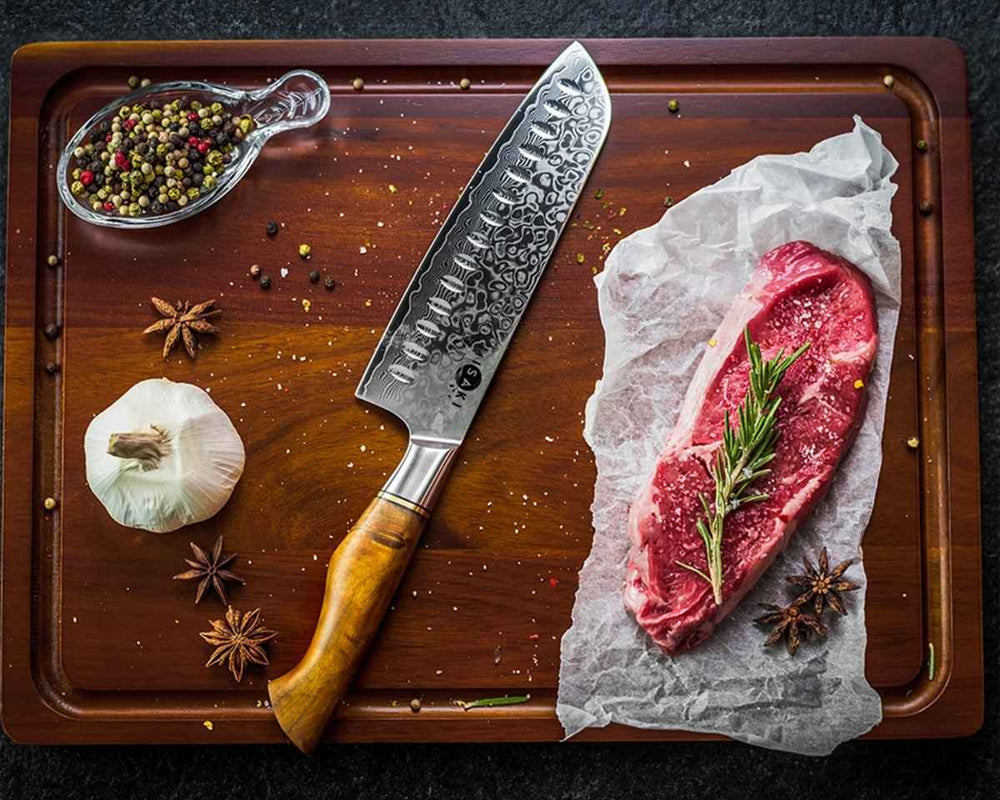
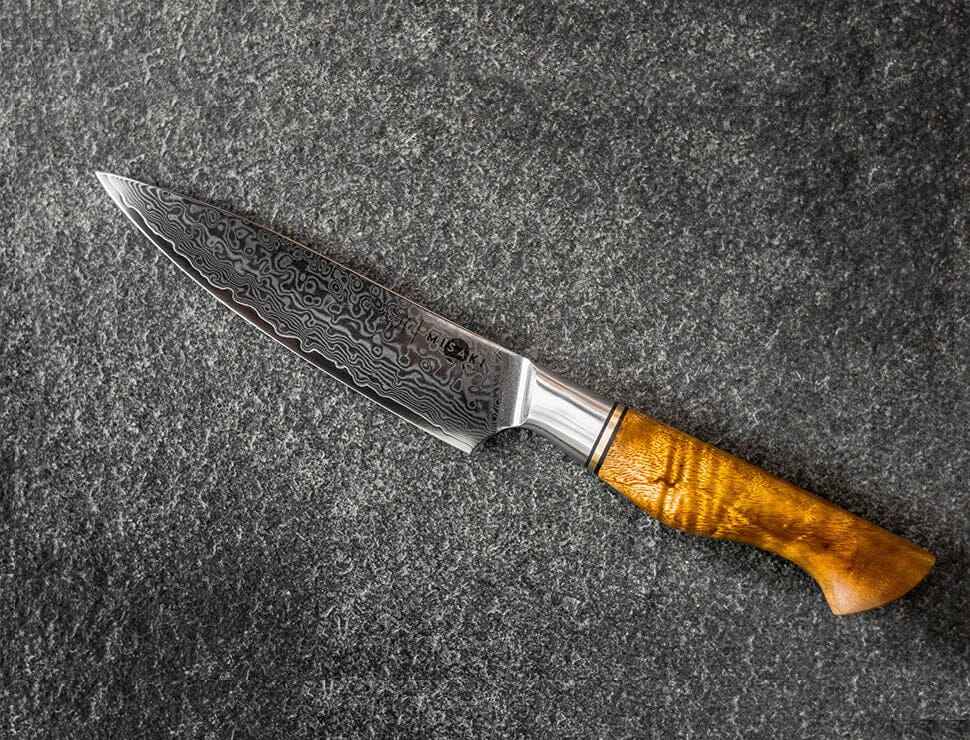
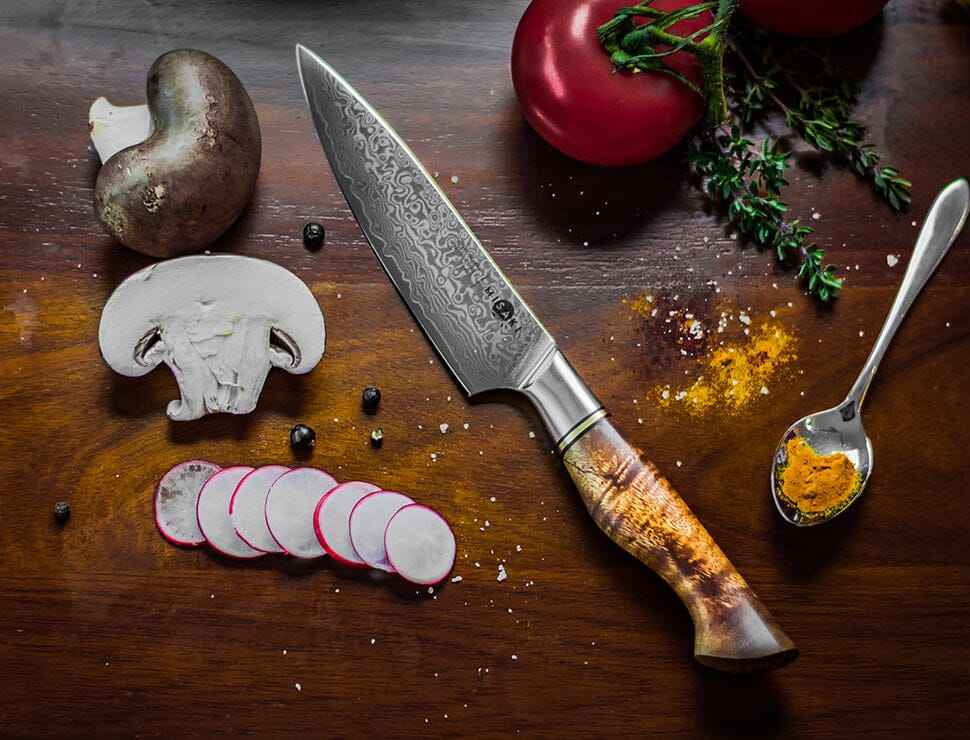
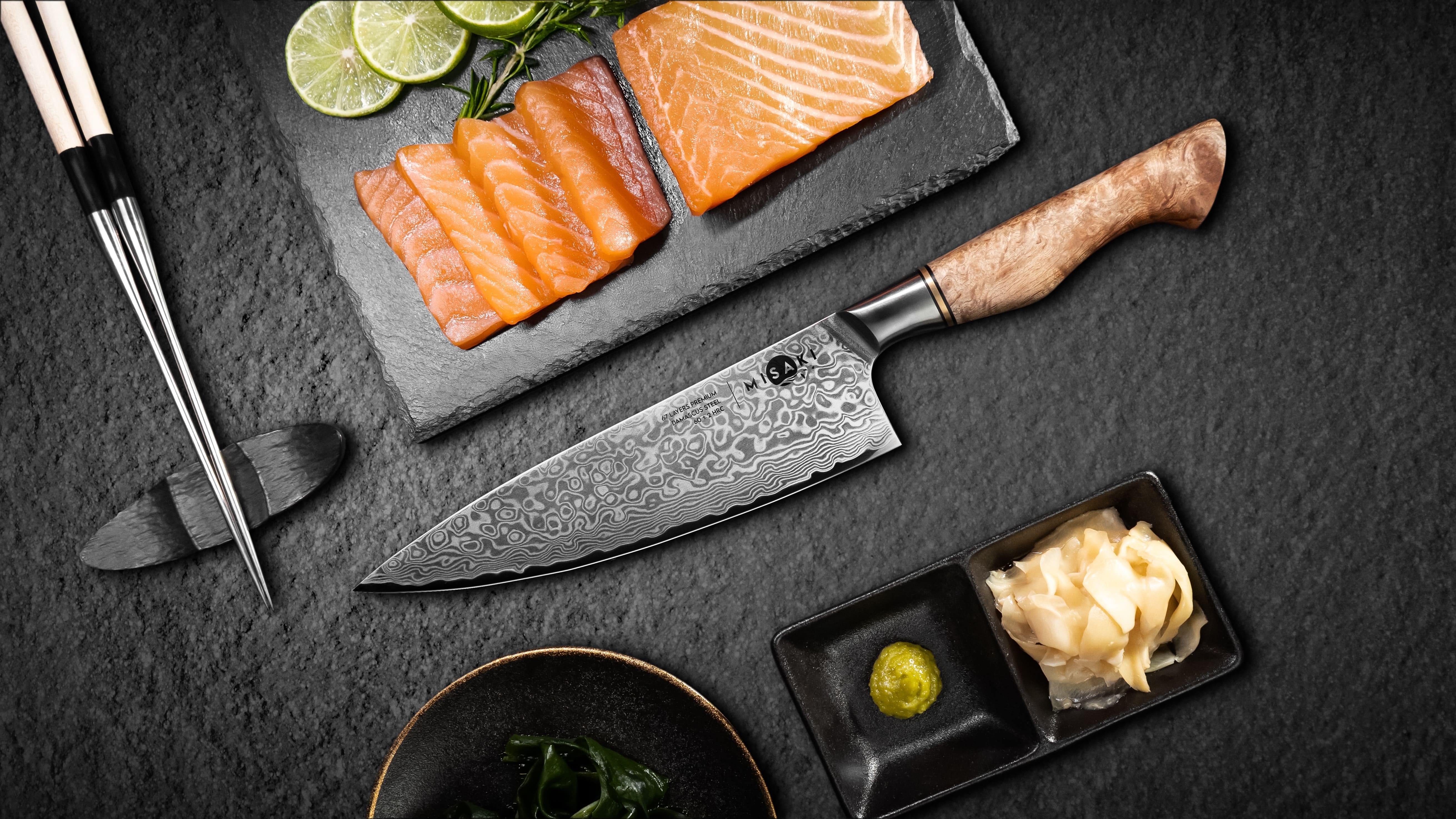
Damascus refers to steel built from multiple layers. Several layers of tough and hard steels are worked into a composite blade. The outer layers often surround a hard core steel that forms the cutting edge. The result is a blade with long edge retention, a clean cutting feel and the characteristic pattern reminiscent of wood or water.
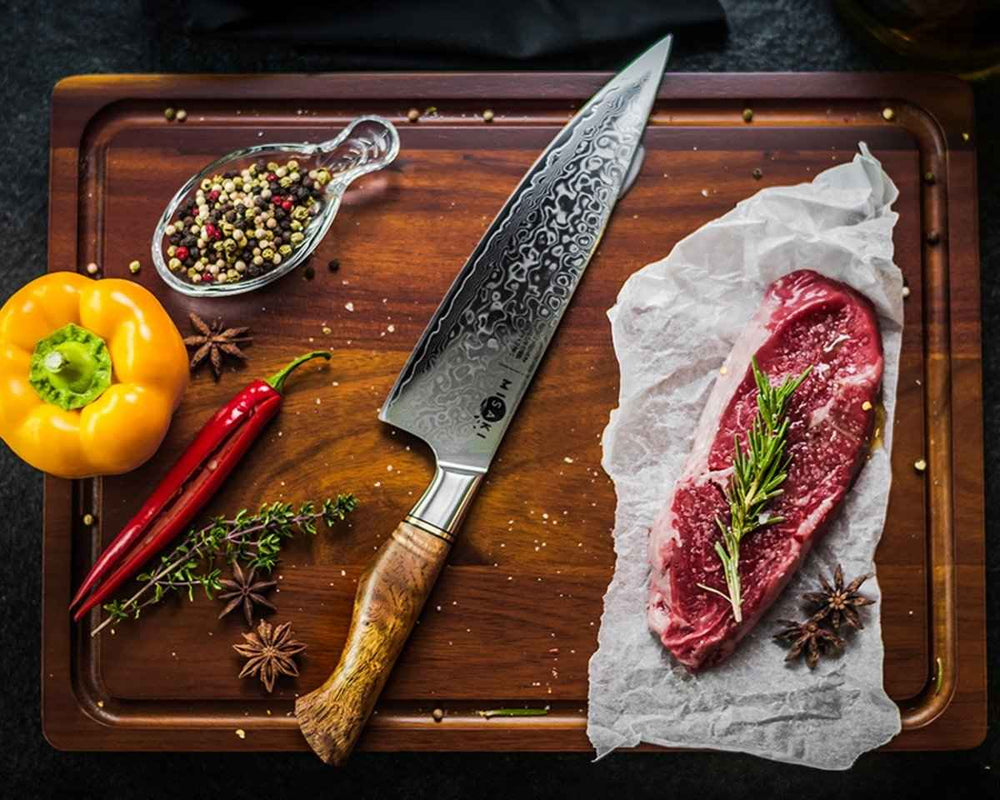
The typical pattern is created by the layered structure and usually becomes visible only after etching, as a contrast between light and dark areas. Every Damascus blade is therefore unique, because no two patterns are exactly alike.
How do you recognise quality?
Important to know: not every knife with a Damascus look is genuine Damascus. The market also includes knives that merely carry a laser pattern. They may look similar, but they do not have the material properties of a true composite blade.
With real Damascus, it is not only the appearance that matters, but above all the craftsmanship. Modern, high-quality Damascus kitchen knives often use dozens of layers around the cutting core. The number alone is not decisive; what matters is clean workmanship without air pockets and without irregularities at the edge.
What really determines everyday performance

The cutting performance of a Damascus knife does not depend on the number of layers alone. The core steel, heat treatment, hardness and geometry are decisive.
The core steel is the heart of a multi-layer kitchen knife. It determines maximum sharpness, hardness, edge retention and the overall cutting behaviour. There are different types of core steels, for example modern powder steels, classic high-carbon steels and other stainless or European tool steels. Each steel group brings its own strengths in terms of sharpness, edge retention and ease of resharpening.
Values of around 56 to 62 HRC are common. Greater hardness generally means better edge retention, but also requires careful handling. A thinly ground blade and a cleanly finished bevel provide controlled, clean cuts.
Many high-quality Damascus knives use a Japanese V grind in the range of about 12 to 16 degrees. This creates a very fine edge. Just as important as the angle is an even grind that stabilises the edge and makes the knife pleasant to guide.
Benefits of Damascus knives
-
Cutting performance and edge retention
Good Damascus knives combine a high-performance core steel with finely ground geometry. This allows clean cuts and edge retention that can be noticeably longer in everyday use. That means less effort when resharpening and a consistently pleasant cutting feel.
-
Balance and handling
High-quality Damascus knives are designed so that blade and handle feel balanced. This makes controlled work easier and reduces fatigue, even when many ingredients are waiting.
-
Appearance with function
The pattern is not merely decorative. It is the visible result of the layered structure and makes every knife unique. A carefully etched pattern shows craftsmanship and gives the knife a premium presence in the kitchen.
-
Resistance
The outer layers increase the toughness of the blade, protect the hard cutting core and contribute to stability. If the outer layers are corrosion-resistant, they also improve protection against rust. With the right care, the blade remains free from discolouration and corrosion for a long time.
Comparison with classic kitchen knives
Compared with many standard kitchen knives, high-quality Damascus knives often offer finer geometry and high edge retention. At the same time, a stainless knife is not automatically inferior. Classic knives can also be excellent when steel, heat treatment and grind are right.
The most visible difference is often the design. While many classic knives are deliberately simple, Damascus shows a special look through its pattern, combining function and aesthetics.
A brief look at the history
The roots of Damascus steel go back to antiquity. The so-called Wootz Damascus from the Middle East became especially well known; it was made from Indian steel and prized for centuries for its wave-like structure. Original Wootz Damascus is no longer produced in the same form today. Modern Damascus knives, however, take up the basic idea: combining hardness and toughness in a multi-layer blade. Japanese forging traditions later perfected this multi-layer technique further and laid the foundation for many of today's Damascus kitchen knives.
Conclusion
Damascus knives are ideal for anyone who values precise cutting performance, comfortable handling and a distinctive appearance. When buying, look for genuine composite blades, clean workmanship and a suitable core steel, because these factors determine everyday performance.
If you are looking for a high-quality Damascus knife set, discover the knife sets from MISAKI. Our blades are made as multi-layer composite blades and combine precise geometry with a striking pattern.
If you have questions about our Damascus knives or the right knife sets, our contact form is always available.