
Why Damascus Knives Are Becoming More Popular in Switzerland

In Switzerland, Damascus knives are seen as the embodiment of precision, durability and an aesthetic that brings real pleasure. Anyone who wants to cook at home like in a good restaurant invests in tools that are reliable, comfortable in the hand, deliver strong cutting performance and look refined enough to be displayed in the kitchen. In this guide, you will find a compact overview of quality, shapes, care and buying Damascus knives in Switzerland, so you can make a choice that will bring you joy for many years.
What is a Damascus knife and how do I recognise quality?

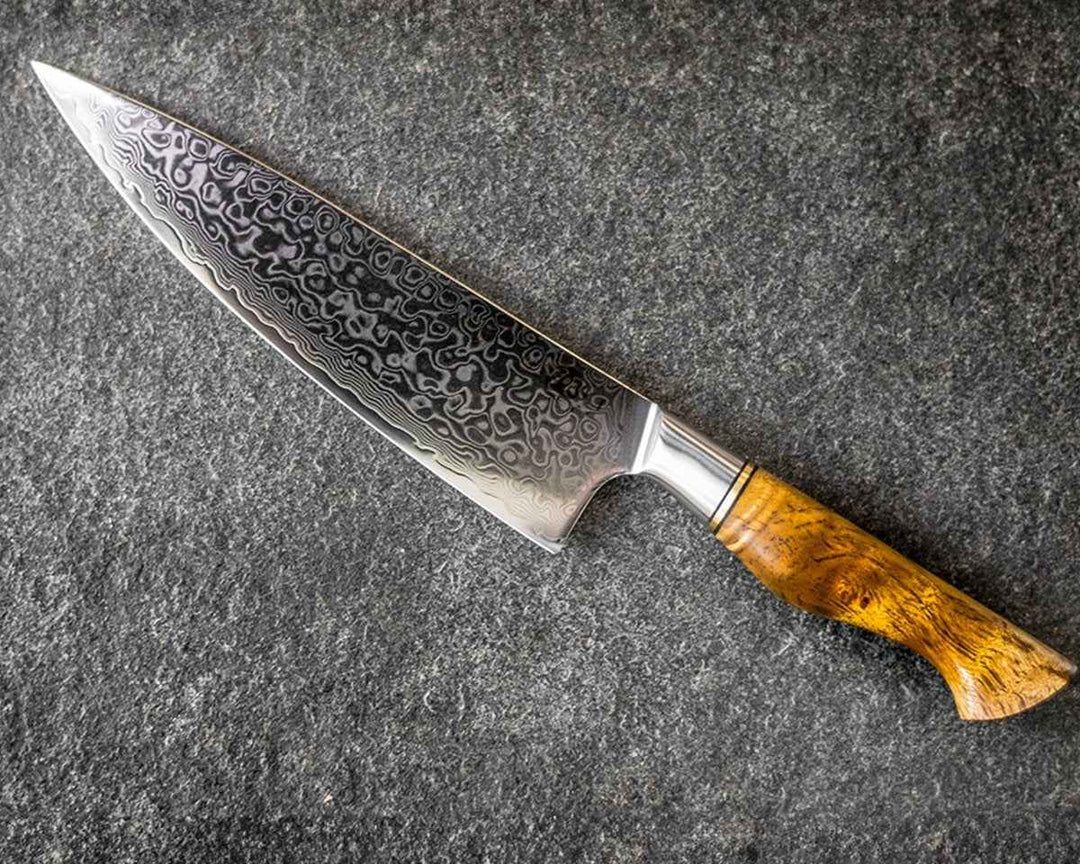
Damascus refers to steel built from multiple layers. Several layers of tough and hard steels are processed into a composite blade. The result is a blade with high edge retention, a clean cutting result and the characteristic pattern reminiscent of wood or water.
Every Damascus blade is unique. No two patterns are alike. The elegant contrast of light and dark layers appears only after etching and brings the steel to life.
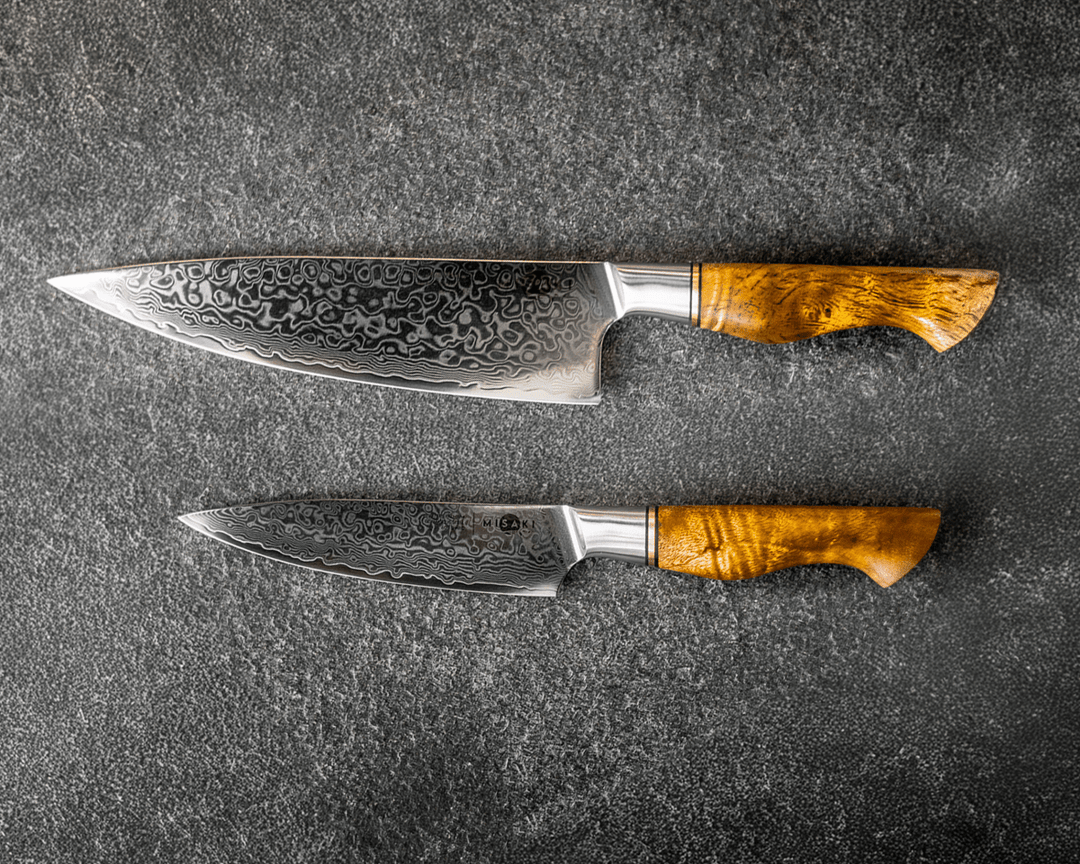
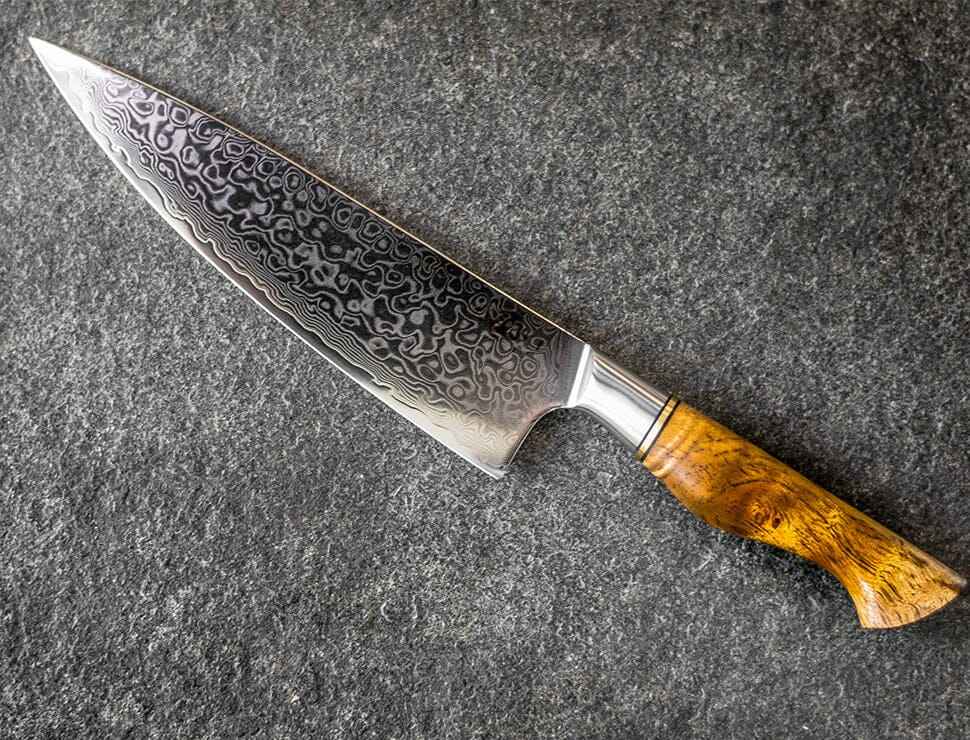
Important to know: many knives sold as “Damascus knives” are not genuine Damascus knives, but are only given a laser pattern. These so-called laser Damascus knives (image left) may have a similar look, but they do not have the material properties that make real Damascus special. With brands such as MISAKI, the Damascus steel is layered, forged and welded to the tang by craft to ensure maximum stability (image right).

Important quality features of a Swiss Damascus knife
Layer construction: Modern, high-quality Damascus kitchen knives use dozens of layers around the cutting core. The number alone is not decisive; what matters is clean workmanship without voids (air pockets) or irregularities at the edge.
Outer layers: They increase blade toughness, protect the hard cutting core and give the knife its characteristic pattern. They stabilise the blade during use and improve handling. Stainless outer layers also add clear corrosion protection.
Core steel: The cutting core is the heart of every multi-layer kitchen knife. It determines maximum sharpness, hardness, edge retention and overall cutting behaviour.
There are different types of core steels with different compositions, hardness levels and cutting properties. These include modern powder steels, classic high-carbon steels and other stainless or European tool steels. Each steel group has its own strengths in sharpness, edge retention and ease of resharpening.
Hardness: Values around 56 to 62 HRC are common. Higher hardness generally means better edge retention, but requires careful handling.
Grind and angle: Japanese V grinds are usually around 12 to 16 degrees and create a very fine edge. What matters is an even, cleanly finished bevel, regardless of whether the blade is ground on one or both sides.
Geometry and balance: Thinly ground blades glide effortlessly through vegetables and meat. Balanced weight between blade and handle reduces fatigue during longer cooking sessions.
Handle material: Hardwoods feel warm and sit comfortably and securely in the hand. Look for seamless workmanship and a stable bolster.
Damascus knives in Switzerland: a practical series example

MISAKI HIKARI stands for around 67 layers of Damascus, 60 to 62 HRC and a maple handle. Finely balanced geometry with a Japanese V grind of around 15 degrees per side makes it a versatile all-rounder. HIKARI combines high edge retention with excellent balance. It is the right choice if you want a versatile main knife for everyday use, appreciate balanced guidance and want a blade that stays sharp for a long time.
MISAKI AKANE uses a powder-steel cutting core, surrounded by around 73 layers of Damascus, with 62 to 64 HRC and a rosewood handle. The fine Japanese V grind of around 15 degrees is designed for precise, powerful cuts and offers a high reserve of sharpness. AKANE delivers exceptional sharpness for the most demanding cuts and suits you if you want maximum precision, make very fine cuts and guide the hard edge with care.
The most important blade shapes for your kitchen
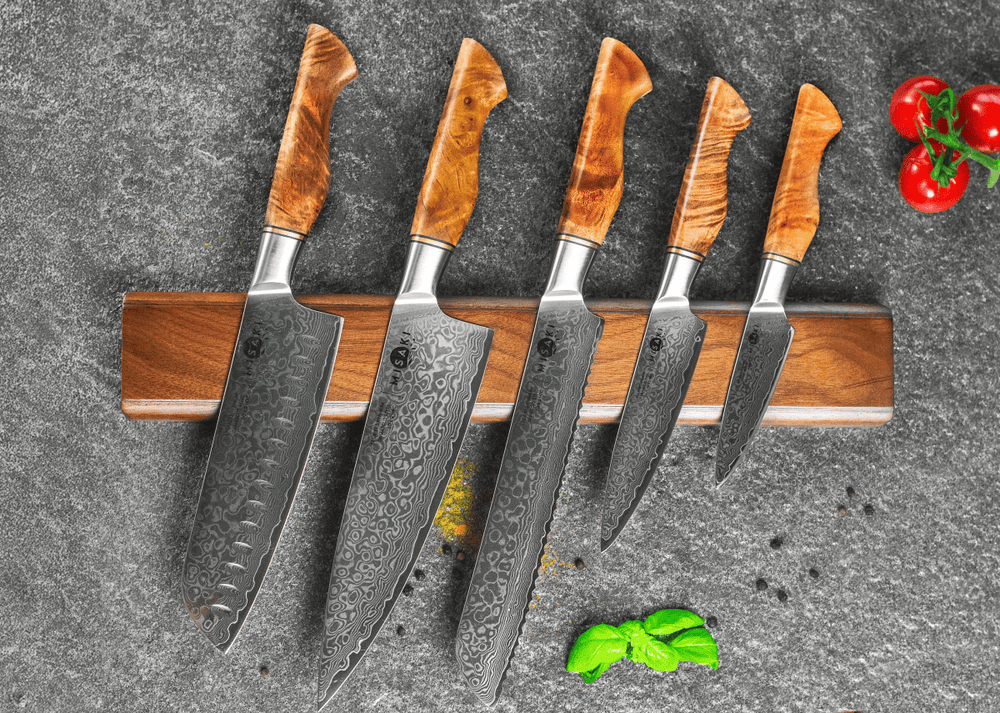
The right shape is often more important than the maximum number of layers. These five blades cover everyday needs in most Swiss kitchens.
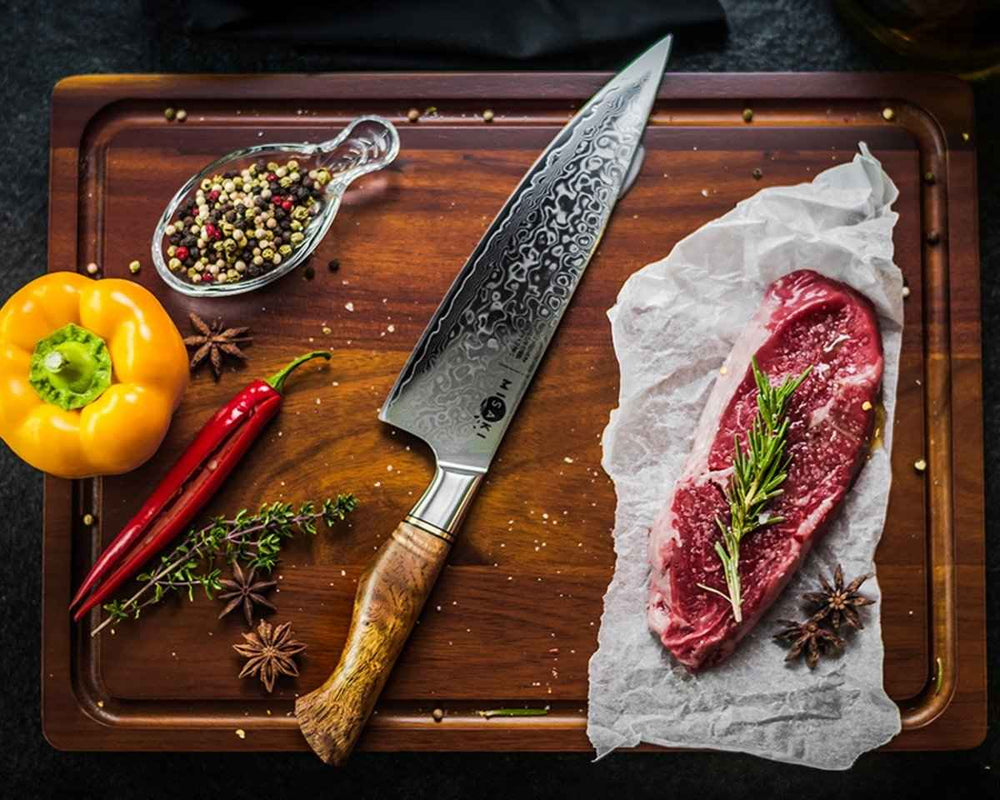
Chef’s knife: The all-rounder for vegetables, meat and fish. Ideal for precise, clean cuts.
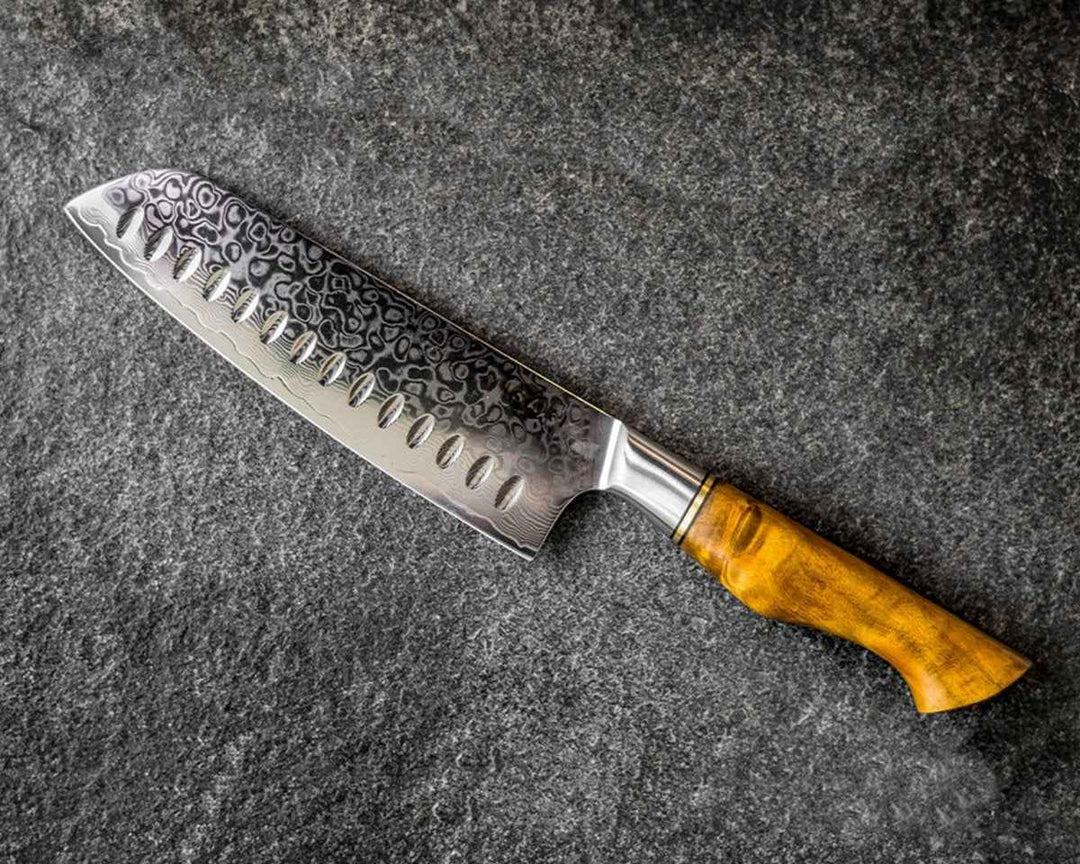
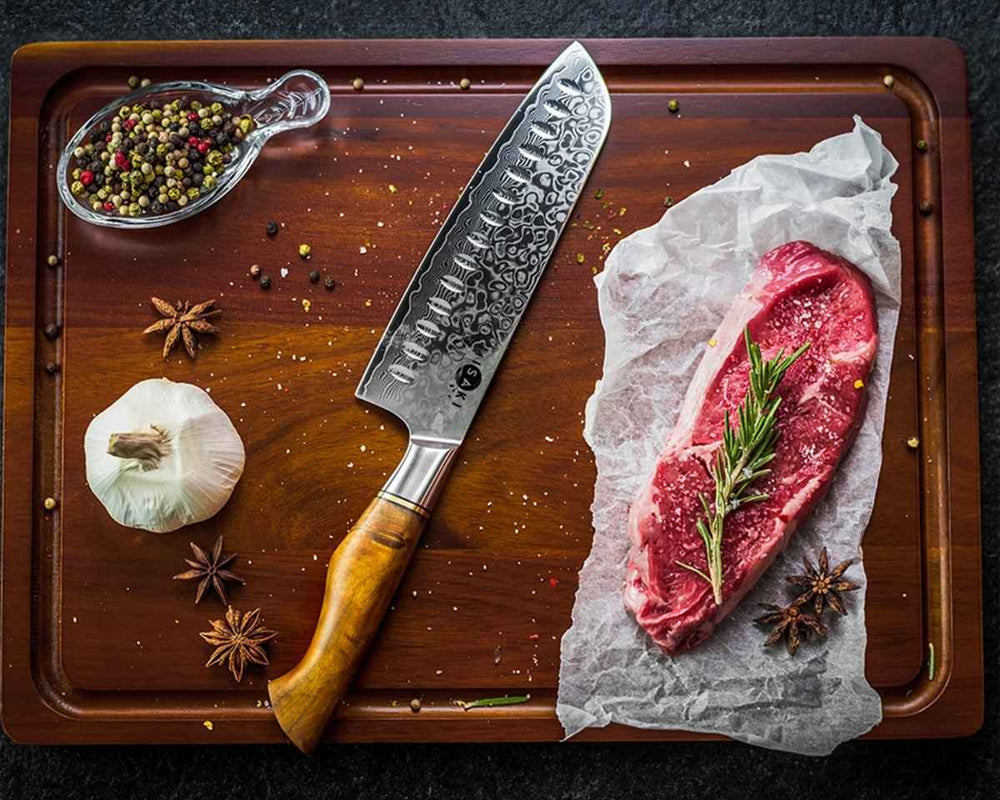
Santoku: The Japanese counterpart to the chef’s knife: broad, light and perfect for fine dice and slices. Slightly shorter than the chef’s knife and especially popular with home cooks who prefer a compact, controlled knife.
Utility knife: Compact, versatile and agile, ideal for smaller ingredients or a quick cut in between.
Bread knife: With serrated edge (single-sided 30° cutting angle), ideal for crusty bread without crushing the inside.
Paring knife: Small, handy and precise, perfect for peeling or fine detail work.
At MISAKI, all these knife types are available in the HIKARI and AKANE lines. This lets you match every knife to your kitchen and style, whether you are an ambitious home cook or a professional with the highest standards.
From ancient forges to Switzerland: the path of the Damascus knife
The roots of Damascus steel reach back to antiquity. The technique originally comes from the Middle East, where especially resilient blades were made from Indian Wootz steel. Its wave-like structure made Damascus steel famous for centuries, from Syria to Persia.
Original Wootz Damascus is no longer produced today. The combination of special Indian ores, unique composition and secret forging technique has been lost. Modern Damascus knives in Switzerland, however, take up the same idea: combining hardness, toughness and a living structure in the steel.

Japan later adopted this principle and perfected it within its own forging tradition. Instead of Wootz, Japanese masters used fine-grained steels, joining them in several layers to create precise blades. This multi-layer technique laid the foundation for today’s Damascus knives, which unite functionality, sharpness and aesthetics.
MISAKI stands in this tradition: made using Japanese multi-layer technique, with modern precision and controlled quality in Switzerland. The result is a knife that unites both elements: the soul of Far Eastern forging craft and the demand for precision and durability for which Switzerland is known.
While many knives with a Damascus look are offered on the market, MISAKI relies on real layered composite steel. Every blade is made not only to look impressive, but also to convince technically, with precise geometry, fine balance and lasting sharpness.
Benefits of Damascus knives in Switzerland
Cutting performance: The combination of fine core steel and thinly ground geometry delivers clean cuts. Vegetables stay juicy, herbs are cut rather than crushed, and meat fibres keep their structure.
Edge retention: A hard, finely formed edge stays noticeably sharp for longer. In everyday use, this means less effort when resharpening and a consistently good cutting feel.
Balance and handling: Good Damascus knives are balanced and feel solid in the hand. This lets you work with control and less fatigue, even when there are many ingredients.
Appearance with function: The pattern is not only beautiful; it results from the layered construction. A carefully etched pattern shows craftsmanship and makes every knife unique.
Resistance: Outer layers made from corrosion-resistant steel protect the hard core. With proper care, the blade remains free from corrosion and discolouration for a long time.
Care, sharpening and storage
With the right routine, your Damascus knife will stay in top condition for years.
Cleaning
After cutting, rinse briefly with warm water, dry gently and store safely. Avoid dishwashers and aggressive cleaners. Acids such as lemon juice or tomatoes affect every blade, so clean promptly after acidic foods.
Cutting boards
Wooden cutting boards protect the edge and feel pleasant. Hardwoods such as teak or walnut are proven choices. Glass or porcelain quickly dull any blade.
Refreshing sharpness
For quick sharpening, a fine-grit diamond sharpening rod is suitable. Guide the edge at an angle of around 15 degrees per side with calm strokes. A few repetitions are enough to realign the micro-edge.
Resharpening on the stone
When refreshing is no longer enough, a whetstone helps. A combination of medium and fine grit brings the edge back. Work with even pressure, guide both sides at the same angle and check the result with a light fingernail test. If you are unsure, use a professional sharpening service.
Leather strop
A leather strop provides the finish. After sharpening or honing, it perfectly aligns the outermost cutting edge and removes tiny burrs. Pull the blade gently over the leather with the edge trailing to achieve maximum sharpness and a clean, refined edge.
Serrated blades
Bread knives with serrated edges are not sharpened on a flat stone. A professional service is recommended here so the geometry of the teeth is preserved. Please contact our customer service for this.
Care oil and corrosion protection
A thin film of camellia oil protects the blade during longer storage. Apply the oil sparingly and store the knife dry.
Safe storage
Magnetic strips, knife blocks or blade guards ensure the edge does not hit other metal. In a drawer without protection, every knife suffers.
Frequently asked questions about Damascus knives in Switzerland
Is Damascus really better than mono steel?
It depends on the intended use. Many cooks prefer Damascus knives because they offer an attractive combination of high hardness, good toughness and characterful appearance. High-quality mono steels can achieve similar sharpness, but Damascus often convinces with its balanced cutting feel and special aesthetics. Heat treatment, grind and geometry remain decisive.
How often do I need to resharpen?
That depends on use, cutting surface and care. If you refresh regularly with a diamond sharpening rod, you need the stone less often. Many households manage with a sharpening interval of a few weeks to a few months.
Can a Damascus knife go in the dishwasher?
No. Heat, water pressure and detergent salts damage every fine edge and can attack handle and blade.
Which length makes sense?
For a chef’s knife, around 21 centimetres is a very good all-round size. Smaller kitchens also benefit from a utility knife with a blade length of about 13 centimetres.
How do I recognise a real Damascus pattern?
Real Damascus is made from welded layers and shows slight differences on every knife. With laser or etched patterns, the exact same design repeats. A reputable supplier states the number of layers, the core steel used and the hardness range.
Conclusion
A good Damascus knife is more than a tool; it is a daily companion that brings joy. With the MISAKI HIKARI and MISAKI AKANE series, you receive Damascus knives that unite precision, durability and aesthetics.
Discover how enjoyable cooking becomes when every detail is right. Do you have questions or would you like personal advice? Contact us; we will be happy to help.