
Japanese Knife Set: Precision and Craftsmanship for Your Kitchen

For many people, a Japanese knife set is the moment when cooking becomes noticeably calmer. Cuts become cleaner, ingredients keep their structure, and the blade follows the hand instead of working against it. This exact mix of precision, hand feel and aesthetics is what makes Japanese knives so sought after.
At the same time, most households in Switzerland do not cook exclusively Japanese food, but cook in many different ways, with bread, vegetables, meat, herbs and quick everyday dishes. That is why a modern Japanese knife set works best when it combines Japanese cutting culture with blade shapes that are truly useful in European kitchens. MISAKI stands precisely for this: uncompromising cutting performance, a coherent set and everyday cooking that becomes easier.
Japanese knives: more than just a kitchen tool

Japanese knives stand for a clear idea: precision does not come from force, but from geometry. The blades are often ground thinner, the edge is more acute, and the knife works especially efficiently with pushing and pulling cuts. Many Japanese knives use harder steel, which keeps the edge stable for longer, while also requiring more mindful handling.
Modern premium lines intentionally combine this Japanese cutting performance with features that make everyday life easier in European kitchens, such as familiar blade shapes and robust, durable construction. The result is a knife set that feels Japanese but fits perfectly into a Swiss kitchen.
At MISAKI, this way of thinking fits the brand exactly. One central point is cutting geometry: MISAKI uses a 15° V grind, which enables a fine edge and makes very precise cuts easier. A knife set should feel like a small, perfectly coordinated tool collection, reduced to what you truly need and reliable enough to impress every day.
Which knives belong in a Japanese knife set?

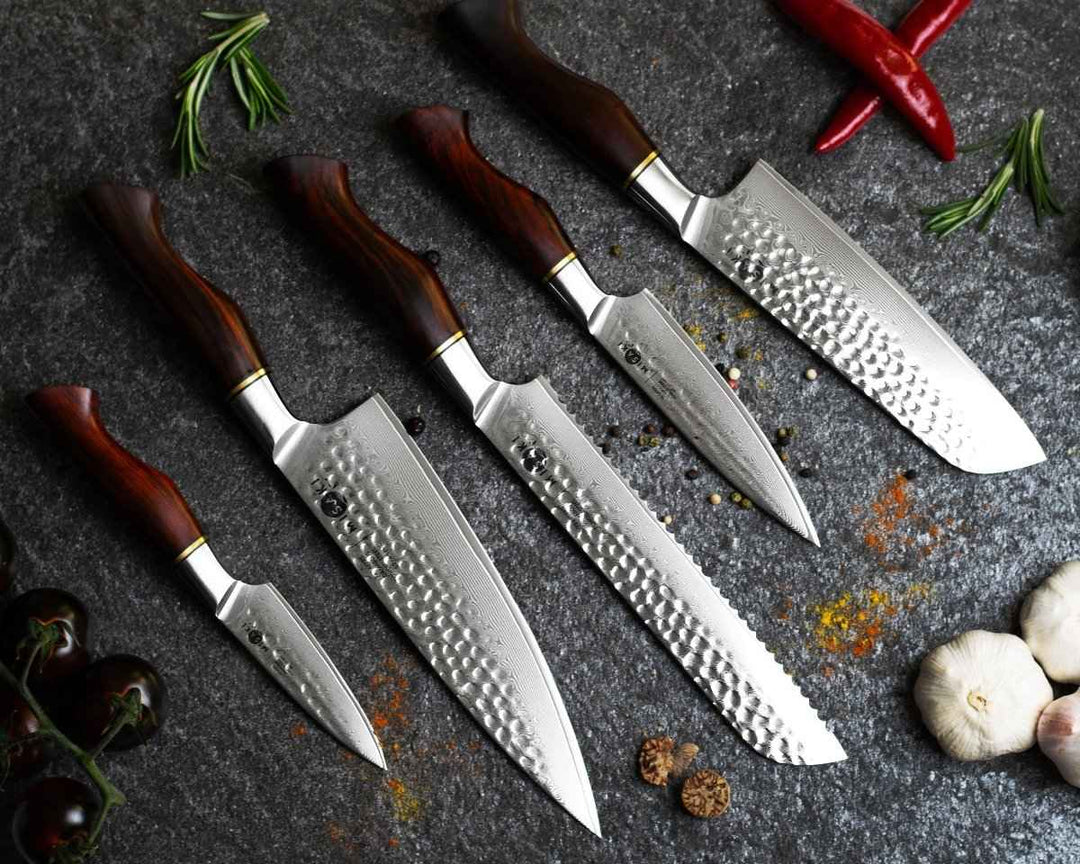
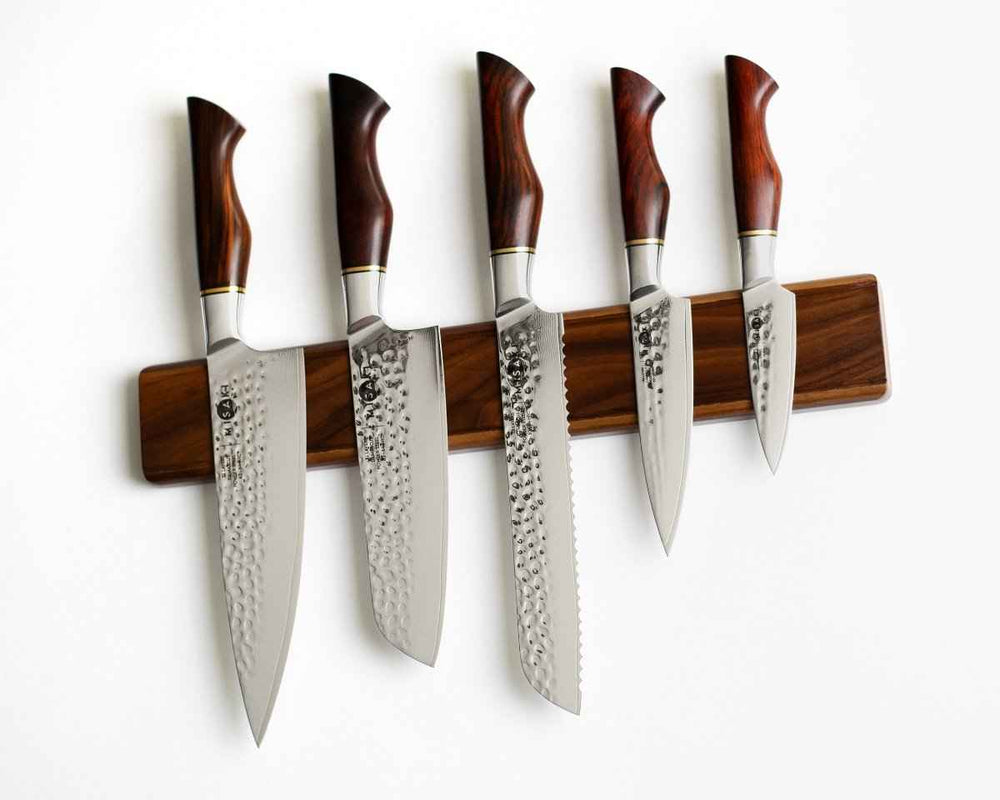
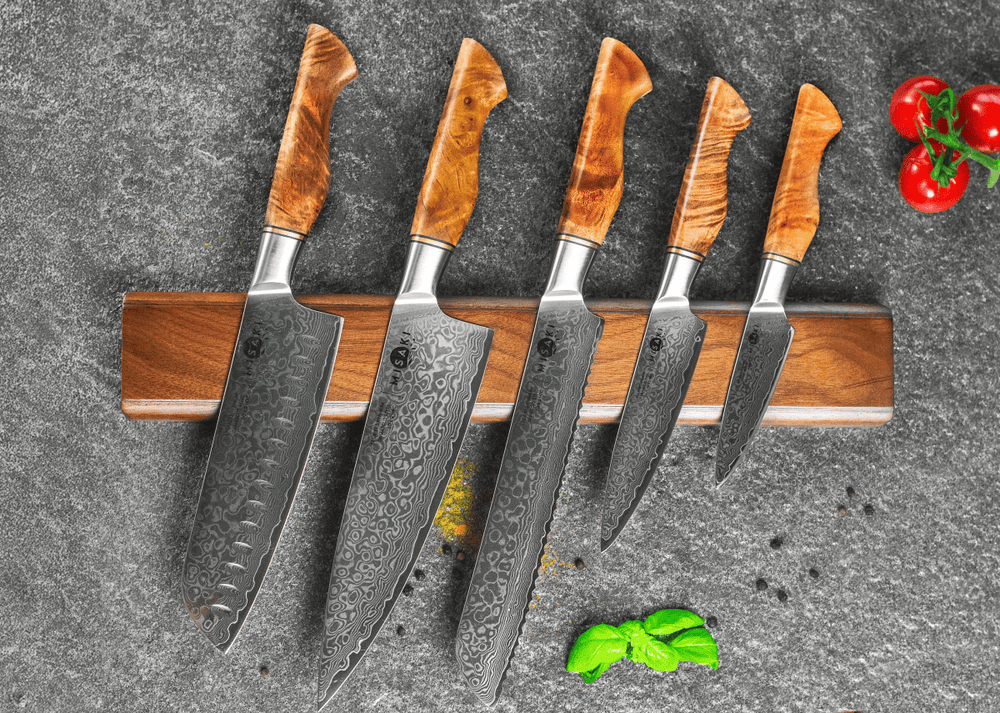
A good Japanese knife set is not automatically large, but thoughtfully composed. These six knife types from the MISAKI range cover practically every task in a Swiss kitchen.
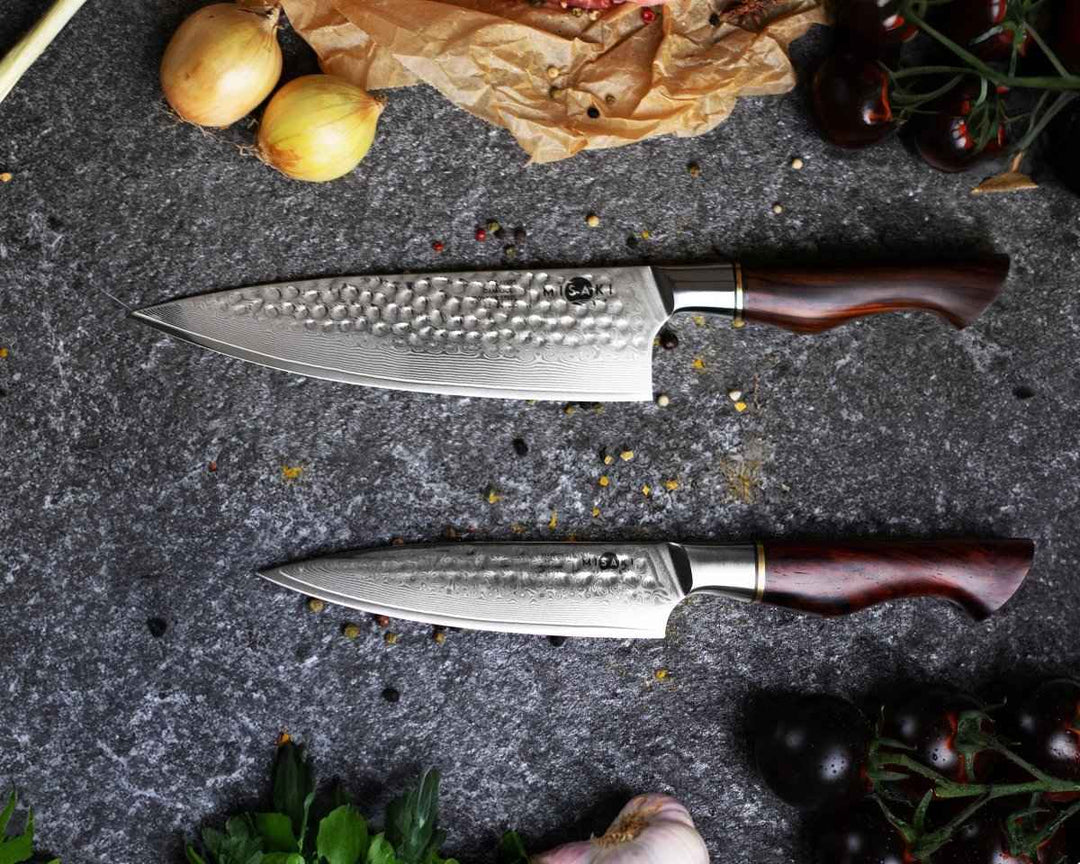
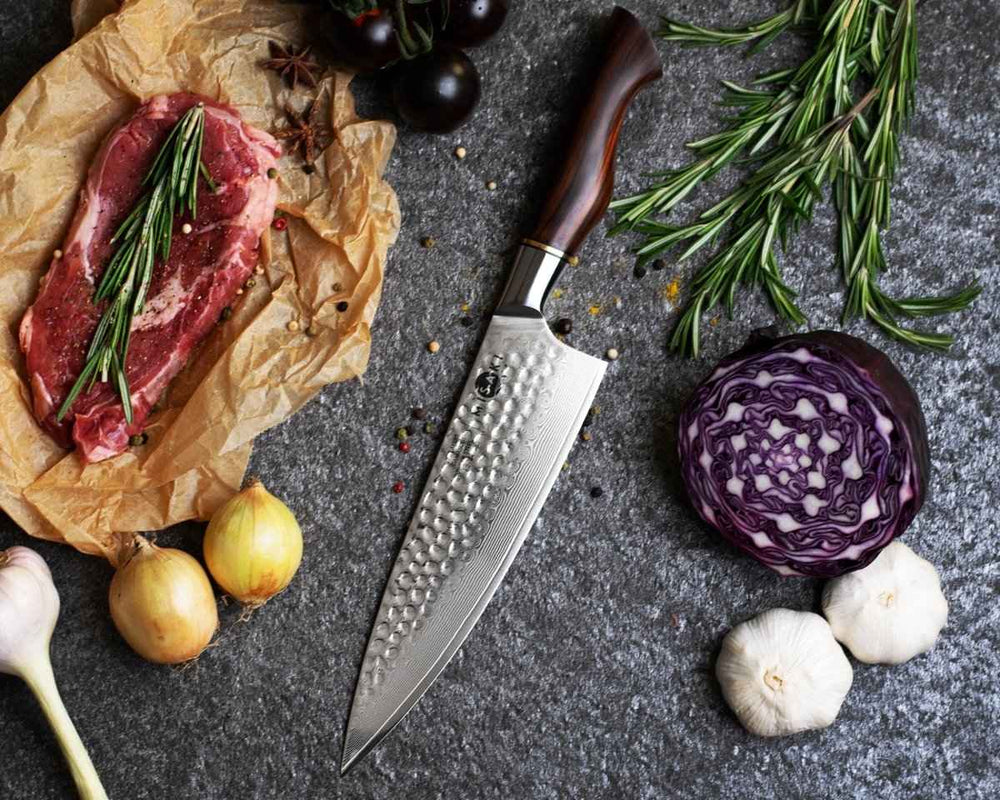
The central knife in the set. In Japanese logic, it corresponds to the Gyuto style, a Japanese interpretation of the Western chef’s knife. Ideal for vegetables, meat, fish and almost all preparation work.
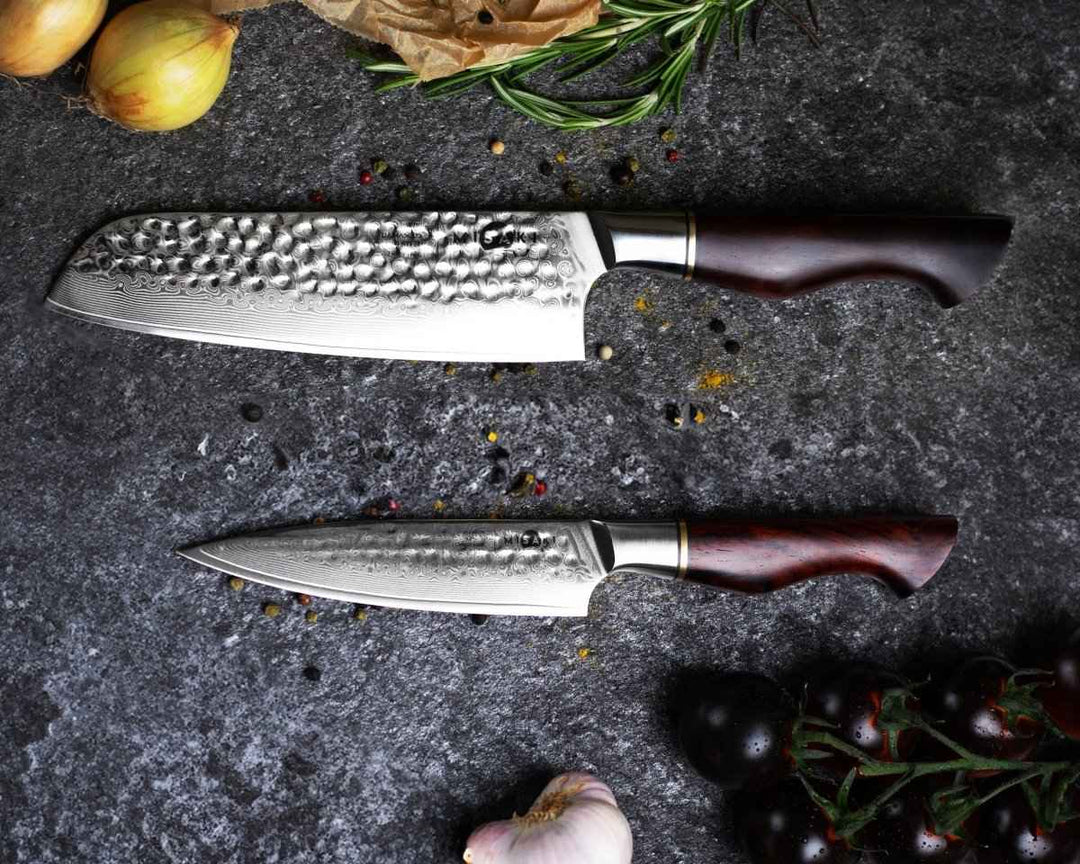
The Japanese everyday classic. Slightly more compact, very controlled and especially pleasant for fine dice and clean slices. Especially popular with home cooks who prefer a compact, controlled knife.
Agile and quick. Perfect for smaller ingredients, fruit, onions and everything for which the large knife feels too dominant.
For precision work in the hand, peeling, trimming and fine details. A small knife that is used surprisingly often in everyday cooking.
Not traditionally Japanese, but extremely useful in European kitchens. The serrated edge cuts crusty and soft bread cleanly without crushing the inside.
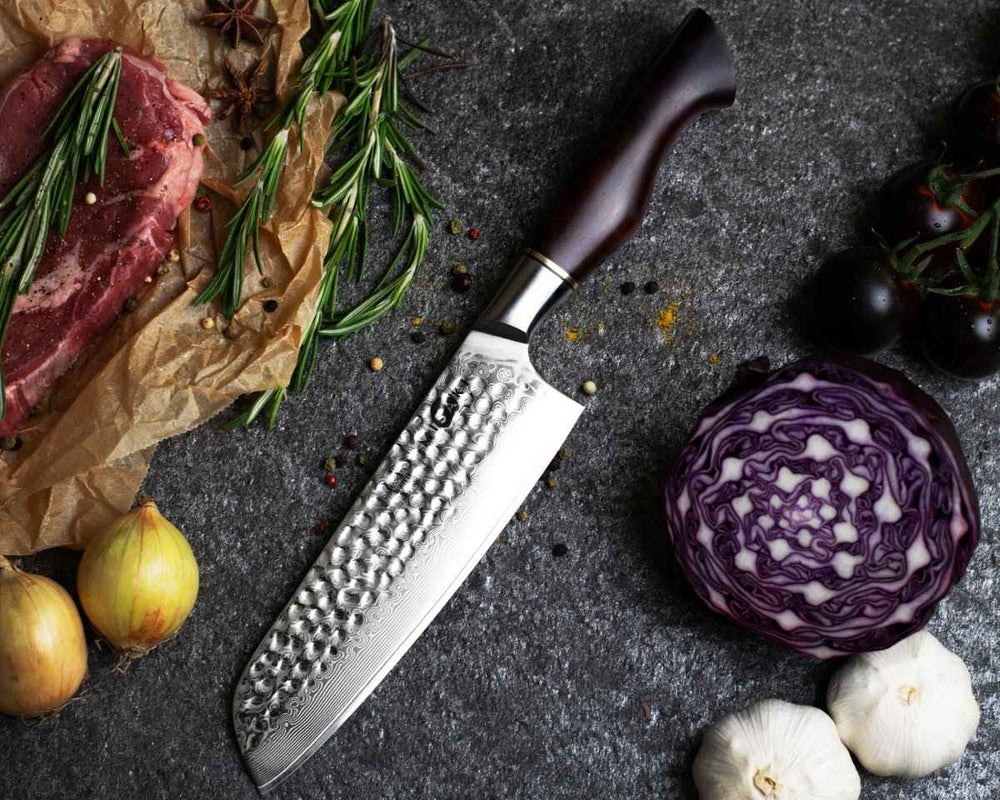
The Japanese specialist shape for vegetables. Straight edge, very efficient work, ideal if vegetables are often at the centre of your cooking.
Japanese knife set vs. European knife set: which is better?
Better is what suits the way you cook. The difference is less about good or bad and more about character, cutting feel and maintenance.
Steel hardness and edge retention
Japanese knives are often tempered harder, roughly in the range of 58 to 65 HRC. European classics are often softer, around 52 to 58 HRC. Harder usually means longer edge retention, but it can also be more sensitive to misuse. Careful handling is therefore worthwhile.
Cutting angle and feeling of sharpness
Japanese knives often work with finer angles. MISAKI uses a 15° V grind. This allows the blade to cut more easily and precisely, but it requires a suitable cutting board and clean technique.
Cutting technique
Many European knives are guided strongly in a rocking motion. Japanese geometries work especially well with pushing and pulling movements. Once you internalise this, you often work with more control and less force.
If you want maximum everyday tolerance, a classic European set is convenient. If you are looking for precision, sharpness and a very clean cutting result, a Japanese knife set will generally bring more joy, provided care and technique are right.
Care and sharpening: how your knife set stays sharp for a long time
Japanese knives reward routine. Small habits make a big difference.
Cleaning
Always clean by hand, rinse briefly, use mild dish soap and dry immediately. Avoid the dishwasher, because heat, salts and water pressure damage the edge and handle over time.
Cutting board
Cutting boards made of wood are ideal. Hardwoods such as teak or walnut protect the edge. Glass, stone and porcelain quickly dull any blade.
Storage
Magnetic strip, knife block or blade guard. In a drawer without protection, every edge suffers.
Everyday sharpening
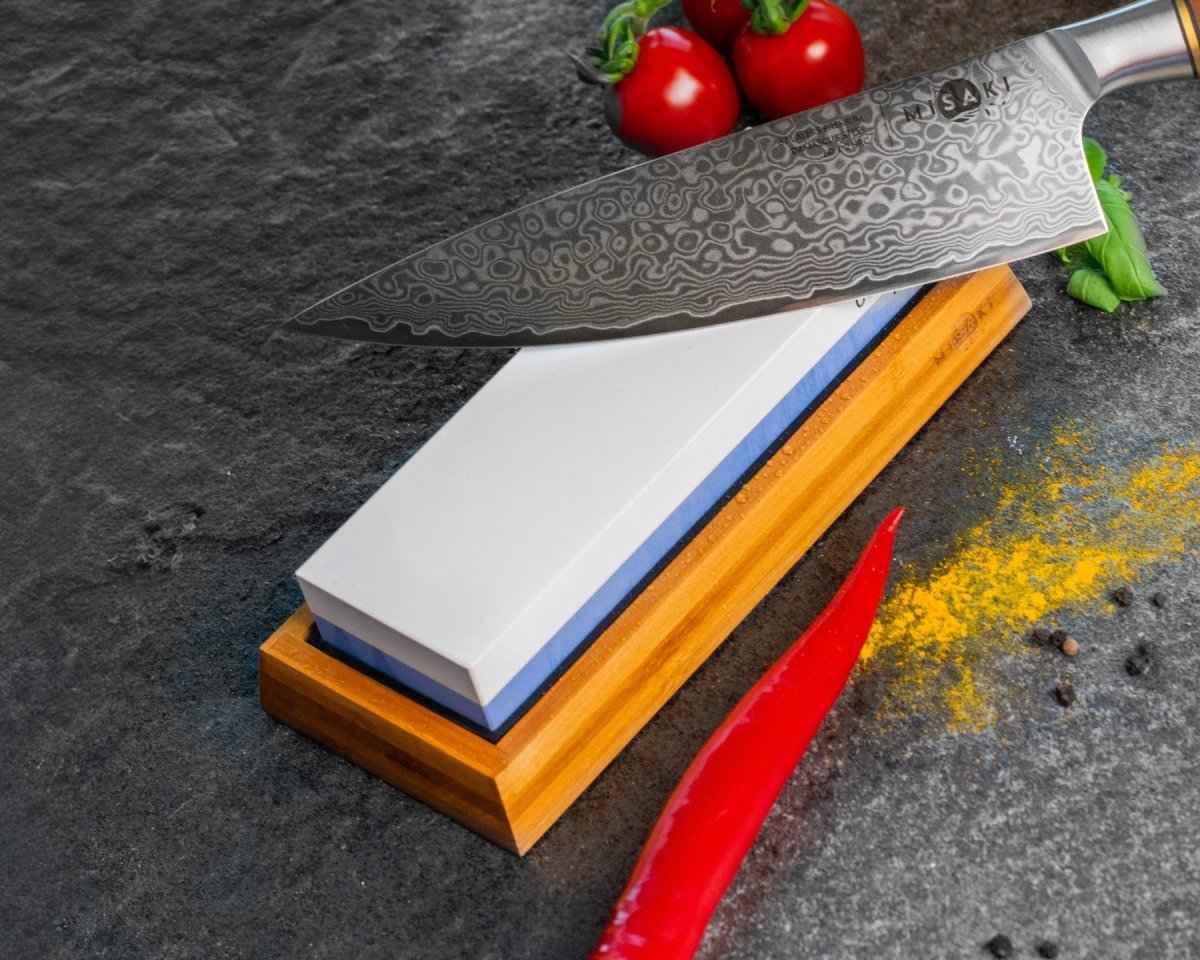
For Japanese knives, the whetstone 1000/6000 is the cleanest solution when the knife is noticeably dull or the edge needs to be rebuilt. For quick touch-ups in between, as soon as the bite noticeably decreases, a diamond sharpening rod is suitable. In everyday use, you also keep the sharpness stable by regularly working with the leather strop.
Finish with a leather strop
After the whetstone, the leather strop is the decisive final step. It removes the last fine burr and refines the edge as much as possible. At the same time, it is your tool for regular edge care in everyday use, so the cutting feel stays clean for a long time.
Bread knife
Serrated edges are not sharpened like smooth blades on a flat stone. A professional service is worthwhile here so the geometry of the teeth is preserved. If your bread knife starts to lose performance, please contact us; we will be happy to advise you on the best solution.
Why a Japanese knife set revolutionises your kitchen
A Japanese knife set changes not only the cut, but the entire workflow. You work with more control, ingredients look better, and cooking feels less like effort. Above all, trust develops because every knife has a clear purpose and performs reliably.
If you are looking for a knife set that combines Japanese precision with European everyday practicality, MISAKI’s logic fits: the most important blade shapes for Swiss kitchens, combined with a cutting culture focused on feel, balance and clean results.
Would you like to learn more about our Japanese knife sets or receive personal advice? Simply use our contact form and we will be happy to get back to you.