
Sharpest Knife in the World: What Sharpness Really Means
Many people search for the sharpest knife in the world or the sharpest blade in the world. In the kitchen, however, what matters is not only a record value, but the combination of sharpness, sharpening angle, edge retention and care. These factors work together especially in high-quality Damascus knives.
An extremely sharp knife must not only cut effortlessly. It also has to keep its sharpness in everyday use, be safe to guide and suit the food being cut.
Is there one sharpest knife in the world?
There is no single sharpest knife in the world that can be seriously named for kitchen use. Sharpness depends on several factors: steel, heat treatment, sharpening angle, blade geometry and care.
In tests or record comparisons, blades can be ground extremely finely. For the kitchen, however, the decisive question is whether this sharpness remains practical. A good kitchen knife combines a very fine edge with stability and control.
What really makes a blade sharp?
A sharp blade is created by a precisely ground cutting edge. The cleaner and finer the edge, the more easily it enters food.
In addition to the grind, steel also plays an important role in edge retention. High-quality steel holds a fine edge longer and is less prone to rapid wear. The decisive factor is not only hardness, but also heat treatment quality and the overall tuning of the blade.
Why extreme sharpness is not always practical
Very extreme sharpness can be impressive, but it is not automatically the best solution for everyday use. An extremely thin edge can react more sensitively to hard cutting boards, bones, frozen food or incorrect technique.
For high-quality kitchen knives, balance is therefore decisive. The blade should cut very sharply while still remaining stable enough for reliable daily use.
What role do steel, hardness and sharpening angle play?
Steel determines how finely a blade can be ground and how long it keeps its sharpness. Higher hardness often improves edge retention, but makes the blade less forgiving. The sharpening angle also influences how aggressive and precise a knife cuts: smooth MISAKI blades use a Japanese V-grind of 15° per side, while the bread knife uses a one-sided 30° serrated edge. More about sharpening angles can be found in our sharpening stone guide.
HIKARI and AKANE: two paths to precise sharpness
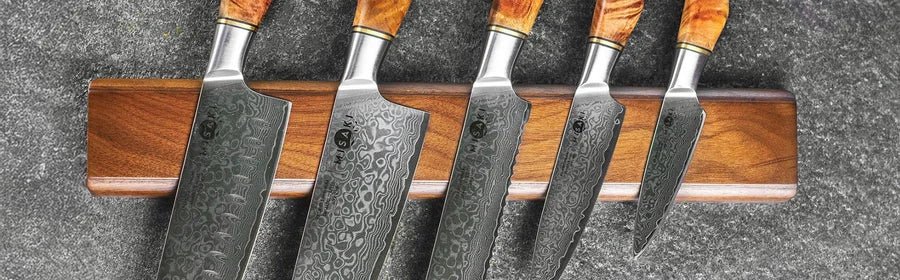
When it comes to the sharpest MISAKI knife, HIKARI and AKANE are especially relevant. The two lines have different priorities. HIKARI is the more accessible line: easier to guide and less uncompromising thanks to its slightly lower hardness, ideal for everyday use. AKANE uses a harder powder steel core for maximum sharpness and edge retention, but requires more deliberate handling and care. The exact hardness values of both lines can be found in our article on Rockwell hardness.
Why Damascus knives are so popular in the kitchen
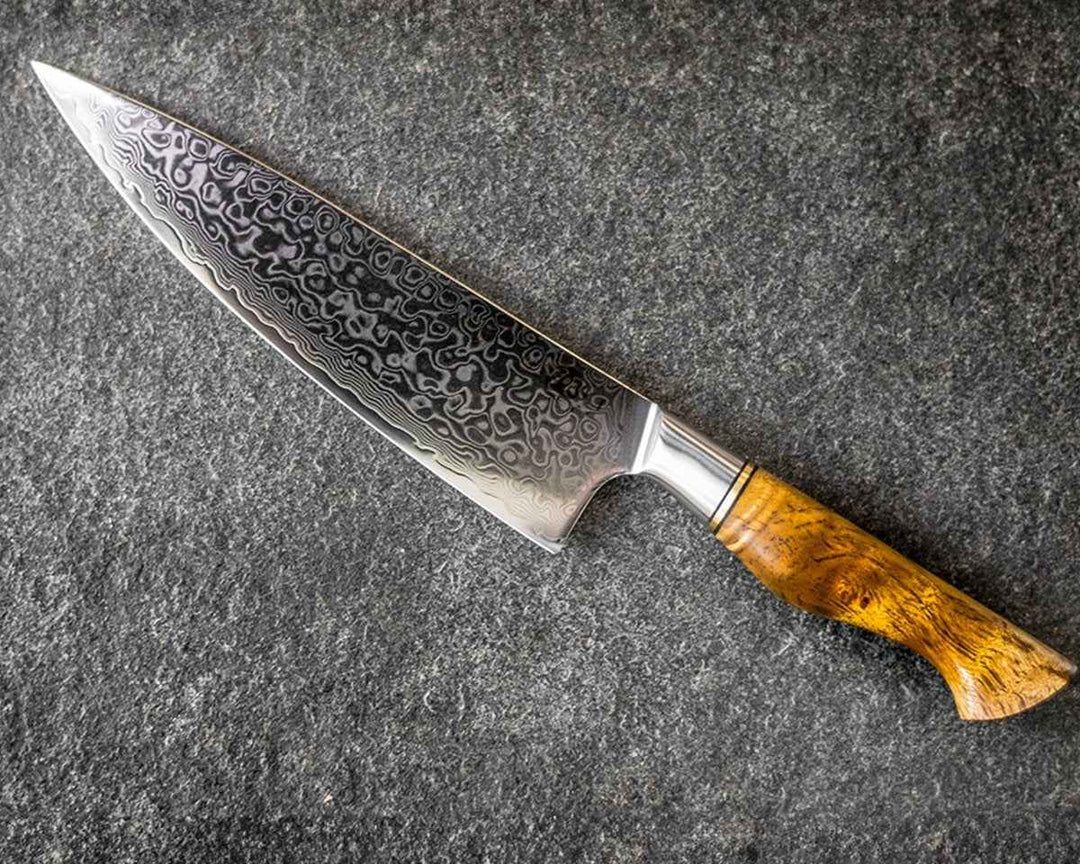
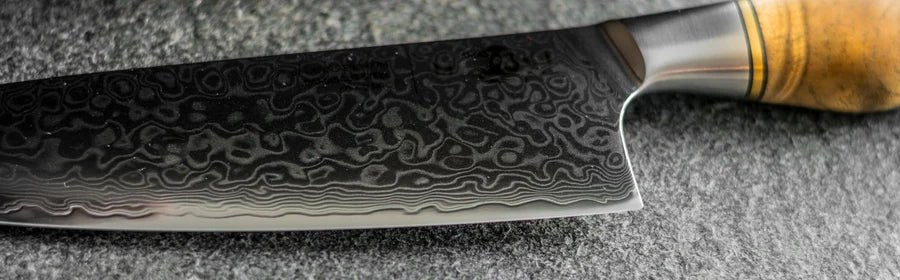
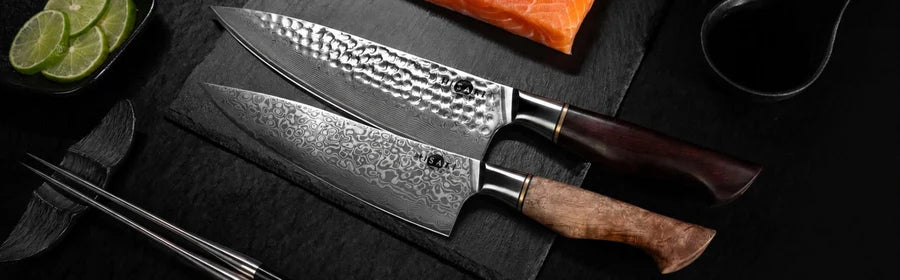
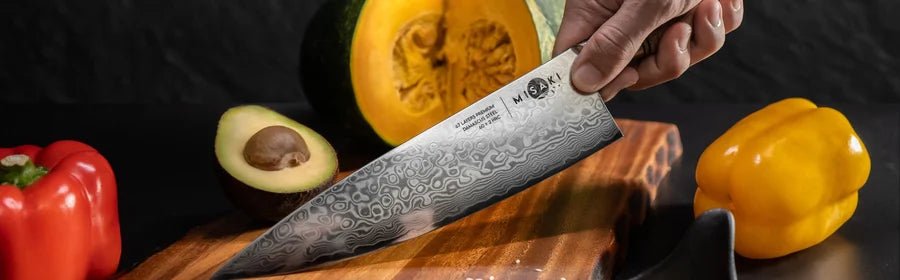
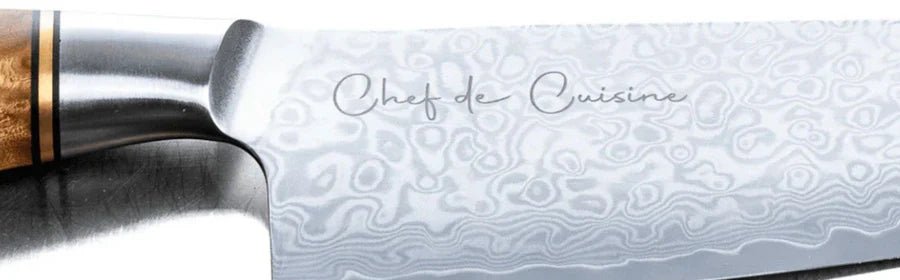
Damascus knives are often wrongly equated automatically with the sharpest knife in the world. But Damascus alone does not make a blade sharp. They are popular for good reason nonetheless: the layered blade combines a fine, edge-retaining cutting edge with the characteristic pattern that makes every knife visually unique. Added to this is the craftsmanship that makes Damascus knives a statement piece in the kitchen. They are functional and eye-catching at the same time.
How to keep a sharp knife performing for a long time
Even the sharpest blade in the world loses its advantage if it is used incorrectly or neglected. Sharpness is not a one-time state, but the result of continuous care. Suitable wooden or plastic cutting boards and regular care with stropping leather, diamond sharpening rod or water sharpening stone are essential. Full care and sharpening instructions can be found in our care guide.
The sharpest MISAKI knife for your kitchen
Whether HIKARI for precise everyday use or AKANE for maximum sharpness and edge retention: at MISAKI you will find Damascus knives that combine real sharpness with everyday practicality thanks to a Japanese V-grind of 15° per side and careful heat treatment. Discover our Damascus knives and find the blade that suits your cutting style.
Unsure which line or hardness best suits you? Contact us. We will be happy to advise you personally.
FAQ
What is the sharpest knife in the world?
There is no single clear sharpest knife in the world for kitchen use. Sharpness depends on steel, grind, blade geometry, care and application. For everyday use, maximum sharpness is not the only factor; control, stability and edge retention also matter.
What makes a knife especially sharp?
The decisive factors are a finely ground cutting edge, high-quality steel and the right sharpening angle. On smooth MISAKI blades, this is 15° per side. The more precisely these factors work together, the more easily the blade glides through food.
Are Damascus knives sharper than normal kitchen knives?
Damascus knives are not automatically sharper. The core steel and the way the blade is processed and ground are decisive. High-quality Damascus knives can, however, be ground very sharply and hold their edge for a long time.
Which MISAKI line is sharper: HIKARI or AKANE?
AKANE, with its harder powder steel core, is designed for maximum sharpness and edge retention, but requires slightly more care. HIKARI is more accessible and especially suitable for everyday use. Discover both lines: AKANE and HIKARI.
Why does a sharp knife cut effortlessly without pressure?
A finely ground edge concentrates force on a very small area and therefore enters the food almost without pressure. A dull blade spreads this force more broadly, requiring more pressure and tending to crush rather than cut the food.
Is the sharpest knife always the best knife?
No. The best knife is not only extremely sharp, but also suited to its purpose. It should sit well in the hand, be controllable and hold its sharpness for a long time. For everyday use, the balance of sharpness, stability and ease of care is decisive.